Confirm communication goals and audience at the project initiation stage.
When a TVC commercial project starts, the brand and production team must jointly answer three questions. First, what perception or behavior of the audience should this film change? Second, in what scenario will the target audience see this film: on TV, online video platforms, or offline event screens? Third, can the core selling points be directly presented visually, or do they require metaphor or comparison?
These three questions determine the script's direction. If the communication goal is to improve brand favorability, the script can take an emotional narrative route. If the goal is to drive short-term conversion, the script needs more direct selling point presentation and a call to action. The production team should ask the brand to provide product materials, competitor references, past placement data, and brand tone documents during the kickoff meeting. If the brand cannot provide a clear target audience description, the production team should proactively suggest conducting a round of user interviews or data reviews before entering the creative phase.
To judge whether a script is qualified, see if it can make the audience remember one core message within thirty seconds. If the script contains more than three selling points at the same time, it usually requires re-prioritizing. The risk is that brands often want to cram all information into one video, resulting in information overload. The production team must dare to subtract, and document the discarded selling points in writing to avoid repeated revisions later.
Script breakdown: key steps from text to visual conversion
The script focuses on being the blueprint for shooting and editing. After receiving the script, the brand should check whether each shot has a clear visual description, dialogue or voiceover, subtitle cues, sound effects, and music requirements. If the script only says "show product texture" without specifying lighting, angle, or action, the production team needs to supplement with storyboard notes.
When breaking down the script, the production team must annotate the function of each shot one by one. Is it to establish the scene, showcase the product, convey emotion, or drive action. Each shot must correspond to a communication purpose; purposeless shots should be deleted. At the same time, check whether the logic between shots is coherent, and whether the audience can understand changes in time, place, and character relationships.
At the script stage, the brand needs to confirm three things. First, whether all dialogue and voiceover accurately convey the brand's proposition without ambiguity. Second, whether the product presentation matches the product's usage scenario, such as whether a food ad requires close-up shots to show freshness. Third, whether the script includes filming content that requires special permits, such as traffic roads, public places, portraits, or brand logos.
If the script involves complex effects or CGI, the production team must assess technical feasibility at the script stage and provide alternative solutions. For example, when the product's internal structure needs to be shown but cannot be filmed live, 3D animation or AIGC generation can be considered. However, alternative solutions must be tested in advance and cannot wait until post-production to discover they are unachievable.
Storyboard design: verifying visual language and narrative pacing
The storyboard is the visual presentation of the script, typically showing each shot's composition, shot size, camera position, and movement in hand-drawn or digital drawing form. When reviewing the storyboard, the brand should focus on whether the shots clearly express the script's intent, rather than being drawn to the visual aesthetics and ignoring the narrative logic.
An effective way to validate the storyboard is to quickly flip through all storyboard images in sequence, simulating the edited pacing. If several consecutive shots are all close-ups, the audience may feel overwhelmed. If they are all wide shots, it may lack emotional tension. Storyboard design should include shot size variations, such as wide shots to establish the environment, medium shots to show action, and close-ups to emphasize details.
The production team must also annotate camera movement in the storyboard, such as push, pull, pan, track, follow, crane, or handheld. Each movement carries an emotional meaning; for example, a slow push-in can enhance focus, while a handheld shot brings a documentary feel. The brand should confirm whether these movements match the brand's tone; for instance, high-end brands typically avoid overly shaky shots.
The storyboard stage must also consider transition methods. Hard cuts, dissolves, fades, or match cuts all affect narrative pacing. The brand should inform the production team in advance whether versions for different platforms are needed, for example, vertical versions may require recomposition, and safe areas should be reserved during storyboard design.
The risk is that overly detailed storyboards may limit on-set creative freedom. The production team can keep the storyboard as a guide, but allow the cinematographer to make adjustments on set based on actual lighting and actor performance. The brand should understand that the storyboard is a reference, not a final commitment, and the final visuals are subject to the shot footage.
Material preparation and team confirmation checklist before production execution
One week before the shoot, the brand and the production team must complete the following material handover. Physical products or samples, preferably with multiple spares. The cast list and portrait release forms, including guardian consent for child actors. Location permits, if private venues or public areas are involved. Props and wardrobe lists, ensuring they meet brand visual guidelines.
The production team must hold a PPM to confirm the following. The director presents the shooting style and visual language. The director of photography explains equipment selection and lighting plans. The production designer presents set build renders or reference images. The production manager reports the shooting schedule and weather contingency plans. The brand must ensure all key decision-makers attend the PPM to avoid on-set changes of mind.
A technical recce must also be conducted before the shoot to check the location's lighting conditions, power capacity, soundproofing, and traffic control needs. If night shoots or special weather are involved, backup plans must be prepared. The brand should confirm whether the shoot location has internet signal for real-time footage preview or communication with remote teams.
During production execution, the brand representative should monitor the following aspects. Whether actor performances meet script requirements. Whether product displays are clear, and if reflections or obstructions affect the presentation of selling points. Whether recording quality is clean, free of wind noise or ambient noise. Whether footage backups are timely, and whether memory cards are dual-backed up.
If situations arise during the shoot where the script cannot be realized, such as location restrictions or poor actor condition, the director must immediately communicate alternative plans with the brand. The brand should authorize the director to make adjustments within reasonable limits, but shots involving core selling points cannot be cut arbitrarily.
Key milestones for post-production editing and VFX verification
In post-production, the brand should review in stages rather than waiting until the final cut to provide feedback. The first milestone is the rough cut, primarily checking if the narrative structure is complete and the pacing is smooth. The brand should focus on whether the rough cut includes all necessary shots and if the message is conveyed clearly; color grading and sound effects do not need attention.
The second node is the fine cut, where the visuals and audio are basically finalized. The brand should check whether the shot transitions are natural, whether the scene transitions are effective, and whether the music and sound effects enhance the emotion. During the fine cut stage, confirm the subtitle content, font, and timing, as well as whether multilingual subtitle versions are needed.
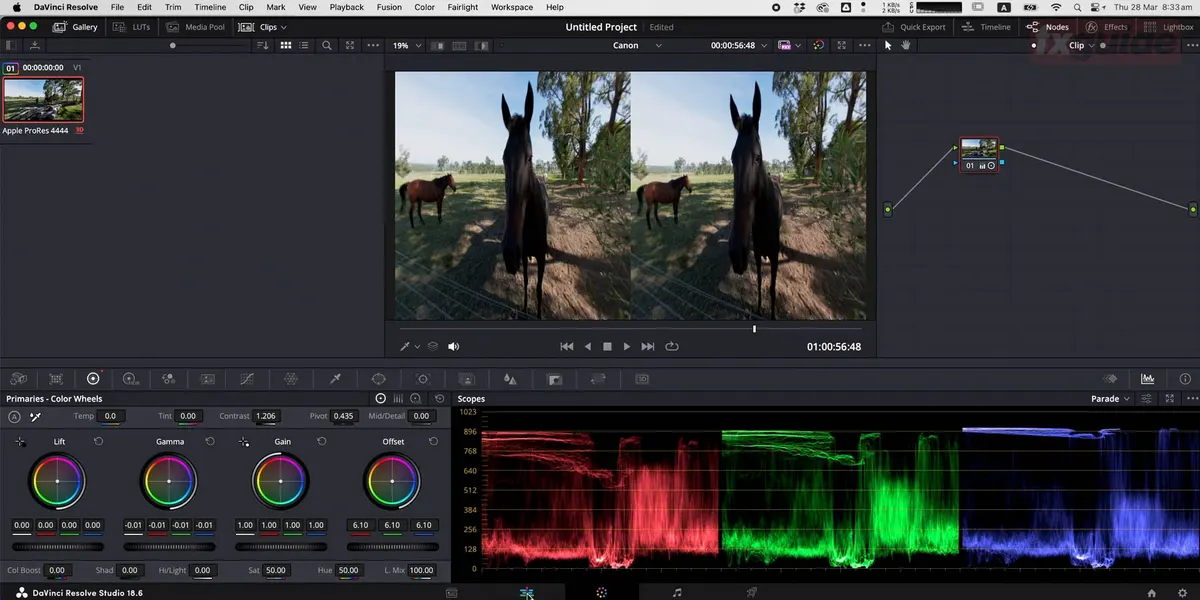
The third node is color grading and visual effects. The brand should provide brand color guidelines, such as primary and secondary colors. The colorist should perform color correction based on the director's intent and brand guidelines. Visual effect shots must be verified to blend naturally with the live-action footage, especially for CGI products or AIGC-generated content. The brand should ask the production team to provide VFX test clips rather than waiting until the final cut to see the results.
Sound design includes dialogue, voiceover, music, sound effects, and mixing. The brand should confirm whether the sound is clear, the volume is balanced, and if there are any harsh frequencies. If intended for TV broadcast, it must also comply with the broadcast station's loudness standards. For online platforms, ensure it is audible even through mobile phone speakers.
During post-production acceptance, the brand should check the master format and deliverable files. Different platforms may require different resolutions, frame rates, and encoding formats. The production team should provide at least one universal master, along with exported versions for the main platforms. Source files include project files, footage, music licenses, and font files; the brand should confirm that these files are fully delivered.
Final Cut Acceptance Checklist and Common Issue Handling
Final cut acceptance should not be signed off after just one viewing. The brand should organize a team of at least three people to watch it separately, including the marketing lead, product manager, and end-user representative. Each person provides feedback from different perspectives, and the production team compiles it to determine which changes are mandatory and which are subjective preferences.
The acceptance checklist includes the following items. Are the visuals clear, with no noise or compression artifacts? Are the colors accurate, with no color casts or overexposure? Is the sound clear, with no noise or distortion? Are the subtitles accurate, with no typos or grammatical errors? Does the duration meet platform requirements, and does it capture attention within the first three seconds? Is the brand information complete, including the logo, slogan, and contact information?
Common issues include product color distortion, especially in food or cosmetics ads. The brand should provide the physical product or a color card for the colorist's reference. Another issue is unclear music copyright; the production team must provide a music license and confirm that the licensing scope covers online streaming and offline events. If using AIGC-generated music or visuals, confirm copyright ownership and commercial licensing.
If the final cut requires revisions, the brand should list the feedback in writing and indicate priorities. Urgent revisions affect the release, important revisions impact distribution effectiveness, and general revisions are optimization suggestions. The production team should assess the workload for the revisions and provide a delivery time. The brand should avoid proposing disruptive changes at the final stage, such as replacing the music or reshooting scenes, as this will severely impact the schedule and budget.
After acceptance is passed, the brand should confirm the deliverables list. This includes the final cut master, versions for various platforms, subtitle files, posters or thumbnails, source files, and project documentation. The production team should provide a delivery note listing the purpose and specifications of each file to facilitate the brand's internal archiving and future use.
Applicable boundaries and inapplicable scenarios for TVC commercial projects.
The validation methods for TVC scripts and storyboards are not applicable to all commercial video projects. For social content on short video platforms, such as Douyin or Kuaishou, complex storyboards are usually unnecessary, with more focus on the appeal and interactivity of the first few seconds. These projects should use an agile creative process, with rapid shooting and iteration, rather than following a traditional TVC workflow.
For product demonstration videos or tutorials, the script should focus on clear steps and accurate operations, and the storyboard may not require excessive artistic treatment. These projects should prioritize information delivery efficiency over visual impact. Brands should require the production team to provide a detailed step-by-step script and verify the accuracy of each step.
For live streams or real-time event videos, full reliance on storyboards is impossible because the live setting is uncontrollable. The production team should prepare a live script and a camera blocking diagram, but must leave room for contingencies. Brands must understand the immediacy of live content and cannot demand the same level of refinement as pre-recorded content.
For projects with extremely low budgets or extremely short timelines, completing full storyboard design and multiple rounds of post-production revisions may be impossible. Brands should clarify project constraints, and the production team should simplify the workflow, such as using smartphone shooting and rapid editing, while ensuring the core message remains clear. In these cases, script validation is especially important because post-production revision costs are high.
For projects involving complex CGI or AIGC, such as virtual characters or digital environments, storyboard validation needs to be involved earlier. The production team must conduct technical tests during pre-production to confirm rendering time and costs. Brands must provide a sufficient production timeline, otherwise the expected results may not be achieved.
Next-step recommendations and project kickoff preparations.
When preparing to kick off a TVC commercial project, brands should first prepare a project brief, including communication goals, target audience, core selling points, reference videos, and budget range. This brief does not need to be polished, but it must truly reflect the project requirements. Then, conduct an initial communication with the production team to confirm the creative direction and technical feasibility.
Before signing the contract, brands must clarify acceptance criteria, revision limits, and copyright ownership. The contract should include the confirmation process for scripts and storyboards, as well as the response time for post-production revisions. Brands should retain final acceptance rights, but also respect the professional judgment of the production team.
If brands lack experience with script and storyboard validation, they can invite a third-party consultant to participate in the review and provide an independent perspective. However, be sure to control costs and time, avoiding over-analysis that leads to project stagnation. Ultimately, the value of a TVC commercial lies in effective communication, not perfect execution. Brands and production teams should maintain open communication, jointly resolve issues during shooting and post-production, and ensure the deliverables meet expectations.
If you are preparing a TVC commercial project, you can first organize the brief, reference visuals, product or company materials, delivery platforms, and licensing scope, then reviewthe TVC commercial service pageto move the conversation from abstract preferences to executable production boundaries.