How to Define the Communication Value of Authentic Interactions During Project Initiation
Before launching a corporate video project, the brand must clarify the core purpose of filming employee training scenes. If the goal is to showcase corporate culture or employer branding, the focus should be on collaboration and idea exchange among participants, rather than one-way instruction from trainers. Decision-makers need to assess whether the scene has visual tension; static shots of people listening often lack appeal. At this stage, evaluate if there are real case studies or group assignments internally, as these dynamic processes have more narrative potential than passive listening. If such interactive scenes are unavailable, consider adjusting the script direction to avoid forcing fake enthusiasm.
Specific actions during the initiation phase include holding business alignment meetings to extract communication goals for the corporate video and identifying key moments in training scenarios that reflect organizational vitality. The criterion is whether there is multi-directional information flow within the scene, meaning exchanges of viewpoints, collaborative work, and immediate feedback among participants. If there is only one-way transmission from trainer to trainee, the communication value is weak, requiring a shift in filming focus or the introduction of high-interaction elements like sandbox simulations.
Key Materials the Brand Must Provide During Pre-Production
To ensure smooth shooting, the brand should organize the training schedule and a list of core interactive segments before site scouting. Materials must include role assignments for participants, discussion topics, and expected output formats. The production team needs this to confirm lighting conditions and audio environments, especially checking for echo interference in open offices or meeting rooms. Both parties must confirm the willingness and expressive ability of employees appearing on camera, arranging rehearsals if necessary. This stage also requires clarifying copyright scope and confirming signed model releases for employees to avoid discarding footage due to legal risks later.
Specific actions in the preparation phase include collecting training outlines, participant lists, floor plans, and video records of past internal training sessions. The brand must provide a detailed timeline of segment transitions, marking the start and end times and participation methods for each interactive segment. The criterion is whether the level of detail in the materials supports on-site storyboard design and whether all on-camera personnel have signed model releases. If materials remain at a macro thematic level lacking specific interaction rules, the production team must request the brand to supplement group discussion prompts and output formats to ensure informed pre-production judgments.
Detailed Deployment of Scenes and Personnel Arrangements
During pre-production site scouting and personnel coordination, the production team must plan camera positions and personnel scheduling based on the actual flow of the training. Open discussion areas require sufficient space for cameramen to move, while enclosed meeting rooms need assessment for multi-camera setup feasibility. For personnel arrangements, select employees who genuinely interact in their daily work to form discussion groups, avoiding temporary assemblies that may lead to awkward silences.
Specific actions include measuring the venue dimensions on-site, recording the direction and color temperature of natural light, and testing the noise levels of equipment like air conditioners and projectors. When selecting on-camera employees, conduct brief on-camera communication tests to observe their fluency and natural micro-expressions. The criterion is whether the space can accommodate at least two shooting angles without revealing camera positions, and whether group members' familiarity with each other's work can support in-depth discussion. If the space is too cramped or personnel show strong resistance to the camera, immediately activate backup venues or adjust group compositions.
Execution Strategies for Capturing Natural States On-Set
During on-site execution, cinematographers should use telephoto lenses to capture from a distance, reducing psychological pressure on subjects. Lighting should supplement existing ambient light, avoiding excessive setup that creates a staged, theatrical feel. Directors should guide employees into genuine discussion states by introducing controversial topics to spark natural reactions, rather than asking them to recite lines. Sound engineers must equip each main speaker with hidden microphones to ensure dialogue clarity. If ambient noise is too high, prepare backup plans such as post-production dubbing or enhanced subtitles. Retain ample B-roll and reaction shots during shooting to provide sufficient material for editing.
Specific on-set actions include completing discreet equipment setup half an hour early to let the team adapt to the presence of gear. The director should observe the discussion flow from a listening position to capture emotional peaks. Cinematographers must skillfully use rack focus to switch between speakers and listeners. The criterion is whether body language appears relaxed, such as the elimination of defensive postures like crossed arms, and whether eye contact lands naturally. If employees exhibit recited tones or frequently look at the camera, pause immediately and rebuild relaxation through casual chat until authentic communication rhythms resume.
Techniques for Reconstructing Narrative Rhythm in Post-Production
During editing, abandon chronological narration and instead reorganize footage around core viewpoints. Create a lively overall learning atmosphere by cross-cutting discussion scenes from different groups. In sound design, balance ambient noise with human dialogue, appropriately retaining details like page-turning or writing sounds to enhance immersion. Color grading should remain natural and fresh, avoiding excessive filters that destroy authentic texture. Subtitles must accurately convey technical terms, adding graphic animations if necessary to explain complex concepts. If using AIGC technology to generate auxiliary visual elements, ensure they unify with the live-action style without overpowering it.
Specific post-production actions include building a material tag library, labeling all interactive highlights by emotional intensity. Editors should first build an emotional skeleton, then fill in reaction shots and B-roll transitions. Audio processing requires frame-by-frame cleanup of sibilance and environmental noise, laying down low-frequency ambient beds. The criterion is whether the narrative rhythm has appropriate pacing and whether cuts follow internal logic rather than abrupt jumps. Color processing must ensure natural skin tone reproduction, with background colors not dominating. If a shot's color grading is too heavy and causes distortion, revert it to a realistic color range close to the on-site environment.
Standardized Checklist for Final Delivery Acceptance
During acceptance, the brand must verify the script, storyboard, editing, color grading, sound, subtitles, and master files item by item. Focus on checking whether employee expressions are natural and free of obvious staging traces. Confirm that all on-camera personnel have signed model release agreements, and that background music and font copyrights are clear and undisputed. Test image quality and volume performance on different playback devices to ensure consistent experience on mobile and large screens. Source files must be delivered in agreed formats, including project files and raw footage, for future secondary creation. Any revision requests must be recorded in writing with clear version numbers to avoid omissions from verbal communication.
Specific acceptance actions include organizing internal screening meetings to check information accuracy frame by frame against the initial script. Legal or business representatives must verify all internal documents, whiteboard content, and computer screens appearing in the footage to ensure no confidential information is leaked. Technically, test image sharpness and audio-video sync rates at different resolutions. The criterion is whether the final film fully complies with brand safety standards and whether all sensitive data labels are cleared from thehua mian. If unredacted business data is found on background whiteboards, immediately blur or replace the footage until it passes compliance review.
Identifying Scenario Boundaries Unsuitable for Authentic Interaction Shooting
Not all training scenarios are suitable for authentic interaction shooting. If training content involves highly confidential data or core technical parameters, avoid filming specific screen content or whiteboard notes. For operational training with highly standardized processes and little variation, real footage may appear monotonous; consider combining with 3D animation demonstrations in such cases. If employees generally lack on-camera presence and cannot improve through guidance, forced shooting may produce counterproductive results. Additionally, if the project timeline is extremely short and does not allow enough time to capture natural states, proceed with caution when choosing this approach.
Specific risk identification actions include conducting confidentiality classification reviews of training content, assessing the visual richness of operational processes, and performing on-camera stress tests for participating employees. The production team must request training courseware in advance to screen for sensitive keywords. The criterion is whether redacting information affects the integrity of business logic, and whether filming intervention seriously disrupts normal training progress. If content confidentiality levels are too high and cannot be alternatively demonstrated, decisively abandon live shooting in favor of reenactment or animation schemes to avoid information leakage risks.
Backup Plans for Handling On-Site Emergencies
During authentic interaction shooting, there are many uncontrollable factors, so the production team must prepare emergency plans in advance. Core discussion segments may stall if topics are too specialized, or deviate from preset themes if arguments become too intense. Equipment may also encounter sudden power outages or audio frequency interference.
Specific actions include the director preparing a list of backup guiding phrases to throw out controversial industry topics to activate discussion during lulls. Sound engineers must carry backup wireless microphones and directional recording equipment to handle frequency congestion. The criterion is whether the team can restore normal shooting order within three minutes when emergencies occur, without causing panic among subjects. If on-site discussion completely spirals out of control and cannot be salvaged, decisively interrupt shooting, reorganize interaction rules, and restart to avoid wasting storage resources and employee energy.
Next Step Action Recommendations and Business Engagement Guidelines
After completing internal assessments, the brand can organize communication goals, audience personas, core selling points, and reference visuals, then contact a professional video production team for consultation. ONCE’s official website publicly offers services covering corporate videos, brand promotional videos, and company image films, providing full-process support from planning to delivery. It is recommended to clarify shooting conditions, delivery platforms, and copyright scope during communication to enable the team to provide precise solutions. Do not blindly compare prices before clarifying needs; instead, focus on the team’s ability to control real scenes and the narrative logic of past cases. Maintain open communication to jointly explore the video expression format best suited to the brand’s current status.
Specific business engagement actions include compiling a requirements specification document and outlining application scenarios and audience pain points for the corporate video. The brand must collect excellent reference videos from the same industry to distill desired visual styles and narrative rhythms. The criterion is whether the requirements document clearly defines communication goals and boundary conditions, and whether reference visuals are feasible. After organizing materials, engage with the professional team to enter the substantive planning phase, ensuring the project advances steadily within a scientific production framework.
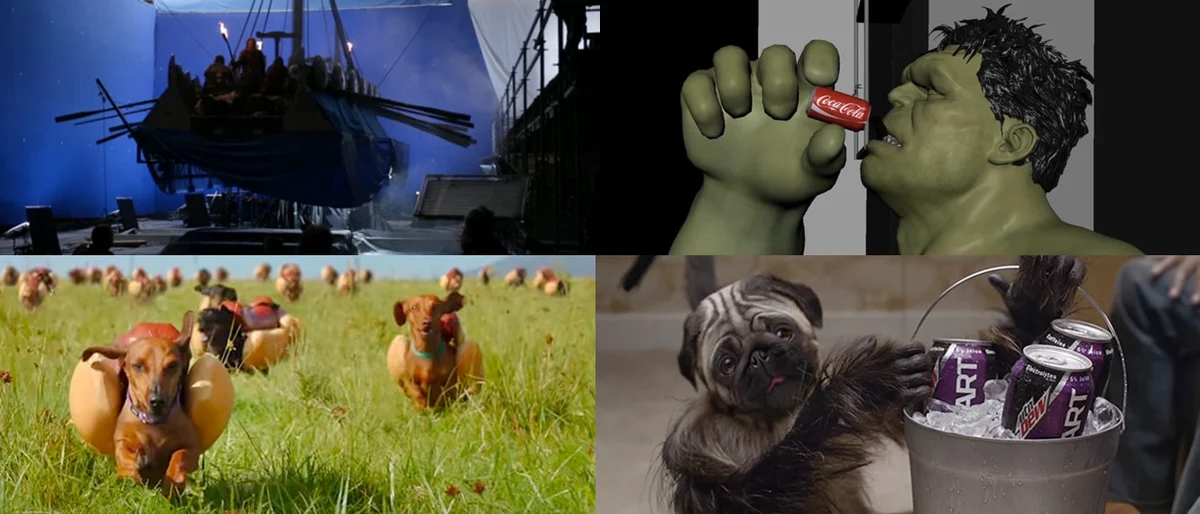
If you are preparing for a corporate video project, you can first organize your brief, reference visuals, product or company materials, delivery platform, and copyright scope, then viewthe Corporate Video Service Page, to ground communication from abstract preferences to executable production boundaries.