Clarifying Core Conflicts at Project Initiation
Sports product TVCs often face seemingly conflicting visual demands. Speed requires impactful visuals, motion blur, and fast-paced editing. Safety demands stable shots, clear details, and a sense of reliability. Brands must define the weight of each element early on. If balanced, the script should use contrast or progression. If one dominates, the other serves as background support. Marketing leads must prepare core selling point documents, clarifying whether the product solves protection issues during high-speed movement or enhances performance. Reference materials should include not only competitor ads but also still photography, motion graphics, and non-commercial extreme sports documentaries. These help the production team understand the desired emotional tone rather than just mimicking shot composition.
Dynamic Previsualization Strategies for Storyboards
Storyboards must go beyond static sketches. For speed-focused sequences, the director and cinematographer must confirm camera movement paths. Use animatics or simple 3D previsualization software to simulate the relative speed between the camera and subject. The key is matching lens focal length with movement speed. Telephoto lenses compress space, enhancing the sense of pressure and speed as the subject approaches. Wide-angle lenses exaggerate perspective distortion, suitable for showing safe interaction with the environment. The team must decide if special rigs like high-speed tracks, drones, or car-mounted cranes are needed. For complex stunts, safety assessments and technical tests are mandatory. Skipping previsualization often leads to chaotic on-set coordination and failure to capture the intended dynamic tension.
Set Construction and Crew Coordination Mechanisms
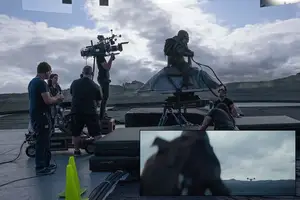
Efficient on-set execution relies on strict organizational structure. The production team must zone shooting areas based on storyboard needs, ensuring high-speed zones do not interfere with static display areas. Gaffers must test heat dissipation and power loads for high-wattage lights to prevent interruptions from overheating. Casting coordinators must align schedules for stunt performers and models, allowing ample time for makeup and warm-ups. The directing team should establish instant communication channels to ensure zero-delay receipt of change orders. Script supervisors must meticulously log parameters and notes for each take to aid post-production selection. All key personnel must attend a technical coordination meeting before shooting to align on image quality and performance intensity standards.
Lighting and Frame Rate Control on Set
Light is a key physical element in shaping texture and speed. To convey speed, high shutter speeds freeze moments, while low shutter speeds create motion trails. This requires lighting with high output and stability. If using natural light, strictly control the shooting window and prepare large reflectors or fill light arrays to balance ratios. Conveying safety relies on clear rim lighting and soft facial illumination to avoid unease from harsh shadows. Cinematographers must determine frame rates based on post-production needs. Footage shot above standard playback rates allows for speed ramping but increases data and storage demands. On-set audio is also crucial; even if re-dubbed later, original ambient sound provides rhythmic reference for editing. Missing any on-set sound effects increases Foley costs and reduces realism in post-production.
Logic of Rhythm Construction in Post-Production Editing
Conveying speed in editing is not just about increasing cut frequency. True rhythm comes from balancing action continuity with fragmentation. Use action match cuts to guide the viewer’s eye smoothly across different shot scales, creating a sense of speed. For safety segments, extend shot duration to allow viewers to absorb product information. Sound design is decisive at this stage. Low-frequency sounds enhance product weight and reliability, while high-frequency sounds emphasize speed and sharpness. Mixers must finely adjust frequency balances to prevent muddiness from obscuring voiceovers. If editing to music, ensure copyright clearance covers all intended distribution channels. Unauthorized background music can lead to takedowns, wasting prior investments.
Emotional Guidance Through VFX and Color Grading
Visual effects should serve product visualization, not dominate it. For example, use particle effects to illustrate aerodynamics or highlight lines to outline protective structures. These effects must match the lighting direction, color temperature, and grain of live-action footage to avoid a disjointed look. Colorists should develop two look schemes. One leans toward cool tones and high contrast to reinforce technology and speed passion. The other favors warm tones and low saturation to convey approachability and safety. Brands must confirm the primary color direction during the rough cut to avoid delays from major changes in the final cut. AIGC tools can generate specific backgrounds or extend aspect ratios, but require frame-by-frame manual checks to prevent logical artifacts.
Multidimensional Final Delivery Checklist
The acceptance phase must separately review technical specifications and creative execution. Technically, check resolution, bitrate, and color space against the latest platform requirements. Audio must be checked for peak levels to avoid clipping or low volume. Creatively, verify key shots against the storyboard, ensure logo visibility duration and clarity meet standards, and check subtitle accuracy for typos or ambiguity. Source file delivery includes project files, separate audio tracks, clean video versions, and color grading LUTs. These assets are foundational for future repurposing; their absence limits marketing flexibility. If major logical errors or technical flaws are found, define revision rounds and deadlines to avoid indefinite rework.
Project Scope Boundaries and Risk Warnings
High-spec TVCs are not suitable for all marketing scenarios. For limited budgets or short campaigns, prioritize social media short videos with simplified VFX and lighting. If product functions are too complex for visual demonstration, supplement with detailed demo videos ortu wen explanations, as TVCs alone cannot fulfill educational tasks. Additionally, for high-risk sports scenes, purchase adequate insurance and hire professional stunt teams; brands must not ask actors to take risks to save costs. Production teams must honestly disclose technical limitations and not promise unachievable visual effects. Both parties must define change management processes in the contract, triggering additional cost and timeline assessments for any creative adjustments beyond the original scope.
Brands should organize internal decision chains and feedback mechanisms before starting. Designate a single point of contact to avoid conflicting opinions shifting the production direction. ONCE provides end-to-end video production services from strategy consulting to final delivery, helping teams find the optimal balance between creativity and execution. Through standardized process management and transparent communication, we ensure every dollar of budget converts into effective brand assets.
If you are preparing a TVC project, first organize your brief, reference images, product or company materials, delivery platforms, and copyright scope, then viewthe TVC service pageto translate abstract preferences into executable production boundaries.