Establish Communication Priorities for Eye Logic
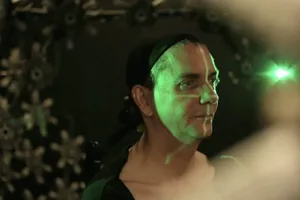
During the creative conceptualization phase of a TVC commercial, the talent's gaze is not just a performance technique but the core visual path guiding audience attention. Brands must first clarify the product's role within the frame. If the product is positioned as a solution provider, the talent's gaze should convey scrutiny or trust, projecting professionalism and reliability. If the product is positioned as a lifestyle companion, the gaze should be soft and parallel, creating an intimate atmosphere. The production team must precisely mark the focal point of each shot in the script to avoid logical breaks during editing. The risk is that if this is not defined early, actors may perform without a clear object, resulting in vacant eyes or wandering focus, which weakens the ad's impact. An exception is abstract concept ads, where the gaze may point into empty space to suggest potential applications, but the intent must be clearly marked in storyboards to ensure artistic expression aligns with the brand core.
Completeness Check for Pre-production Materials
Before launching the project, brands must provide a clear list of core selling points and reference images. These materials directly determine the Director of Photography's approach to depth of field and focal planes. Without specific references, it is difficult for the production team to decide whether to use shallow depth of field to highlight product details or deep depth of field to show the interaction between people and the environment. We recommend that brands compile past visual cases they liked and explain why, such as lighting texture, color tone, or compositional balance. Additionally, confirm whether the actual lighting conditions at the shooting location support the planned eye angles. If the location is limited, discuss in advance whether to use virtual production or post-production compositing. Skipping this step may lead to on-set script changes, increasing the risk of budget overruns and affecting final quality.
Constructing Geometric Relationships in Storyboards
Storyboard artists must construct a stable geometric triangle using the talent's eyes, the lens optical axis, and the product's center of gravity. In TVC commercials, this triangular relationship determines the frame's stability and visual tension. When the talent looks at the product, the extended line of sight should accurately pass through the product's most recognizable feature. If the gaze deviates, viewers may subconsciously feel discomfort, reducing information reception efficiency. The production team must mark the relationship between camera height and the actor's eye level in the storyboard. Low-angle shots impart authority to the product, suitable for tech or high-end categories. High-angle shots appear more approachable, suitable for consumer goods. The risk lies in pursuing aesthetic composition while ignoring ergonomics, causing actors to hold awkward poses for long periods, which affects natural performance. In such cases, adjust prop positions rather than forcing the actor, ensuring smooth and natural movements.
Scene Setup and Personnel Coordination
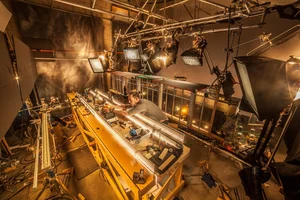
Set designers must adjust prop placement based on eye logic to ensure the product is in the optimal position within the actor's field of view. Lighting technicians must pre-test reflections from different angles to prevent highlights on the product from obscuring key logos. For actor blocking, directors should guide actors to change their gaze direction through slight head turns rather than eye movements, which appears more realistic. In multi-actor scenes, primary and secondary gaze relationships must be clarified to avoid chaotic lines of sight that distract the audience. Assistant directors must mark standing positions on set to ensure consistency across takes. If complex movement is involved, rehearse in advance and record the best combination of gaze angles and body posture to save time during formal shooting.
Coordination of Lighting and Focus On Set
Lighting technicians and cinematographers must work closely to ensure sufficient catchlights in the talent's eyes while avoiding reflective interference on the product surface that disrupts gaze guidance. Catchlights are key to conveying emotion; their absence makes characters appear tired or lifeless. When shooting talent and products in the same frame, we recommend using large-aperture lenses to separate the subject from the background, but ensure key product areas remain within the depth of field. If the product is small, macro lenses may be needed, requiring special attention to focus breathing. The on-set director should monitor playback in real time to check if gaze directions conflict with the axis rule. If mismatches or errors are found, reshoot immediately; do not rely on post-production fixes, as subtle changes in eye expression are difficult to reconstruct perfectly digitally.
Pacing and Gaze Matching in Post-Production Editing
When editing TVC commercials, editors must follow the principle of gaze matching, meaning the direction the talent looks in one shot should logically align with the product's position in the next shot. If gaze directions reverse between shots, it creates spatial confusion and disorients the viewer. For multi-camera footage, select frames with the most determined gaze and sharpest focus. If CGI product integration is involved, ensure the lighting direction in the composite matches the live-action talent's lighting to avoid visual discontinuity. The risk is that excessive cutting disrupts performance continuity; we recommend preserving long takes to showcase authentic interaction. Sound design should also coordinate with gaze shifts; when the talent looks at the product, slightly enhancing sound effects can reinforce focus and improve the audio-visual synchronous experience.
Multidimensional Standards for Delivery and Acceptance
The acceptance process should cover three dimensions: script fidelity, technical specifications, and artistic expression. Brands must verify that the final video faithfully executes the gaze design from the storyboards and that product close-ups are clear and undistorted. Technically, check if resolution, frame rate, and color space meet platform requirements to ensure consistent display across devices. Artistically, assess whether the talent's emotion blends with the product tone and if the overall atmosphere meets brand expectations. Source files, project files, and subtitle files should be archived separately for future modifications or derivative content. If gaze logic errors or product blurriness are found, they should be considered major defects requiring rework. Copyright scope must clearly include licenses for all music, fonts, and assets used to avoid legal disputes. Both parties must sign the acceptance form as the basis for final payment.
Identifying Scenarios Where Strong Gaze Binding Is Not Applicable
Not all TVC commercials are suitable for emphasizing eye contact between talent and products. In fast-paced promotional videos, information density takes precedence over emotional connection, making quick product cuts more effective than lingering gazes. Additionally, if the product is an intangible service or abstract concept, forcing actors to stare into space may appear pretentious and reduce credibility. For videos driven primarily by voiceover, visuals serve only as background support and do not require complex gaze design. Brands pursuing a minimalist style may also choose negative space over focus. In these cases, over-designing gaze relationships increases production costs and distracts from core messages. Production teams should identify such needs early in the project to avoid resource misallocation and choose more appropriate visual storytelling strategies.

If you are preparing a TVC commercial project, start by organizing your brief, reference images, product or company materials, delivery platforms, and copyright scope, then visit theTVC Commercial Service Pageto translate abstract preferences into executable production boundaries.