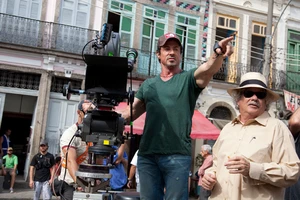
Clarify the physical logic of screen presentation during the project initiation phase
At the start of a TVC commercial project, the brand and production team must jointly assess whether the core creative concept heavily relies on the clear display of phone screen content. If the script includes many close-up or macro shots, moiré patterns become a technical challenge that must be addressed. The production team should explain to the client during early communications that interference between screen pixel arrays and camera sensor grids is an optical physical phenomenon that cannot be completely eliminated by equipment upgrades alone. Both parties must determine a response strategy before finalizing the script, such as using post-production compositing to replace live footage or adjusting shot scales to avoid high-frequency interference areas. Decisions at this stage directly impact subsequent budget allocation and schedule planning, effectively avoiding creative compromises due to technical bottlenecks on set.
Preparation of preliminary materials and confirmation of reference visuals
The brand must provide high-precision source files for screen content, including lossless video footage or vector interface designs. These materials will serve as the basis for post-production compositing or as comparison standards for on-set monitoring. Both parties should jointly confirm the light-and-shadow texture and color tone in the reference visuals to ensure visual consistency in color temperature and contrast between the live-action environment and post-production assets. If a pure live-action approach is planned, test the screen refresh rates and brightness performance of different phone models in advance, and record specific shooting angles prone to interference. The core of this step is to establish a unified quality benchmark to prevent image quality gaps or color deviations in the final cut due to insufficient source file resolution or mismatched color spaces.
Lighting strategies and camera position control on set
Cinematographers must employ multiple methods to suppress moiré patterns during shooting. The first step is to finely adjust the relative angle between the camera and the screen; slightly tilting the lens or changing the shooting distance can often significantly reduce interference stripes. Secondly, lighting should avoid direct reflection on the screen while ensuring uniform ambient light to facilitate keying or motion tracking in post-production. If conditions allow, lower the camera shutter speed or use an optical low-pass filter, but weigh the potential impact of motion blur on image clarity. The production team must reserve sufficient time for technical testing, as different smartphone models vary in sensitivity to light and angles. Blindly applying past experience may lead to inefficient shooting.
Specific execution actions
- Use polarizing filters to eliminate unnecessary reflective spots on the screen surface
- Adjust the camera focal length; using telephoto lenses with long-distance shooting can reduce the probability of pixel interference
- Enable zebra pattern assistance on real-time monitors to instantly identify high-frequency interference areas
Judgment criteria
During full-size playback on the monitor, there are no obvious flickering stripes in the screen area, and edge sharpness meets 4K output requirements. Ambient light ratios are controlled within a reasonable range to ensure sufficient room for color correction in post-production.
Compositing and repair processes in post-production
In the post-production phase, editors and VFX artists must choose processing paths based on the quality of preliminary footage. If moiré patterns in live footage are slight, local repairs can be made using frequency separation or denoising plugins to retain realistic glass texture and reflection details. If interference is severe, green screen shooting or complete post-production compositing of screen content is required. At this point, the accuracy of motion tracking is crucial to ensure the composited footage perfectly aligns with the subtle shakes of handheld cameras. The color grading stage must unify the light-and-shadow relationship between the live-action environment and composited assets to avoid a floating appearance. Sound design and subtitle addition should occur after picture lock to prevent audio-video sync issues or subtitle displacement due to further visual adjustments.
Specific execution actions
- Perform frame-by-frame analysis of live footage to mark segments with severe moiré patterns
- Use 3D camera tracking technology to reconstruct the spatial relationships of the shooting scene
- Map high-precision source files to the phone screen model and add matching environmental reflection layers
Judgment criteria
Composited footage shows no sliding or drifting in fast-motion shots, and screen edges fit tightly with the device body. The overall tone blends naturally with the surrounding ambient light, with no obvious signs of digital compositing.
Multi-stage acceptance standards and delivery specifications
The acceptance process should be conducted in stages, covering scripts, storyboards, rough cuts, fine cuts, color grading, and master output. During the rough cut stage, focus on checking the logical coherence and narrative rhythm of screen content. In the fine cut stage, confirm the edge blending and natural motion trajectories of VFX compositing. After color grading, preview on different display devices to ensure moiré patterns do not reappear after video compression. For final delivery, provide not only the HD master but also versions without subtitles, layered project files, and source materials to accommodate secondary editing needs for different platforms. The brand should designate a specific person to handle feedback at each stage to avoid confused revision directions due to scattered opinions, which could affect overall project progress.
Specific execution actions
- Establish an online review platform to centrally collect revision feedback from all parties
- Output test files at various bitrates to simulate playback effects in mobile network environments
- Verify the delivery checklist to ensure all agreed-upon file formats are complete and error-free
Judgment criteria
All keyframe images are free of technical flaws, and audio levels meet broadcast standards. Delivery files follow naming conventions, and metadata is complete for easy archiving and retrieval.
Identify scenario boundaries where moiré control is not applicable
Not all TVC commercials require high-cost solutions for moiré patterns. If the video is primarily distributed on small mobile screens and screen content is not the visual focus, audience perception of subtle interference stripes is low. In such cases, technical standards can be relaxed to prioritize narrative flow and emotional delivery. Additionally, if the creative style leans towards retro, glitch art, or abstract expression, moiré patterns may instead enhance visual tension and need not be deliberately eliminated. Brands must judge the necessity of technical investment based on communication goals and audience habits, avoiding excessive budget consumption on non-core details that could imbalance overall production resource allocation.
Specific execution actions
- Evaluate the primary viewing device sizes and resolutions of the target audience
- Analyze the narrative weight of screen content in the creative script
- Confirm with the client whether stylized visual interference effects are acceptable
Judgment criteria
At typical viewing distances, ordinary viewers cannot detect or do not care about screen texture details. The cost of technical processing accounts for less than the preset threshold of the total budget and does not affect the transmission of core information.
Risk anticipation and technical redundancy design
The production team must anticipate potential technical risks and develop redundancy plans. For example, some new OLED screens may flicker at specific brightness levels, which can interact with camera frame rates to cause rolling stripes. Therefore, the set should have test equipment with various refresh rate settings, and frame rate matching tests should be conducted before shooting. If live-action results do not meet expectations, immediately activate the backup compositing plan and use pre-prepared source files for digital replacement. This dual-protection mechanism ensures the project can still deliver quality-compliant finished products on time when facing uncontrollable technical variables, avoiding project stagnation due to the failure of a single technical path.
Specific execution actions
- Conduct complete process signal tests from pre-production to delivery before shooting, recording the best frame rate and shutter combinations
- Prepare backup phone models covering mainstream screen technology types
- Back up raw footage on set and simultaneously conduct preliminary post-production previews
Judgment criteria
Usable footage can still be obtained under extreme lighting conditions. The backup plan allows initial compositing to be completed within four hours, ensuring no delays in subsequent production processes.
Next-step action recommendations and collaboration tips
It is recommended that brands request technical test samples for screen shooting from the production team before signing contracts to intuitively assess their capabilities. Both parties should reach written consensus on the number of revisions, conditions triggering additional fees, and copyright ownership. For projects involving complex VFX compositing, reserving sufficient time for rendering and review is crucial. Professional video production service providers can offer end-to-end support from strategy consulting to final delivery, assisting teams in finding the optimal balance between technical constraints and creative expression. Please thoroughly organize requirement documents before project initiation to ensure all parties have a consistent understanding of expected outcomes, thereby improving collaboration efficiency and final video quality.
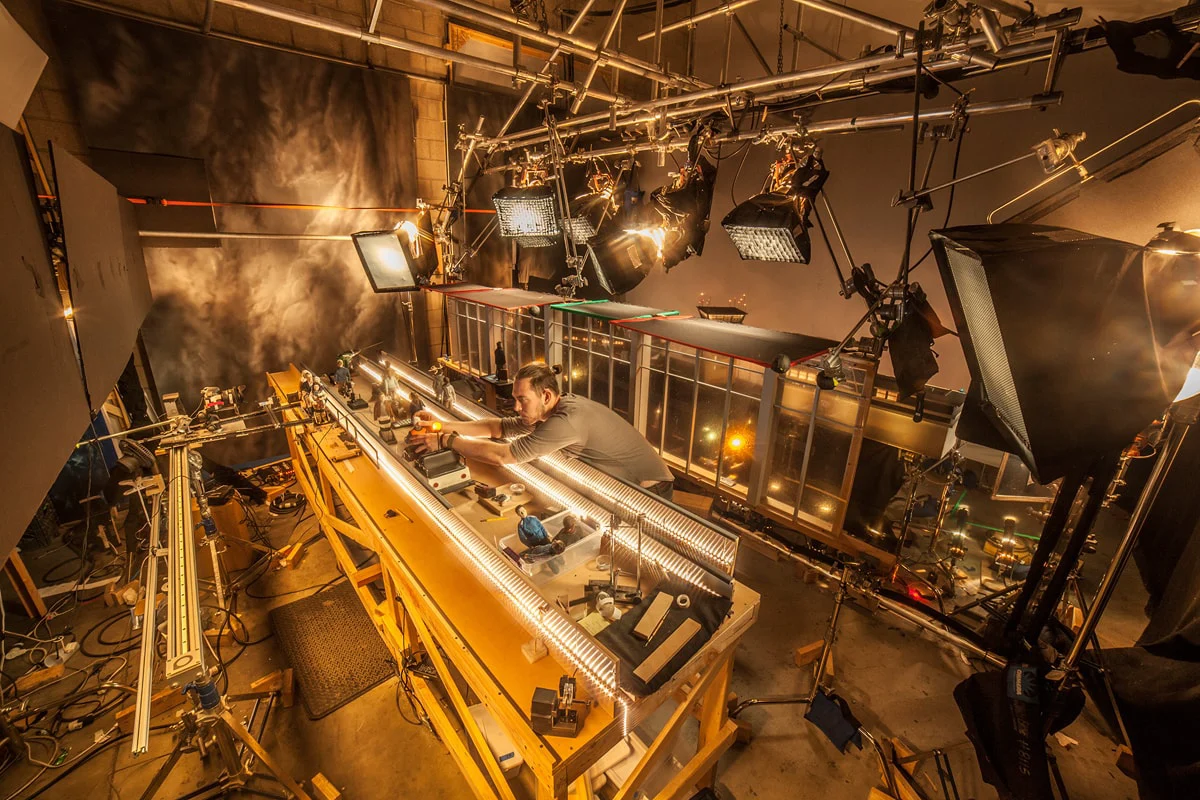
If you are preparing a TVC commercial project, start by organizing the brief, reference visuals, product or company information, delivery platforms, and copyright scope before viewingthe TVC Commercial Services Pageto translate abstract preferences into actionable production boundaries.