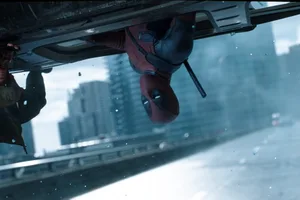
The core of the project initiation phase is defining action logic.
Before launching a TVC commercial project, the brand must clarify the product's core selling points and its interaction with the target audience. Props are not just visual decorations; they are physical media connecting user pain points with solutions. The planning team should identify high-frequency usage moments in real life and translate them into visible action sequences. Without clear action logic, subsequent shooting will fall into the trap of blindly piling up visuals.
Brands must prepare a detailed list of product functions and usage restrictions to prevent creativity from deviating from actual utility. The production team needs to assess the executability of actions, confirming whether special prop customization or stunt support is required. The risk at this stage is pursuing visual spectacle while ignoring the product essence, causing viewers to remember the visuals but forget the product. Deliverables should include a core action script confirmed by both parties as the basis for subsequent storyboard design. The criterion is whether the actions are repeatable and lifelike, ensuring viewers instantly understand the operational intent.
Pre-production Material Preparation and Scene Personnel Planning
Thorough material preparation is the foundation for efficient execution. The art director must collect reference images matching the brand tone based on the script and create mood boards to unify the visual style. Location selection must consider spatial depth and lighting conditions; on-location shoots require prior scouting to confirm power outlets and noise interference. Studio shoots require planning background construction schemes to ensure sufficient space for lighting setup.
In terms of personnel, besides the director and director of photography, professional prop masters are needed for item maintenance and replacement. Casting should focus on hand shape and body coordination, as many close-up shots in TVC commercials focus on operational details. The risk lies in temporary venue or actor changes causing stylistic fragmentation. It is recommended to create a detailed shooting schedule, arranging difficult action shots during periods of peak energy. The criteria are whether scene elements interfere with the subject's visibility and whether staffing can cover emergency response needs.
Storyboard Design Must Detail Prop Interaction Details
The storyboard script is the key link transforming textual concepts into visual language. The director and director of photography must jointly determine shot scale, movement trajectory, and the positional relationship of props within the frame. For TVC commercials emphasizing usage scenarios, close-ups often convey product texture and ease of operation better than wide shots.
Designers must mark contact points between props and actors' hands, force direction, and reaction time. For example, when demonstrating cleaning products, the process of stain removal requires precise planning of before-and-after visual transitions in the storyboard. The risk is that overly simplified storyboards drastically increase on-site communication costs. An exception is brand image films with large room for improvisation, but minimum requirements for key product exposure must still be retained. Confirmed storyboards should include reference examples to ensure consistent understanding of visual effects among all parties. The criterion is whether the storyboard clearly indicates focus changes and action start/end points to avoid on-site ambiguity.
Lighting and Material Restoration During Shooting Execution
On-site shooting is the process of implementing the storyboard; lighting setup directly determines the presentation effect of prop materials. Different materials such as metal, glass, or fabric require specific lighting schemes to highlight their texture and gloss. The cinematographer must coordinate with the gaffer to adjust angles, avoiding reflections that interfere with the recognition of product logos or key functional areas.
Actors' performances must align with daily usage habits, avoiding exaggerated movements that create a sense of falseness. The director should monitor screen details to confirm the continuity and naturalness of prop actions. Risks include color temperature inconsistencies caused by changing ambient light and prop damage affecting shooting progress. It is recommended to prepare backup props and back up footage in real time. If high-speed motion or macro shooting is involved, test equipment stability and focus accuracy in advance to ensure sharp, clear images. The criteria are whether highlights are overexposed losing detail, whether shadows retain sufficientceng ci (layers/depth), and whether action trajectories comply with physical inertia.
Post-Production Editing Builds Narrative Rhythm
The editing phase connects scattered shots to build a smooth narrative rhythm. Editors must adjust shot duration according to musical beats and voiceover speed to enhance immersion in product usage scenarios. For TVC commercials demonstrating complex operational processes, techniques such as acceleration, freeze frames, or picture-in-picture can simplify information density.
Sound design is equally important; ambient sounds and operational sound effects enhance the realism of the visuals. The risk lies in over-relying onte xiao (special effects) transitions, weakening the persuasiveness of the content itself. An exception is highly stylized creative shorts, which may break conventional editing logic. Internal reviews must be conducted before delivery to check for stiff action connections and ensure complete transmission of product information. Editing versions should distinguish between rough cuts and fine cuts to facilitate phased feedback from the brand. The criterion is whether viewers can understand the product's core function through visuals alone without voiceover assistance, and whether the rhythm feels neither dragging nor rushed.
Color Grading and Visual Unity Control
Color grading aims to unify the overall tone and create a visual atmosphere consistent with the brand tone. Footage from different scenes may have color deviations, requiring secondary color correction to adjust skin tones and product colors, ensuring the accuracy of brand identifier colors. Products emphasizing technology or natural feel should have distinct tonal tendencies.
Colorists must refer to brand visual guidelines, avoiding excessive color saturation that leads to distortion. The risk is inaccurate monitor calibration, causing significant display differences across various terminals. It is recommended to provide samples in multiple formats for the brand to preview on different devices. If CGI compositing is involved, ensure lighting matches between live-action footage and digital assets. Final grading should be completed in a standard monitoring environment, outputting a master version meeting broadcast standards. The criteria are natural skin tone restoration, product main colors and brand VI color values within allowable error margins, and overall tonality matching the preset emotional baseline.
Acceptance Checklist and Copyright Compliance Review
Before project delivery, the brand must verify items against the acceptance checklist. This includes resolution, frame rate, audio levels, subtitle spelling, and copyright information. Special attention must be paid to whether prop actions accurately reflect product functions to avoid misleading advertising. Authorization scopes for all used music, fonts, and stock resources must be confirmed, covering intended distribution channels and durations.
Archiving source and project files is also part of acceptance, facilitating subsequent secondary creation or modifications. The risk is omitting format requirements for niche platforms, hindering launch. It is recommended to check the latest technical specifications of each platform in advance. If involving portrait rights or location usage rights, confirm the validity of authorization letters. Upon acceptance, both parties sign the delivery confirmation, marking the formal end of the production phase. The criteria are that all technical indicators meet broadcast standards, legal documents are complete and flawless, and the final content matches the confirmed script.
Applicable Boundaries and Non-Applicable Situations
TVC commercials are suitable for scenarios requiring brand awareness building, product detail demonstration, or emotional value transmission. For short-cycle activities needing only rapid traffic generation or sales conversion, high production costs may not be cost-effective. Additionally, if product functions are highly abstract or lack physical form, relying solely on prop actions makes intuitive expression difficult, requiring animation or narration support.
Non-applicable situations include projects with extremely limited budgets but high image quality requirements, extremely short distribution cycles preventing refined post-production, or products in early R&D stages with undefined functions. In these cases, lightweight social media short videos or AIGC-generated content are recommended for testing. Brands should rationally assess their needs and choose matching production forms to avoid resource mismatch. ONCE provides complete process services from pre-production to delivery for corporate promotional videos to overseas marketing videos, customizing solutions based on specific goals. It is recommended to communicate deeply with professional teams before project launch to clarify communication goals and expected effects. Through scientific process management and professional technical execution, ensure every frame effectively serves brand value transmission. For further discussion on production details, contact ONCE for customized consultation.
If you are preparing a TVC commercial project, you can first organize the brief, reference images, product or company materials, delivery platforms, and copyright scope, then view theTVC Commercial Service Pageto ground communication from abstract preferences to executable production boundaries.