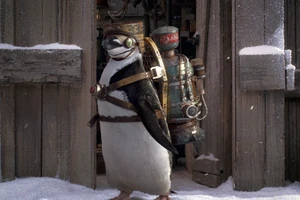
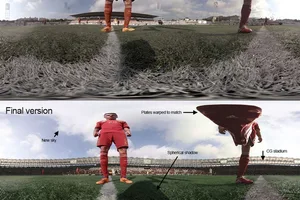
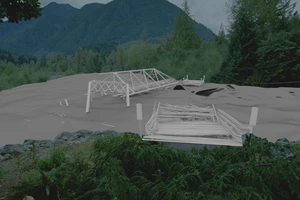
The acceptance criteria for edges and motion must be written into the proposal at the project initiation stage.
TVC commercial post-production compositing is not a step that begins only after editing is completed. At the project initiation stage, the brand must confirm with the production team which elements in the composite are live-action, which are CGI or AIGC generated, and which are a mix of live-action and digital elements. This confirmation directly determines how to light, how to move the camera, and how to record reference data during shooting.
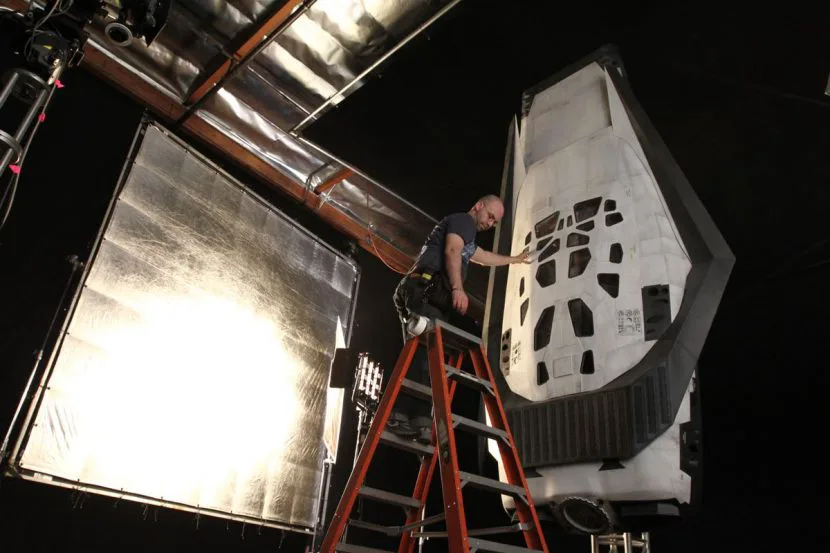
The brand needs to prepare a visual reference list, specifying acceptable compositing styles. For example, glass bottle reflections common in product commercials, metal surface highlights, and the fusion of human skin with virtual backgrounds all need to have standards fixed with reference images during the pre-production stage. The production team must then output a compositing technical specification, stating the precision requirements for edge detection, such as pixel-level or sub-pixel-level edges, the sampling method for motion blur, and the tolerance range for dynamic tracking.
The judgment criteria are: if there is an offset of more than 1 pixel at the edges between the composited elements and the live-action elements, or if the motion trajectory has a delay of more than 2 frames compared to the live-action shot, this shot should be deemed non-compliant. The risk is that if the brand does not participate in establishing these standards, the final acceptance will rely solely on feel, leading to repeated revisions. The exception is that if the creative itself pursues a rough collage feel or intentionally distorted visual effects, the edge and motion standards can be relaxed, but this must be confirmed in writing at project initiation.
The shooting phase should reserve sufficient edge information for post-production compositing.
The edge quality of TVC commercial post-production compositing depends half on the quality of the footage shot. The shooting team must record the following information on set for each shot requiring compositing: lens focal length, aperture value, shooting distance, camera motion trajectory, lighting angle and intensity, and reference markers in the scene.
The specific action is to place a grayscale reference card and a size scale before shooting, ensuring they are visible in the frame, so that during post-production compositing these markers can be used to calibrate edge positions and scaling ratios. For motion shots, use a tripod head with encoders or a motion control system to record precise camera displacement data, facilitating 3D tracking in post-production.
The judgment criteria are: if there are fast-moving objects in the shot, such as a rotating product, fluttering fabric, or a running person, the shooting frame rate needs to be high enough to capture clear motion edges. The risk is that if lighting data is not recorded during shooting, the light and shadow direction cannot be matched during post-production compositing, making the edges appear stiff. The exception is that if the composited elements are entirely AIGC-generated and do not require live-action edges, the shooting phase can be simplified, but additional environmental lighting information needs to be generated.
In the post-production compositing phase, perform edge detection first, then motion matching.
The basic post-production compositing workflow is: first perform edge extraction on the live-action footage, then perform a unified edge assessment on the composited elements, and finally adjust the motion trajectory. The brand and the production team must conduct step-by-step acceptance and not just look at the final cut.
Step one, edge detection. Use edge detection tools in compositing software, such as Nuke's EdgeExtend or After Effects' Roto Brush, to output edge mattes. Check whether the edges are clean, without jaggedness, semi-transparent residue, or incorrectly included background pixels. The judgment criteria are: when the edge matte is zoomed in to 200%, the contour line should be continuous and unbroken, and the transition area should not exceed 2 pixels.
Step two, motion matching. Compare the motion trajectory of the composited elements with the tracking points of the live-action shot. Use point tracking or planar tracking tools to output an error curve. The judgment criteria are: the average error is less than 0.5 pixels, and the maximum error does not exceed 1.5 pixels. If the error is too large, the tracking points need to be readjusted or manual keyframes used.
The risk is that if only overall motion matching is done and local motion is ignored, such as the swing of a person's arm or the rotation of a product, the edges will tear in local areas. The exception is that if the composited elements are static, such as in background replacement, motion matching can be simplified to a single-frame unified assessment, but the lens breathing effect needs to be handled.
Practical methods for edge verification, using black-and-white contrast and channel checks.
Edge verification cannot rely solely on the composite preview; professional inspection methods must be used. The production team should output the Alpha channel of the composite image and check the edges in black-and-white mode. The specific action is to display the Alpha channel separately and observe whether the edges are smooth and if there are any black or white noise points.
Another method is to use an edge highlight filter, such as overlaying an EdgeDetect node in Nuke to display the edge lines in color, and then compare with the original image. The judgment standard is that the edge lines should completely adhere to the object contour, with no offset or blurring. For semi-transparent objects, such as glass or smoke, the edges need to retain a transparency gradient and cannot be hard-cut.
During acceptance, the brand can request the production team to provide edge inspection screenshots, including three images: the original footage, the composite result, and the Alpha channel. The risk is that if only the final image is checked, the human eye's sensitivity to edges is limited, making it easy to overlook minor flaws. An exception is if the composite element is a solid color background, such as green screen keying, the edge inspection can be simplified, but additional checks for color spill and edge residue are required.
Practical methods for motion verification, using speed curves and frame sequence comparison.
The core of motion verification is checking whether the motion of the composite elements is consistent with the live-action shot. The production team should output motion speed curves to compare the speed changes of the composite elements and the live-action tracking points. The judgment standard is that the peaks and valleys of the speed curves on the timeline should be synchronized, with a phase difference not exceeding 1 frame.
The specific action is to export the position keyframes of the composite elements as data and perform a difference calculation with the data of the live-action tracking points. If the difference exceeds a preset threshold, such as 2 pixels, the keyframes need to be adjusted. For complex motions, such as camera zoom combined with object rotation, 3D tracking tools must be used to check whether the motion in the depth direction matches.
During acceptance, the brand can request the production team to provide a motion trajectory overlay, displaying the motion path of the composite elements as lines for comparison with the motion path of the live-action objects. The risk is that if only a single frame is checked, stutters or jitter during motion cannot be detected. An exception is if the creative requires exaggerated motion, such as slow motion or acceleration, in which case the motion matching standard can be relaxed, but visual continuity must be maintained.
Delivery acceptance checklist, recording edge and motion status by item.
Delivery and acceptance for TVC commercials cannot rely solely on viewing the final cut; it must be recorded by item according to each stage. The brand should prepare an acceptance checklist including the following items: edge detection results, motion matching errors, color consistency, noise matching, sharpness matching, and the final rendered frame sequence.
Specifically, for each composite shot, record the pixel error of edge detection, the frame difference of motion matching, and the color deviation value. This data must be written into the acceptance report as a basis for revisions. The acceptance criteria are: edge error less than 1 pixel, motion frame difference less than 1 frame, color deviation within 5%, and noise level consistent with the live-action footage.
The risk is that if only verbal confirmation is made, disputes may arise during later revisions. An exception is that if the delivery platform is social media, where image quality requirements are lower, the standards can be appropriately relaxed, but this must be stated in advance.
Cases where this does not apply: do not use the standard acceptance process in these situations
Not all TVC commercials require strict edge and motion acceptance. The following cases can be simplified or skipped: pure live-action with no composite elements, pure AIGC generation with no live-action footage, creative style being abstract or glitch art, and delivery platform being mobile vertical screen with heavy compression.
In these cases, excessive focus on edges and motion will instead delay project progress. The brand should judge: if the image itself pursues a rough or distorted effect, then edge imperfections can become part of the style. The risk is that blindly applying the standard process will increase production cost and time. The exception is that even if stylized, the recognizability of the main subject must be ensured, and the product cannot be deformed due to edge issues.
Next step recommendation: do a test shot before full rollout
For brands preparing to launch a TVC commercial project, it is recommended to produce a test shot containing key composite elements before formal shooting. Use this shot to verify whether the edge and motion standards are feasible, while allowing the production team to familiarize itself with the process. The test shot does not need to be a complete final cut, but should include the most complex composite scene, such as product rotation plus background replacement.
Adjust the acceptance standards based on the test results, then proceed to formal shooting and post-production. This reduces rework and gives the brand a clearer expectation of the final result. If the test shot cannot pass acceptance, the creative concept or technical approach needs to be re-evaluated, rather than forcing it forward.
If you are preparing a TVC commercial project, you can first organize the Brief, reference images, product or company materials, delivery platform, and licensing scope, then checkTVC Commercial Service Page, translating communication from abstract preferences into executable production boundaries.