Whether virtual production suits a brand depends on its specific shot requirements. Sports ads demand high-speed action, multi-subject framing, and complex backgrounds; automotive shoots often involve managing paint reflections and ambient light; consumer electronics focus on edges, materials, and version variations; while spatial narratives require switching between multiple locations within limited shooting time. Themes provide direction, but only the shot list determines the production plan.
First, Categorize by Shot Requirements
Sports and ensemble shots are ideal candidates for initial virtual production evaluation. When actors, athletes, vehicles, and digital crowds must move within the same perspective, seeing the environment, ground, and lighting relationships on set helps directors better judge whether actions work. High frame rates, screen refresh rates, camera tracking, and real-time rendering must all be verified together during test days.
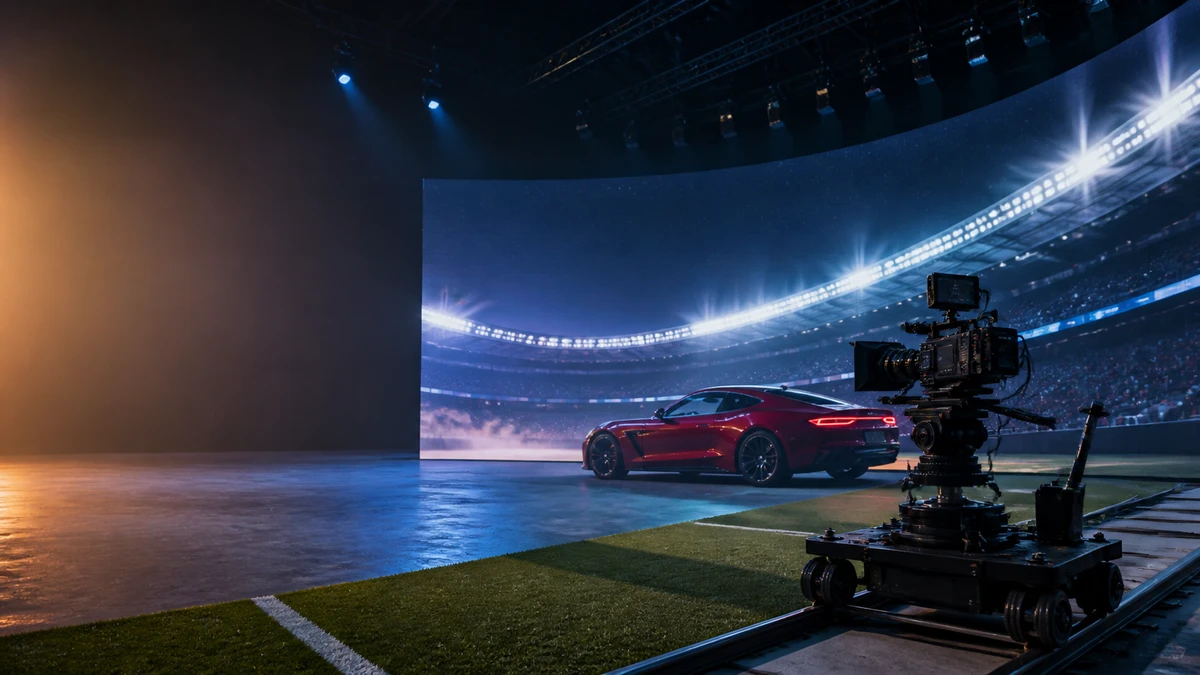
For automotive and highly reflective shots, determine if reflections require on-set interaction. If car bodies need to reflect cityscapes, tunnels, or racetracks, LED or hybrid solutions offer DPs more direct references. Close-up shots of paint, glass, and wheels still require physical material testing; black levels, color accuracy, and reflection shifts cannot rely solely on on-set experience.
Consumer electronics and product close-ups don't necessarily require full LED walls. Small products, macro movements, transparent components, and intricate buttons often rely more on practical sets, CGI, or a combination of both. Virtual production becomes most valuable when products must interact with people, spaces, or sequential versions, and when early confirmation of ambient lighting and composition is desired.
Spatial narratives benefit from integrating digital asset reuse into pre-production. If one set must serve as a city, showroom, factory, and futuristic space, real-time environments enable rapid scene changes during shooting. This requires clearly defined assets, shot scopes, and versioning rules. If backgrounds remain in flux, green screen or post-production compositing may allow greater flexibility.
Why Sports Commercials Often Expose Issues
Publicly available behind-the-scenes footage from a football TVC offers a valuable stress test. The production team developed an Unreal Engine system for stadium crowds, utilizing extensive motion capture, facial animation, and scan data, with details adjusted based on camera visibility. Principal photography was completed in two days on a soundstage, allowing night lighting, stadium backgrounds, and crowd movement to be managed under unified, controlled conditions.
The challenge with this approach lies in ensuring the entire sequence works cohesively. High-speed segments require verification of camera shutter angles, simulated frame rates, display refresh rates, ground contact, and post-production cleanup. Public documentation notes that crowd agent counts once exceeded 40,000, prompting the team to implement level-of-detail layering by stadium zone and shot scale. While this case should not set a universal speed benchmark, it demonstrates that virtual production efficiency stems from completing asset and performance preparation in advance.
Four key factors must be calculated.
The first is digital assets and reusability. The required fidelity for environments, vehicles, crowds, lighting, and materials determines pre-production time investment. Shooting a single fixed-background shot yields limited asset reuse value. Upfront costs are only amortized across subsequent shots when multiple locations, shot scales, and iterations are required.
The second is stage infrastructure and synchronization. Camera tracking, lens calibration, real-time rendering, LED displays, timecode, and genlock must be validated as an integrated system. Epic’s In-Camera VFX documentation places Live Link, nDisplay, camera calibration, and time synchronization within a single workflow chain. If any component remains unverified during testing, shoot days risk becoming troubleshooting sessions.
The third is on-set iteration and performance. Virtual environments are editable, but modifications are not cost-free. Scene versions, rendering load, screen brightness, parallax, and actor blocking require dedicated tracking. Crowds, vehicles, and particle effects must have detail levels assigned by shot scale to ensure both visual quality and stable real-time frame rates.
The fourth is post-production and delivery. While LED walls provide early environmental lighting, reflections, and background context, they do not automatically eliminate moiré, edge artifacts, color matching issues, or version adaptation needs. The later landscape, portrait, short-form, and platform-specific aspect ratios appear in the brief, the more likely rework will concentrate on the most difficult shots to fix.
If you are still choosing between LED volumes and green screens, start by reading "Virtual Production vs. Green Screen: Four Key Factors for Brand Commercials," which compares the impact of assets, on-set workflows, post-production, and revisions in a single framework.
Automotive and consumer electronics briefs must address reflections.
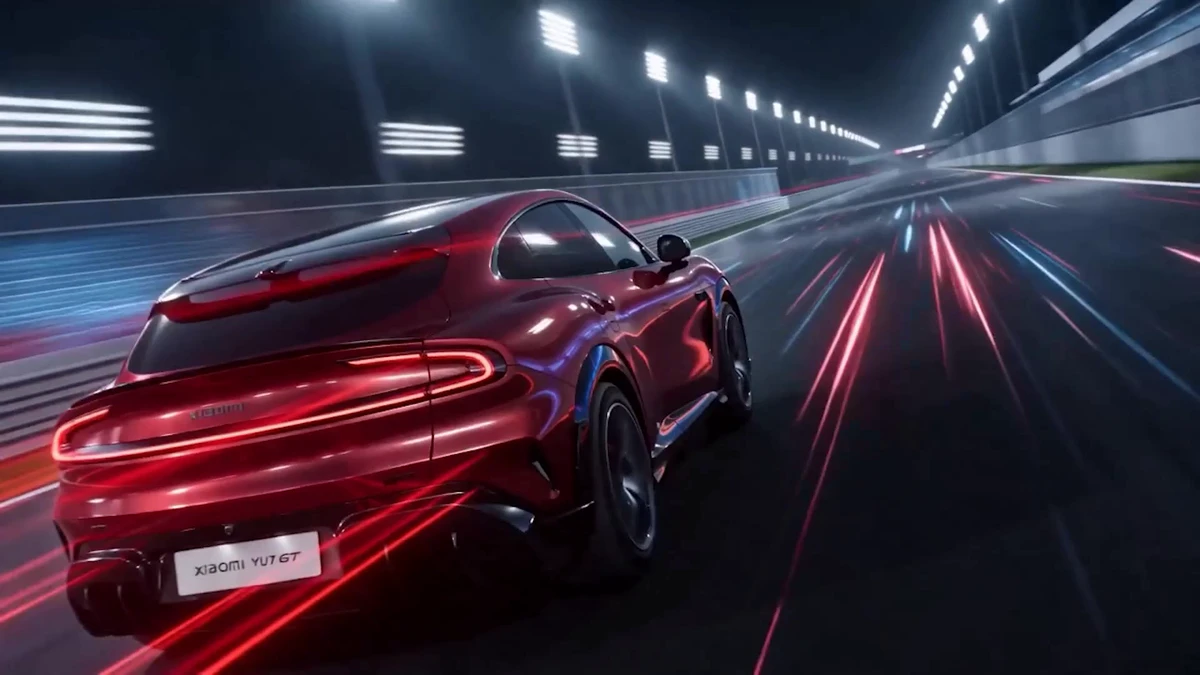
On-set decisions for automotive shoots often begin with how the environment reflects on the car paint. For high-speed motion, digital backgrounds, ground surfaces, and lighting allow the team to evaluate both speed and reflection simultaneously. For extreme close-ups of paint, glass, or metal, practical samples and controllable lighting remain essential, as virtual backgrounds only partially address these needs.
For consumer electronics, first determine whether the product requires physical interaction. Actions such as pressing buttons, screens lighting up, opening packaging, and products landing on surfaces are easier to capture with tactile authenticity through live-action filming. When a product must maintain consistent motion and lighting logic across multiple environments, CGI, live action, and virtual sets can be combined.
Ask at least eight questions in the brief before shooting
- Which shots require on-set visibility of final backgrounds, parallax, and environmental reflections?
- Which actions require physical contact with real ground, vehicles, props, or products?
- Have camera movement, focal length, shutter speed, and delivery aspect ratio been finalized?
- What practical material tests are required for car paint, glass, metal, and screen black levels?
- Who is responsible for creating, maintaining, and rolling back digital environment, vehicle, character, and crowd assets?
- Who is responsible for on-set acceptance of tracking, lens calibration, timecode, and genlock?
- Who has final decision-making authority when issues arise with scene changes, version switching, or real-time performance?
- Will landscape, portrait, short-form, and platform safe areas affect shot design?
If several of these eight questions remain unanswered, conducting a brief representative shot test is safer than booking the full stage outright. The test should cover the most complex motion, the most sensitive reflections, and the most challenging crop in the final deliverable.
Quick Assessment
Brand commercials suited for virtual production typically feature clear environmental interaction, significant camera movement, reusable digital assets, or a need for rapid on-set spatial verification. Projects with only a simple background, predominantly product close-ups, or an undefined post-production direction may not require a full virtual stage.
The final approach may be LED, green screen, CGI, live action, or a hybrid. Selection should be based on whether shots can be evaluated correctly earlier, assets reused across versions, on-set systems operated on schedule, and sufficient post-production flexibility retained. To incorporate these criteria into an actionable Campaign Content Brief, start with ONCE Campaign Content Begin discussions on creative concepts, the main film, short videos, and multi-platform versions.
Material Review
- Research Seed 0868 "The virtual production behind the soccer TVC for Caledon Football Club"
- Epic Games In-Camera VFX Overview
- Epic Games In-Camera VFX Best Practices
- Epic Games In-Camera VFX Quick Start
- Epic Games nDisplay Overview