Your overseas team has product photos, samples at the Chinese factory and a monthly content target. An editing subscription sounds like the missing piece. It may be—but first establish who will create the footage that does not yet exist.
ONCE recommends comparing services from the inputs you can actually supply. A plan that starts with uploaded footage and a plan that starts with a shipped product can both deliver videos each month. They are not necessarily undertaking the same production work.
What two providers actually describe
Vidchops’ current service pricing and FAQ page, checked October 25, 2026, describes uploading video and submitting editing requests. It also says it cannot create project footage from scratch or provide complex original 2D and 3D animation.
Baker Brothers Productions’ Ship & Shoot article, published August 25, 2026, describes clients sending products or briefs, followed by its shooting and delivering content.
Those pages establish the providers’ stated service designs, not proven quality, capacity or business results. Nor do they define every subscription on the market. Their useful contrast is the starting point: who turns the brand’s existing resources into the footage required for the edit?
Inspect usable coverage, not folder size
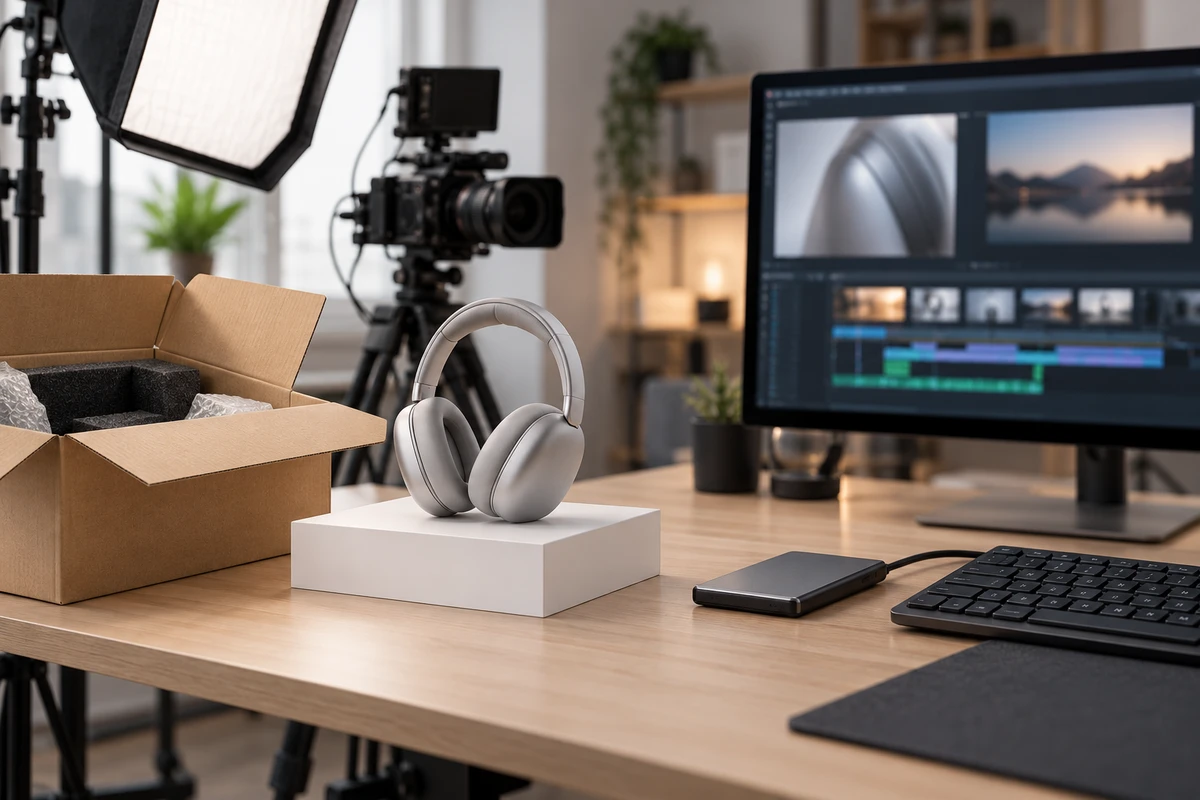
Imagine a hypothetical headphone brand with clean product photos and an advertisement for its previous generation. It wants monthly demonstrations of the new model. The photos may describe appearance; the older film may contain useful brand atmosphere. Neither automatically supplies accurate new-model pairing, fit or control footage. This is not an ONCE customer case or a cost study.
There are two questions: does a file exist, and can it perform the intended communication task? A large archive may still lack a complete action. Conversely, when the right footage already exists, buying another shoot simply because a package sounds more comprehensive may add little.
Choose one genuine upcoming video before comparing monthly plans. Do not evaluate a service using a perfect sample brief, then expect ordinary assignments with missing inputs to behave the same way.
ONCE’s reverse-intake worksheet
For each essential segment, record four things: the intended message, the actual material available, the missing production action and its owner. This is an original planning method, not a platform standard or completed ONCE test.
- Appearance: identify current-SKU footage separately from still photographs. Decide whether the desired motion and angle require new capture.
- Operation: locate a clear beginning, action and visible result. If absent, assign an approved demonstration and its filming rather than writing “fix in post.”
- Context: establish whether owned footage, licensed stock, a new shoot or a clearly conceptual treatment can do the job.
- Language and packaging: determine whether editable material exists or whether translation, layout rebuilding and old on-screen information require additional work.
Every line should resolve to a real file or a defined task. Stock and generated imagery can contribute to expression, but a plausible-looking action should not stand in for product-function evidence that needs approved information and a real demonstration. A concept should remain distinguishable from a recorded product test.
Buy the work that closes the gap
When accurate footage is ready, compare editing coverage: review and selection, narrative structure, captions, sound and adaptations. Ask whether the brand supplies selects or the editor reviews the archive. Finished runtime alone does not describe that effort.
When the physical product exists but the footage does not, compare ongoing production that includes capture, or commission a defined shoot before recurring editing. Confirm samples, settings, performers or hands, product support and access to reusable source material. Shipping a product is not the same as delivering an approved brief.
For a mixed catalogue, existing footage can feed regular edits while new products receive planned capture. Tie each shoot to upcoming needs instead of building an archive without a use plan.
Compare the complete work scope: preparing usable inputs, the monthly service itself and any excluded production or handover. Avoid counting the same task twice. This is a procurement method, not a price calculator using invented hours or industry averages.
Pilot the assignment with the weakest coverage
Give the prospective team a real brief and representative source files. Ask what can be completed, what needs new capture and what requires brand confirmation. Agree the scope and price of any production trial; this method does not depend on free strategy or speculative work.
Review both the film and the division of responsibility. Can the brand keep supplying the agreed inputs? Did the provider actually include the promised footage creation? If much of the work is filling undefined gaps, change the service scope before treating the editor as the bottleneck.
For a partner such as ONCE, the opportunity worth testing is a clear combination of input review, targeted capture and ongoing editing. It is not a claim that ONCE already sells this exact subscription or has measured a margin improvement. Productization still requires real demand, execution records and cost assessment.
When briefing ONCE’s production team, bring an actual upcoming video, sample materials and the products available for filming. Agree who creates the missing pictures before asking how many finished videos a monthly fee buys.
Sources checked October 25, 2026. A precise publication date was not established for Vidchops’ current page. Its inconsistent duration, caption-pricing and turnaround statements are not used here, and this is not a price comparison. The original AI cover is conceptual, not a customer production or measured service test.