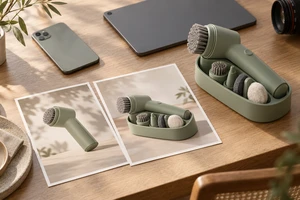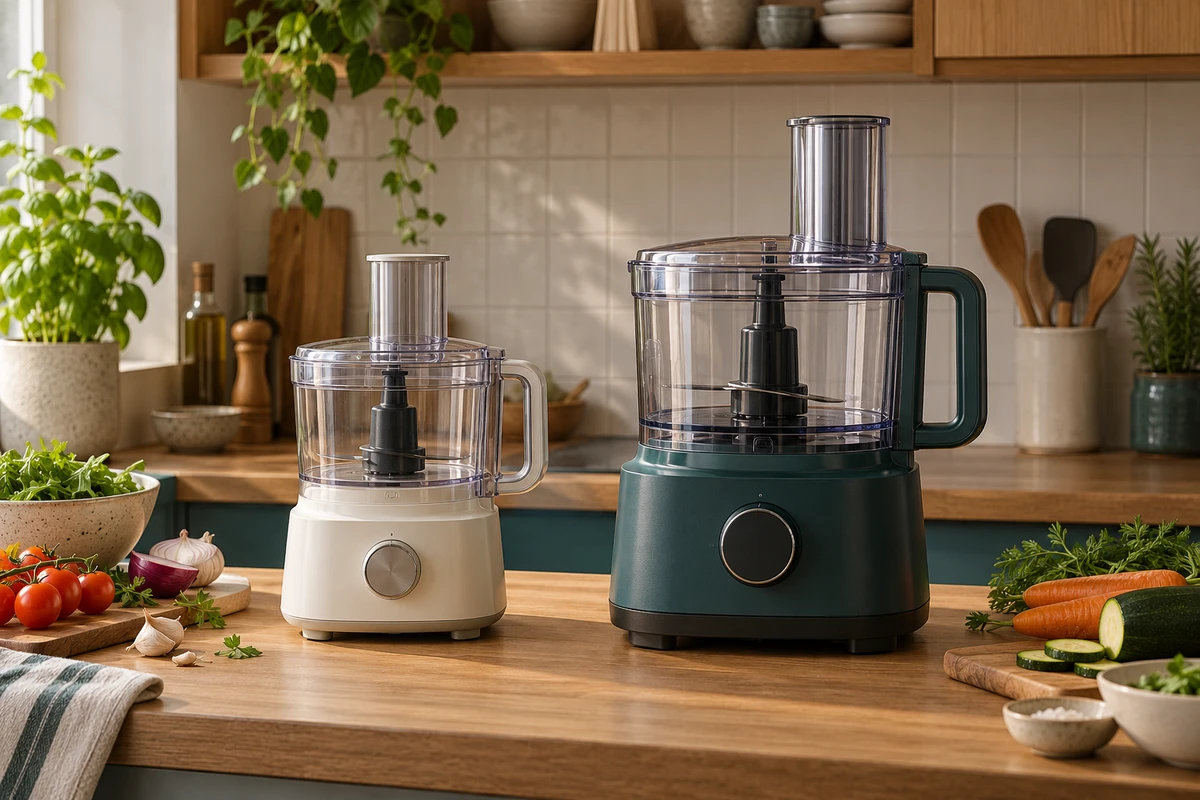
A shopper rejects a countertop appliance because it will not fit the kitchen. The next product video celebrates a more capable model—but never establishes whether that model solves the space problem. The brand has advertised another item, not explained a useful substitute.
For overseas brands commissioning multi-model content from a China-based production partner, the brief should begin with the rejected option and the buyer’s reason for rejecting it. More features are not automatically the answer. The useful comparison shows what remains possible after the switch, what improves and what the customer must now accept.
A recommendation slot is not a complete substitution claim
Shopify’s current Search & Discovery recommendation guidance, checked October 25, 2026, distinguishes complementary add-ons from related products that can provide potential alternatives. Its automatically generated related recommendations can draw on purchase history, descriptions or related collections, and can change.
ONCE’s inference is limited: being recommended does not by itself establish that another item satisfies a particular shopper’s hard requirements. A recommendation can be worth exploring without being an unconditional replacement. Confirm the actual model, market version and relevant product facts before turning that relationship into a confident creative claim.
Baymard’s March 23, 2021 research article on cross-sell information explains why both alternative and supplementary recommendations need adequate product details. Names and prices, for example, should not have to be inferred from a thumbnail. This is useful information-design context—not a current industry percentage or evidence that a new comparison film will increase sales.
ONCE’s switch brief
Before scripting a proposed substitute, write four things down:
- The reason to leave. What specific condition made the original unsuitable? Avoid a generic desire for something “better.”
- The requirements to keep. Identify constraints the shopper cannot give up: the intended task, available space or relevant connection requirements. Verify these before endorsing a switch.
- The gain and the sacrifice. Record the supported advantage alongside changed capacity, footprint, preparation or operating steps.
- The information that stays on the page. Keep current price, exact variant and detailed specifications accessible beside the creative. Do not permanently bake every changing detail into reusable footage.
This is a proposed ONCE planning method, not a platform standard or a completed customer test. The point is to decide whether there is a useful recommendation to explain before paying to film it.
Show the consequence, not just a winner
Imagine a hypothetical brand comparing compact and larger-capacity food processors for a small-kitchen shopper. No actual specifications or performance results are assumed here.
First establish the relevant space requirement: placing the appliance is not necessarily the same as using it or removing its parts. A product that fits inside a cabinet while switched off has not thereby been shown to operate there. Plan the actual placement and operating actions in the same approved setting, supported by accurate dimensions.
If batch size matters, create a separate demonstration task approved by the product owner. Use meaningful comparable conditions and identify the configuration. Do not make one product appear larger by moving the camera closer, or hide steps to imply convenience the product does not provide. A measured result needs an approved method and a real record; without that, do not add a speed or efficiency claim.
Not everything needs a filmed test. Matched photographs can explain structure; a short action can explain removal or storage. Exact fit ranges and current commercial information may be better served by readable text or a table. Spend on motion where the changed experience is difficult to understand in a still.
Review the recommendation in both directions
A shopper willing to accept a larger footprint for a different capacity is not equivalent to one who chose the compact option because space is non-negotiable. The products may appear as options for each other, but the reason to switch has to stand separately for each audience.
Run a reverse review: swap the original and proposed alternative in the script. If “a complete upgrade” works just as easily in both directions, the creative may not be explaining a meaningful difference. If the trade-off reverses, preserve the separate conditions rather than forcing one verdict into every version.
This is an editorial logic check, not consumer research. Before release, also check the destination: does the demonstrated version match the purchase link, can the decisive information still be read on mobile, and has a short cut removed the qualification that made the recommendation appropriate?
Buy relationship assets as well as product assets
A reusable library needs individual model footage. It also needs an approved account of the relationship between models: for which buyer problem, under which retained requirements, with which accepted changes, and confirmed by whom.
That account should travel with the relevant comparison assets. A folder for Model A and another for Model B do not give a future editor permission to infer that either replaces the other. If the facts change, revisit the affected relationship and its creative; do not assume every single-product shot has become unusable.
Scope single-model coverage, paired demonstrations, fact checking and future updates separately. A small range with one simple difference may only need a comparison image. Commission video when the action changes the decision—not because every pair of SKUs needs another film. No universal saving, price or sales improvement is asserted here.
Bring one genuine reason shoppers reject a model, along with approved product information, to ONCE’s production team. Decide whether the alternative answers that reason before deciding how persuasively to shoot it. A useful product comparison helps a shopper choose; it does not need to declare every new option the winner.
Sources checked October 25, 2026. Shopify’s help page is current documentation without a precise publication date established here; the Baymard article was published March 23, 2021. The appliance example and original AI cover are conceptual, not customer work, specifications or a comparative test.