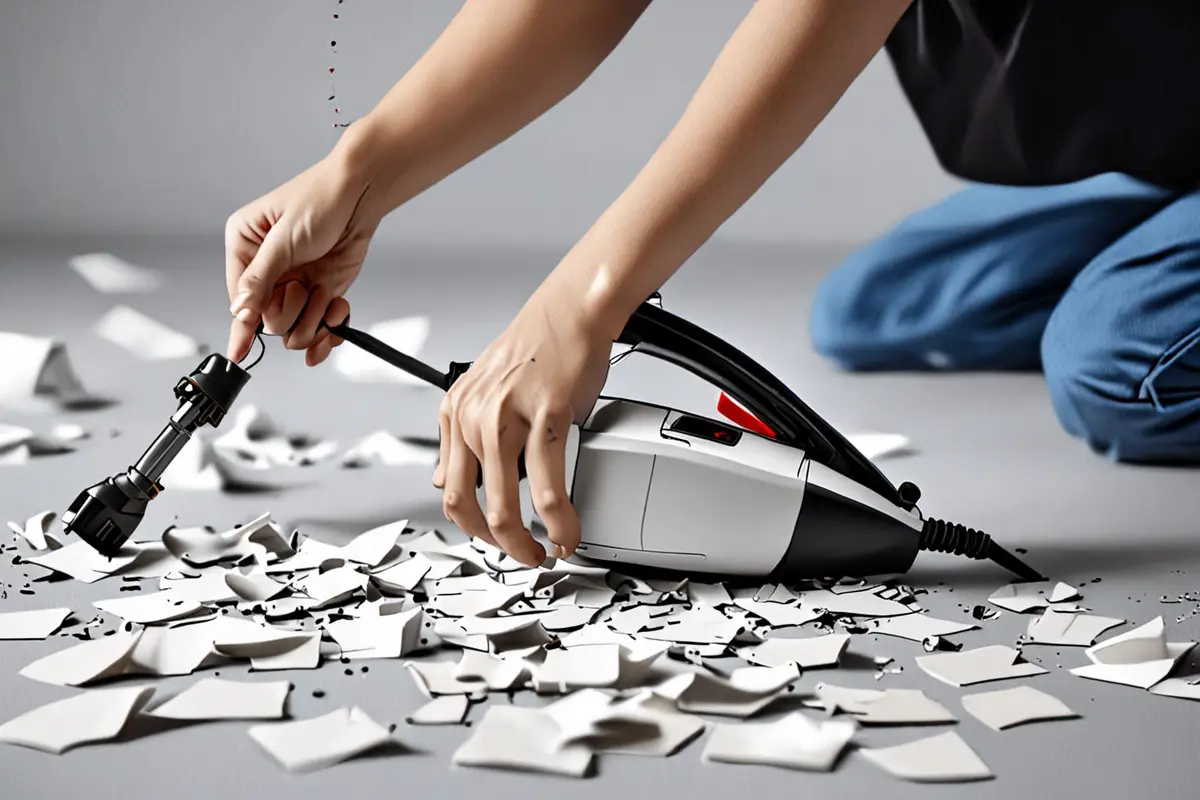
Imagine a fictional ad for a desktop cleaner. Someone spills coffee grounds, reaches for a paper towel, and only pushes the mess farther across the table. Then the product enters. One pass turns the chaos into an absurdly neat line. The moment is funny not because the actor announces a joke, but because a familiar failure is resolved by one unexpected, legible product action.
The product is not a sponsor that appears after the comedy. It causes the reversal. Remove it and the last beat no longer works. That distinction matters in product advertising: the audience should remember not only the joke, but also what completed the change.
Being Funny and Being Remembered Are Different Jobs
Humor can make an ad more watchable. Martin Eisend's 2009 meta-analysis combined 369 correlations and reported that humor generally improved attitudes toward the ad, attention, and positive affect. It did not show that humor automatically improved every cognitive outcome. The practical boundary is simple: laughter is attention, not automatic brand attribution.
A 2011 paper framed the problem in its title: That was funny, but what was the brand again? Cline and Kellaris tested humor strength together with message relatedness; the abstract reports better memorability when humor was both strong and related to the message. These studies used particular samples and ad materials, so they cannot predict sales for a new campaign. They do, however, point to a useful creative question: do the joke and the product claim share the same causal chain?
Start with a remove-the-product test:
- If the relationship, misunderstanding, and reversal remain complete without the product, the brand is only signing the film.
- If any competing product could replace it without changing the joke, viewers may remember the category but not the brand.
- If the product's structure, action, or feedback determines how the reversal happens, humor can begin to carry product meaning.
This does not mean every joke must recite a benefit. It means the important change in the story cannot be unrelated to the product.
Find Humor in Real Friction, Not in an Imported Meme
The most reliable comic material often lives inside small, recognizable usage frictions: a lid that almost closes, a cable that catches at the last moment, a cleaning tool that pushes debris farther away, or a person trying to finish a quiet task while the environment keeps producing noise.
Write the usage moment in five beats:
- A person has an ordinary goal.
- A real friction sends the action off course.
- The person tries an excessive or mistaken solution.
- The product changes the causal chain through a real mechanism.
- The person or environment delivers a restrained reaction.
The joke is rarely just beat four, when the product appears. It comes from the expectation built in beats two and three being rewritten by the product. The product becomes the verb that completes the reversal, not an instruction manual inserted into the scene.
Consider another fictional example: a storage box with a clear locking response. A person presses an old lid shut with their whole body three times. Each time they release it, the lid springs open. The new product closes with one light press and an authentic click. The person remains frozen in the pose they expected to need, only to discover the task is already over. The humor comes from the delay between bodily habit and product feedback. Whether the lock actually behaves this way must still be confirmed with the physical product; comic sound design cannot invent a capability.
Route the Joke Through the Product
A useful product joke connects at least four nodes: expectation, violation, product result, and brand attribution.
Establish a Legible Expectation
The audience must understand what the person wants before it can feel the deviation. This does not need a long explanation. A repeated action, a desire for order, or a clear eyeline can be enough. If the opening must explain a world, a backstory, and three benefits at once, exposition will slow the comedy before it starts.
Make the Violation About the Product Problem
A surprise animal, a fall, or a sudden surreal set may be funny. If it has no relationship to the product problem, attention moves away from the product. A stronger violation enlarges a small usage truth: excessive caution, a wrong habit, an overconfident expectation, or a body still following the old method.
Show the Result Instead of Announcing It
The product outcome must be visible. A cleaner should leave a readable path. A box should reach a verifiable locked state. A noise-control experience should first establish the source and the wearing action. A character saying “that was easy” is not evidence. ONCE's article on offscreen space in product advertising explores the related boundary between useful omission and missing product proof.
Place the Brand Where the Causal Chain Resolves
If branding arrives too late, viewers may store the joke as an independent sketch. If it arrives too early, it can announce the reversal before it happens. A more natural approach lets product form, movement, sound, or packaging participate in the cause first, then confirms the brand when the result is understood. The brand is carried back into memory by the joke rather than pasted onto it.
Performance Can Reveal the Joke Too Soon
Actors can accidentally perform the comedy out of a product idea. A comic face before the problem occurs, a supporting character looking toward the solution too early, or an obvious camera push that says “laugh here” can turn surprise into advance notice.
Performance works better when the character first believes the situation is real. The goal is sincere and even the wrong solution has logic. After the reversal, the reaction does not have to become larger. A body that is half a second behind the result, or a hand that no longer knows what to do, can protect the product's leading role better than a broad expression.
Shoot different reaction intensities rather than three copies of the same take:
- almost no reaction, only a stopped action;
- the eyes verify the result before the body follows;
- the character tries to hide the old habit.
In review, do not ask only which take is funnier. Ask which one lets the viewer read the product result before reading the embarrassment. Reverse that order and the ad may become only a performance clip.
Editing and Sound Decide When the Audience Understands
There is no universal millisecond formula for comic timing. A pause that feels long in a six-second cut may be necessary after a complex action. A better method is to separate the scene into setup, deviation, reveal, and aftermath, then give each the time needed for comprehension.
Do not cut all four beats on musical accents. The setup can be steady, the deviation can arrive slightly early, the product result needs readable time, and the reaction can arrive later. ONCE's guide to commercial editing rhythm makes the same distinction: music, action, and comprehension run on different clocks.
Sound can spoil a joke before the picture does. An exaggerated effect placed before product contact explains the reversal in advance. A laugh track, comic music, or an overdesigned pause can also turn a believable product situation into a sketch. Product-relevant sounds usually come from real contact: locking, attaching, sliding, stopping liquid, or an environment becoming quiet. They are both timing devices and parts of the result.
Run a muted version as well. If the product solution becomes incomprehensible without the sound effect, the causal chain is fragile. Captions can communicate dialogue and meaningful sounds, but they cannot repair a result the camera never showed.
A Short Cut Must Preserve the Smallest Complete Cause
A hero film can show repeated failed attempts. A 15-second version may keep one mistake and one product reversal. A six-second cut might need only “old habit begins, product result is already complete, body has not caught up.” The protected information is not every frame. It is who wants what, what changes the situation, and why the change belongs to this product.
Keep only the broadest reaction and the ad becomes a meme. Keep only the product close-up and the humor disappears. Re-stage the same causal chain for vertical, muted, and shorter versions instead of trimming a punchline from the end of a master film.
Let GenAI Expand Variations, Not Choose the Target
Generative AI can help a team explore alternative frictions, settings, props, and reactions. But a generic instruction to “make it funnier” is not a neutral creative operation.
A 2025 Scientific Reports study conducted a preregistered audit of 600 generated images across 150 prompts. When images were made “funnier,” representation shifted across stereotyped groups; older, visually impaired, and higher-body-weight people became more likely to appear. The study examined a particular system and image task, not every model. It still offers a clear warning: a model may translate humor into labeling people.
Use AI to expand product friction, action order, or situational misunderstanding, not to select who should be mocked. When identity, body, accent, occupation, or cultural habit becomes the target, human teams must reassess the power relationship and local context. GenAI contact, material behavior, and product feedback must also return to physical testing or verifiable animation.
Research with 98 advertising professionals, summarized by Google Research in 2026, found that GenAI increased idea quantity in the condition that included prompt-literacy training. That supports using the tool deliberately for divergent options, not delegating the final comic judgment to it.
Some Problems Should Not Be Made Less Serious
Safety instructions, medical claims, disaster risk, financial loss, and steps that could cause misuse should not be carried only by a reversal. Humor may reduce the pressure of explanation, but it cannot blur conditions, responsibility, or consequence. A genuinely unfamiliar mechanism may also need to be understood literally before an audience can appreciate a violated expectation.
Cross-market work must check the knowledge required by the joke. Puns, topical memes, and celebrity imitation may travel poorly. Product actions, physical frictions, and relationships are often easier to re-stage locally, but they still need local review.
Product-ad humor becomes valuable when the brand is not merely telling a joke. The joke itself performs a credible, visible demonstration that another prop could not easily replace. If you are developing a humorous concept for a launch, brand film, or social campaign, ONCE can connect usage observation, writing, performance, live action, and AIGC-assisted production. Explore ONCE brand and commercial film production, and bring the product plus one recurring user friction to the conversation.
Sources checked on October 25, 2026. This article draws on Eisend's meta-analysis of humor in advertising, Cline and Kellaris on humor strength and message relatedness, van Kuilenburg and colleagues on humorous commercials and brand linkage, and Saumure, De Freitas, and Puntoni's preregistered audit of bias in AI-generated humor. Their scopes do not predict campaign results. All scenarios here are original hypotheticals, not client work.