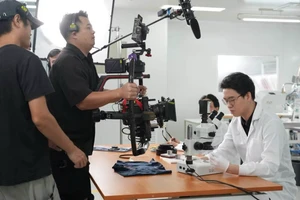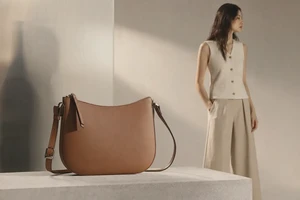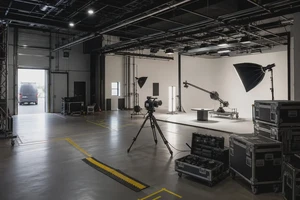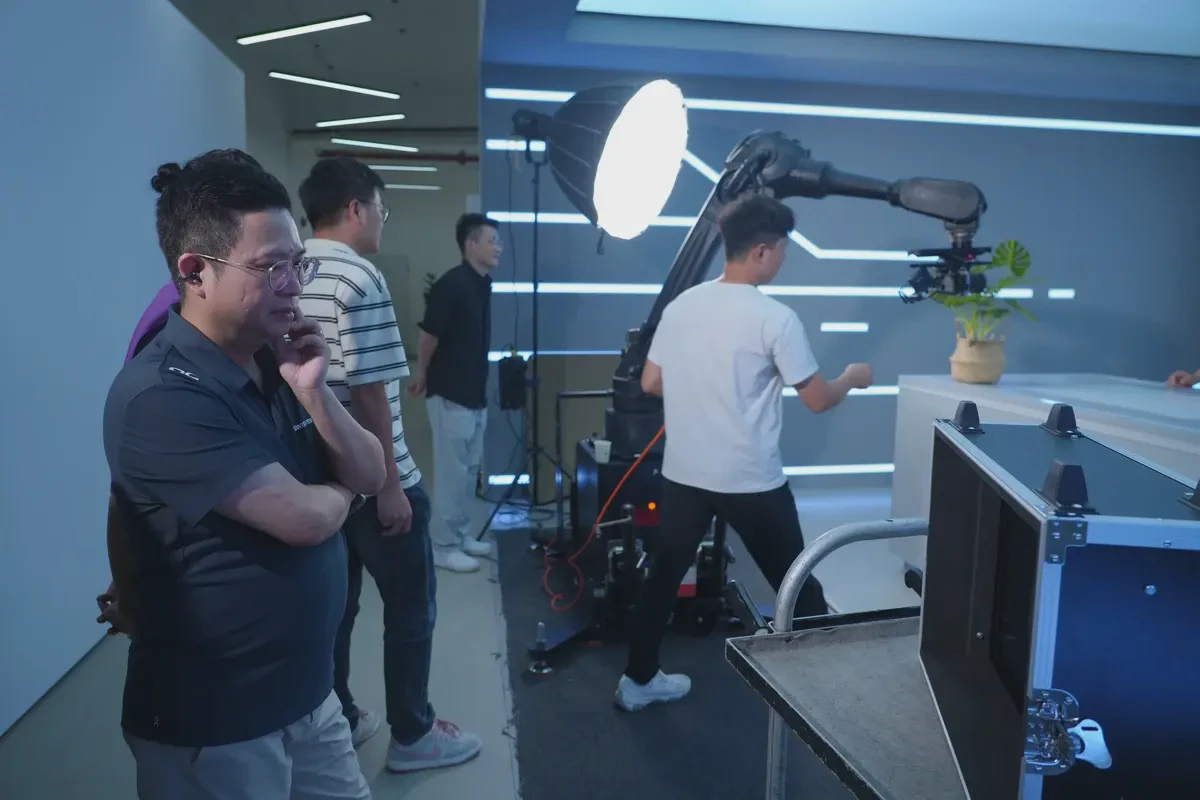
Imagine an overseas producer shortlisting a Shenzhen studio from another time zone. The gallery looks promising, but it does not show whether two product cases can travel from load-in to the set, where a moving camera can stand, or what a line of dialogue will sound like at the planned hour. A remote recce should create a documented shortlist for an on-site technical scout, not pretend to approve a stage from a video call.
The question arose while ONCE reviewed how its public Shenzhen studio page answers international production enquiries. Our earlier studio-selection guide considers usable area, height, power and access at the technical scout. Here the task is narrower: what visual and written evidence should a remote producer request before travelling or committing crew time? A hypothetical tabletop shoot below illustrates the method; it is not an account of a particular client or a promise about the current stage.
Start with a shot, then request the evidence
Suppose the brief calls for a camera to move around a tabletop product, one performer to speak a line on location, and both landscape and portrait compositions. Ask the studio contact for material that helps decide whether each task merits a closer scout. A general gallery cannot answer these project-specific questions. A large build, a vehicle move or a silent packshot would require a different set of observations.
The California Film Commission's guidance for location hosts encourages an early discussion of planned activities, parking and access restrictions. This is a US example of venue communication, not a Shenzhen regulation or a specification for ONCE's facilities. A remote review borrows the habit of asking precise questions; an on-site technical scout and the responsible specialists still have to confirm suitability.
Film one continuous route from load-in to set
On an agreed date, have a local contact record an uninterrupted walk from the proposed unloading point through the entrance, turns, lift or stairs to the product position and camera position. For bottlenecks, add a clearly labelled measurement photo or a marked plan with the measured value, person and date. A wide-angle lens is no substitute for the usable width. Sensitive building access or security details belong in a private project exchange, not a public case study.
If a single pass cannot show a corner, attach a numbered still rather than editing separate routes together as if the path were continuous. The producer can flag cases, track, stands and crew movement for follow-up; the venue and local production team must verify an actual load-in. In a Film Independent interview, a location manager describes both creative fit and logistics such as access, permissions and support. We use that production distinction, without importing California permitting rules into a Shenzhen booking.
Separate picture evidence from sound evidence
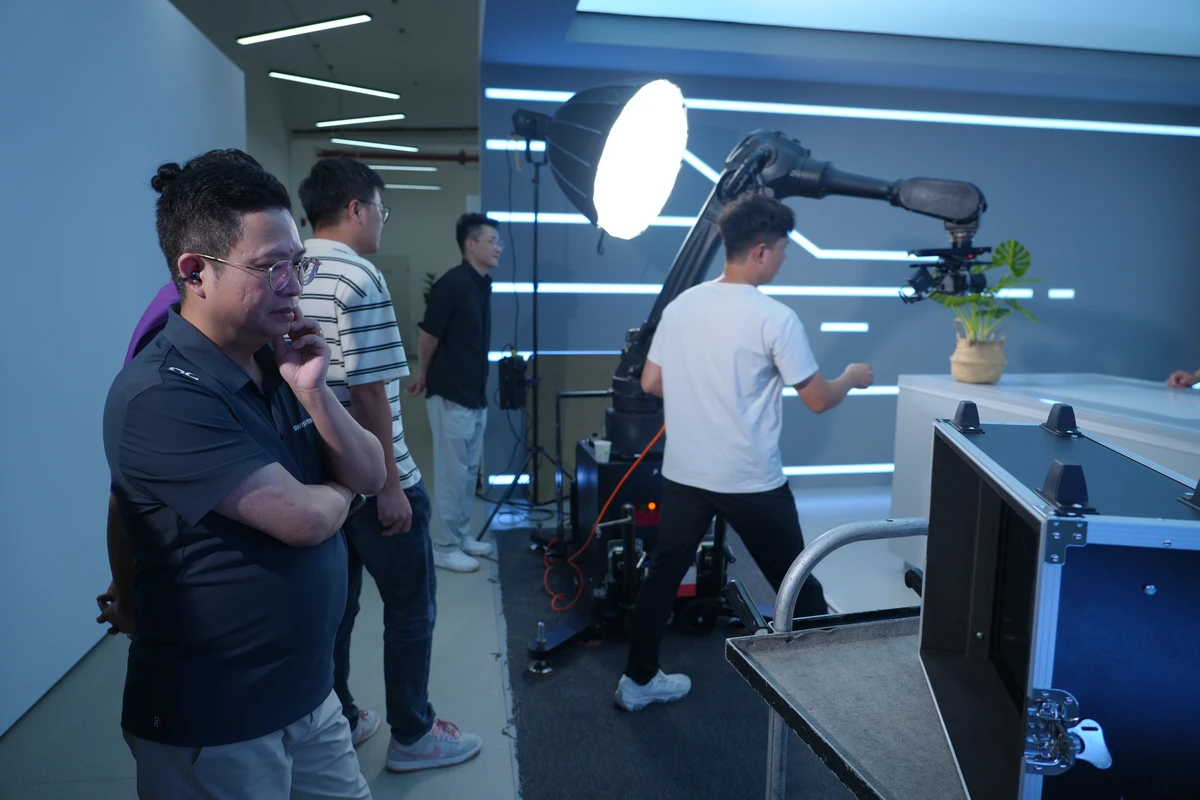
One broad view shows visual character. Numbered stills from each intended camera direction, linked to a rough floor sketch, show backgrounds and possible positions for product, performer, camera and stands. The director of photography and studio lead should confirm the actual movement envelope and clearances with the planned equipment; do not derive a universal safe distance from photographs.
For dialogue, request a short original room-tone recording at the expected shooting time, noting whether ventilation, doors, nearby work and other equipment were active. A quiet minute does not guarantee a quiet day, and the compression on a video conference cannot replace a sound recordist's location test. The same boundary applies to electrical loading, rigging and fire routes: the remote pack identifies questions; qualified people check the real plan and site.
Record a decision and its unresolved owner
| Remote evidence | Decision it helps make now | On-site confirmation |
|---|---|---|
| Continuous load-in walk and measured bottlenecks | Where large items or crew flow may be constrained | Actual move, venue rules and access plan |
| Numbered camera-direction stills and marked sketch | Whether background, movement and light positions merit a scout | Clearance, lighting, camera path and safe working area |
| Time-labelled original room-tone sample | Whether there is a likely sound issue to investigate | Sound conditions, controllable systems and formal recording test |
Mark each line “seen,” “measurement needed,” or “owner to confirm,” with a name and date. If a critical answer is missing, request evidence or arrange the technical scout. If the essential shot clearly cannot fit, shortlist a different space. Neither a gallery nor a remote video is a reservation, safety assessment or agreement on production terms.
For a product shoot in Shenzhen, send the shot task, largest sample or case, dialogue requirement, proposed dates and delivery formats through the ONCE project enquiry. That gives the local team a concrete basis for choosing what to show remotely and what to verify in person.