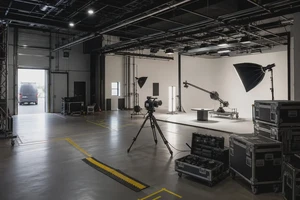
For a cross-border commercial, an evocative group image, a model card and a self-tape may arrive in the same deck. They answer different questions. The mood image helps a brand choose a visual direction. A current, permissioned model card introduces a real candidate. A short audition shows how that person speaks, moves and handles the product. None of the three, by itself, proves that the person is booked for a particular shoot or licensed for every market.
The distinction became concrete while ONCE designed its now-public international talent resource page. A visual can communicate the tone of a campaign; the candidate material must tell a buyer what is real, current and still to be confirmed. This guide is for overseas teams sourcing talent for a Shenzhen or Pearl River Delta product shoot. It does not publish private model cards, a claimed roster size, supplier rates or unconfirmed availability. Our commercial audition guide explains how to compare two finalists. Here we focus on the earlier handoff from a resource page to a responsible casting enquiry.
A concept image answers a visual question
A generated or composited fashion image can show color, framing, the atmosphere of a location and the relationship between a person and the product. Label it “concept visual” or “mood reference,” and keep a simple source note describing what was photographed, generated or composited. The image does not establish that the depicted face belongs to available talent, that someone agreed to appear in an advertisement, or that they can travel for the proposed dates. If a concept deliberately resembles a real performer, check permission separately rather than treating a public portrait as a source for a digital double.
Equity, the UK performers' union, argues in its AI vision statement that performers should be able to give or withhold informed consent when their performance or likeness is reproduced with AI. We cite this as an industry position, not as a universal legal rule. The applicable contract, platform requirements and local law must be checked for each distribution plan.

A model card introduces a candidate
When the performer or their representative permits display, a card can contain recent photographs, selected work, working languages, appropriate public details and the agent or booking route. Add a visible update date and a status that says what has actually been checked. Is this a former collaborator, a current candidate or someone whose dates are being enquired about? Are the pictures heavily retouched? Are previous campaign stills cleared for reuse on this resource page? Leave an unanswered field open and ask the representative; do not fill it with an assumption.
A card cannot confirm schedule, travel arrangements, willingness to perform a particular action or cultural fit for every market. “Access to talent in the Pearl River Delta” should never imply that every person is locally present or ready for every day. Avoid treating nationality, skin tone or accent as a shortcut for an entire audience. Start with the role's lived situation, the product behavior and the language task, then ask actual candidates whether the brief suits them.
An audition tests behavior; booking and usage follow
A self-tape or short live conversation can show how someone handles the product, responds to a simple direction and sounds in the intended language. Keep the request to one natural line and one necessary action. Do not make candidates build a set, buy props or film a complete commercial at home. Equity's published self-tape guidance recommends clear creative context and simple requests; agree practical details with the agent for the actual job.
A good tape supports a creative decision. It is not a booking, a fee agreement or unlimited permission to use the footage. Dates, wardrobe and action limits, payment, distribution territories, channels and term all require separate confirmation by the relevant parties. A plan to use real footage for AI extensions, voice synthesis or likeness replication needs an explicit discussion; an ordinary appearance agreement should not silently become permission for that new use. This is a production communication framework, not legal advice.
Put the label beside the material
| Material | What it helps you judge now | Who must confirm the rest |
|---|---|---|
| Concept image / mood reference | Style, framing, setting and person-product relationship | Creative team explains photographed, generated and composited sources |
| Permissioned model card | A real candidate's recent look, work and public details | Performer or agent checks currency, dates and display permission |
| Project-specific audition | The requested action, language and on-camera state | Producer and agent agree booking and intended media use |
Place these labels near the image, where a buyer makes the decision. For an enquiry, ask for five inputs: target market, the relationship between role and product, essential action, location and dates, and planned channels and usage period. The production team can then offer a genuine candidate route and arrange appropriate testing. Unconfirmed fields should say “to confirm,” not “available now.”
If you have a script or sample product, send the role's purpose and visual references through the ONCE project enquiry. The next conversation can separate concept imagery, real candidate material and the performance that still needs testing before an agent, producer and rights holder confirm the final arrangement.