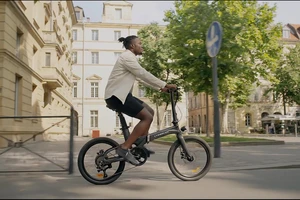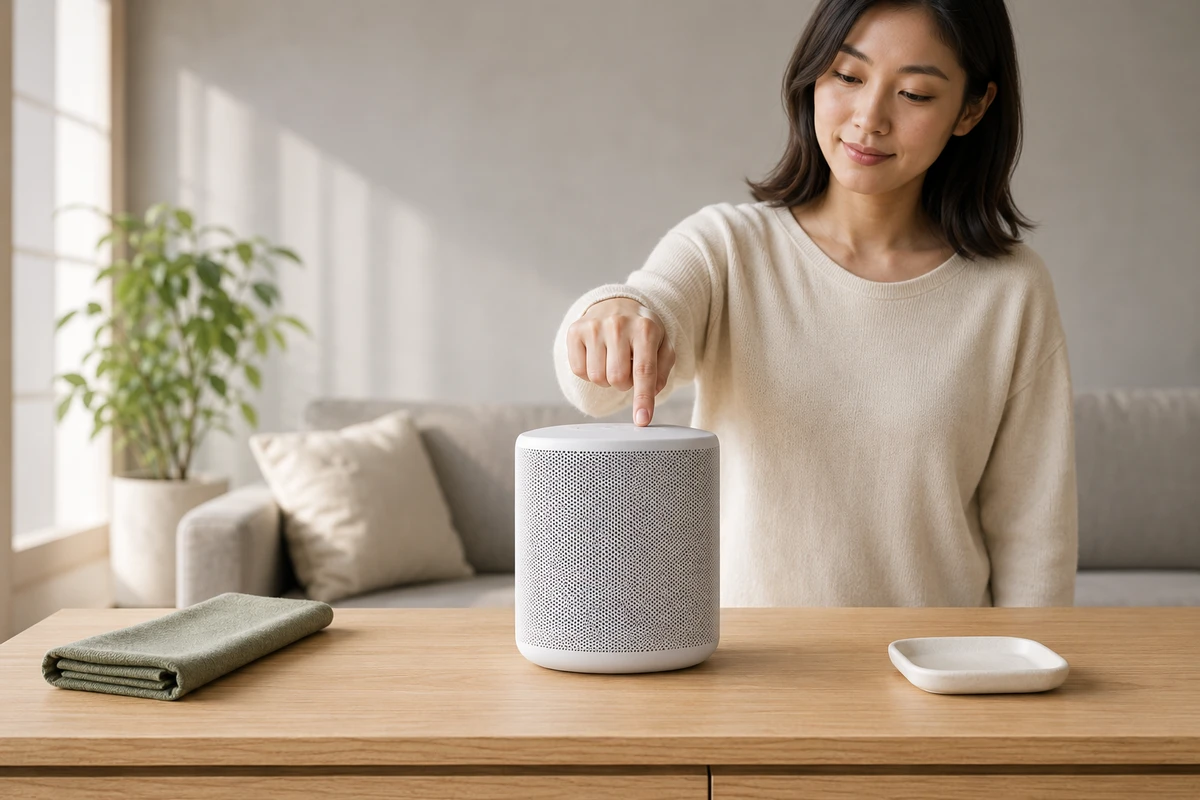
Two finished cuts, A and B, sit on the review table: Version A shows the product in the first second, while Version B opens with a use scenario. But Version B also changes the music, voice-over, duration, and end card. Even if the campaign results differ, no one can say which change caused the impact. The production priority in Amazon video ad A/B testing is not cutting more versions, but leaving only one interpretable difference between the two assets.
This article is for cross-border brands preparing Sponsored Brands, Sponsored Products video, or other Amazon advertising video assets. After reading it, you can decide whether to test the opening, product claim, or communication method first, then organize the sample units, talent, filmed actions, file naming, and launch records into a pair of assets that can continue to evolve.
Write One Hypothesis Before Shooting Instead of Listing Ten Versions
The first line of the testing worksheet should be a question that the results can answer, such as: “With the same audience and landing page, is showing the product function first more suitable for this campaign objective than showing a lifestyle scenario first?” This also defines what must not change: the same ASIN, the same campaign phase, comparable delivery conditions, the same duration, and the same end-card destination. Based on this, the production team changes only the order of the opening visuals instead of turning the two videos into two separate creative concepts.
In its official article on creative testing, Amazon Ads recommends defining the hypothesis clearly first and evaluating results around genuinely relevant metrics. See its creative testing recommendations. For brands, this means writing “what we need to learn” in the production brief before writing “how many assets to deliver.” If the person, setting, music, and product claim all change at once, the test will only tell you that the two videos are different; it will not tell you what to keep in the next round.
We usually divide variables into three layers. The first is the opening task: show the product first or the problem first. The second is the core message: demonstrate the structure or show the usage result. The third is the presentation method: real-person operation, pure product shots, or animated explanation. Select only one variable from one layer per round. Price, promotions, landing page, and target audience are managed separately by the operations team and should not be mixed into the production difference table.
For the First Paired Set, Change Only the Opening and Keep the Sample State and Shot Length Consistent
Suppose this round tests “product first” versus “use context first.” Version A can establish the full product in the first shot before moving into hand-model operation; Version B can first show the problem the person encounters, then cut to the product at the same time point. From the core action onward, the two videos should share as much as possible: the same sample unit, firmware state, battery level, hand model, camera height, and end card. This concentrates the additional shooting on two openings instead of reshooting the entire video twice.
The product team should establish reset actions for paired shots. For example, return the earbuds to the same opening angle of the charging case in every take, restart the beauty device from the off state each time, and return a screen-equipped device to the same interface before every take. The continuity sheet can use labels such as A01, B01, and COMMON02; A and B are the two opening sets, while COMMON is the follow-up footage shared by both versions. Completing the common section continuously before shooting the A and B openings that day can reduce lighting and sample-state drift between the two versions.
The Amazon video ad specifications page explains that some Amazon video ads autoplay when at least half of the video is visible and play muted by default, with sound starting only after user interaction. Specific assets should still be checked against the current requirements for the actual advertising product. During production, refer to the Amazon video ad specifications so that Versions A and B can complete the opening test even without sound. Key actions cannot rely solely on voice-over, and subtitles should not appear in one version while being absent from the other.
For the Second Set, Keep the Product Claim and Change Only How the Same Claim Is Expressed
Once the opening direction is established, the next round can compare communication methods. For example, to make the same point that “the product takes up less space when folded,” Version A can show a continuous hand-folding action, while Version B can use a before-and-after comparison from the same camera position. The product facts, on-screen duration, and end card remain consistent. This tests whether viewers understand the process or the result more easily, rather than taking a chance across multiple product claims.
The biggest on-set risk with these shots is losing sample continuity. For a folding structure, photograph three reference states: fully open, midway through the action, and fully closed. Place detachable accessories in separately numbered trays. For products that easily show fingerprints, prepare one working unit and one appearance unit. If a hand model is needed, the same hand should perform both Versions A and B, with the same cuff, nails, and grip direction. If Version B uses a static comparison, it should also retain Version A’s product orientation and background brightness.
Amazon Ads’ Sponsored Products video setup guide recommends uploading multiple videos so interactive video thumbnails can appear. The production takeaway is that multiple videos should serve clearly defined viewing tasks, rather than being the same finished cut with arbitrary new names. The first can explain the core action, while the second answers a size or compatibility question. For a true paired test, however, both should address the same question and change only one communication method.
Delivery Files Must Make the Difference Obvious to Operations
Paired assets should not be named “final,” “final2,” or “latest.” A workable filename could be SKU_objective_variable_version_aspect ratio_language, such as X1_CONSIDERATION_OPENING_A_16x9_EN. The folder should also include a one-page version guide that clearly lists the shared sections, the single difference, landing page, subtitle language, music version, and export date line by line. Once operations receives the files, the team should not need to watch the entire video again to understand the relationship between A and B.
If both horizontal and vertical versions are required, separate “test variable” from “aspect-ratio adaptation” as two levels. A horizontal and A vertical belong to the same creative direction, while B horizontal and B vertical belong to another; do not make A horizontal and B vertical and compare them directly. For further reading on whether existing assets can be used in Amazon vertical ads, see Landing Pages and Asset Reuse for Amazon Vertical Video. That article addresses aspect ratio and entry points; this one focuses only on how to produce paired creative assets.
Before launch, complete one silent run-through: watch from the first frame to the end card without turning on sound and confirm that the product, action, and core meaning are understandable. Then turn on sound and check that the music, voice-over, and action cues align perfectly. Both versions should use the same subtitle style, loudness processing, and compression specifications so technical differences do not interfere with the creative judgment. If a placement has separate specifications, adapt both versions together rather than fixing only one.
Bring the Results Back to the Shot List and Decide Only Whether to Keep, Retest, or Stop
After testing, the production team should not interpret the business results on behalf of the media team, but it should record the results in the asset log: test date, campaign name, A/B files, the single variable, observed metrics, valid period, and next step. If Version A is better suited to the current objective, make opening A part of the shared footage for subsequent versions. If the difference is inconclusive, do not rush to create Versions C and D; first check the delivery conditions, sample size, and whether the assets truly differ by only one variable.
You must also distinguish ad creative testing from product detail page content experiments. Amazon Seller Central’s Manage Your Experiments guide discusses A/B experiments for branded product detail page content. Video creative testing in advertising campaigns should be designed separately according to the advertising product used, account permissions, and reporting method. The two entry points must not be treated as the same feature.
When the results call for another round of shooting, add only one variable. Keep the approved talent, sample orientation, common shots, and end card, then add another opening or communication method; continue using the original numbering for the files. This allows every testing round to build reusable assets instead of discarding everything from the previous round.
If you are planning paired assets for Amazon advertising videos, you can provide ONCE with the ASIN, advertising objective, landing page, existing assets, single variable to test, aspect ratio, and language versions. We will combine the Amazon product video production solution with product and commercial imaging case studies to organize the testing worksheet first, then schedule the production and delivery of the common shots and the A/B difference shots.