Generative AI applies to images, video, scripts, 3D assets, and digital humans, but each output requires distinct verification. Teams should ask four questions before adoption: Are inputs usable? Are results verifiable? Are decisions reversible? Is the workflow reproducible? If any answer is unclear, do not submit highly sensitive assets.
Are Inputs Usable?
First, list the types and sources of materials to be uploaded. Storyboard exploration, internal pre-visualization, proxy files, and partial inpainting are typically suitable for low-risk trials. Unreleased client assets, likenesses, restricted scripts, and unverified brand assets require separate confirmation before use with cloud services.
Teams must document upload scope, model service regions, data retention policies, and project licensing. Free-tier access does not imply consent for training or long-term storage. For local processing, verify that software, models, and hardware truly support on-premise execution.
Are Results Verifiable?
Different outputs require different approvers and checklists.
- Review images for composition, text, characters, and brand elements.
- Review videos for action continuity, camera movement, texture, and editing relationships.
- Review 3D assets for mesh, UVs, materials, scale, and target format.
- Review digital humans for identity consistency, performance, voice, and licensing scope.
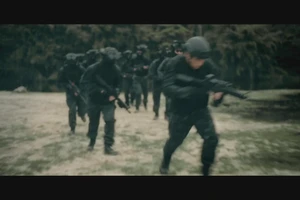
Generated results cannot be used directly in the final cut. Save both inputs and outputs first, then have an artist familiar with this stage review them segment by segment. Frames from ONCE’s own studio are included here solely as production context references and do not represent any generative AI output.

Can the results be reverted?
Before trialing, decide who can disable tools, replace models, and delete outputs. Retain original assets, reference images, prompts, model versions, intermediate results, and manual corrections within the project so you can revert to a previous version if quality or licensing issues arise. Once generated content enters editing or compositing, ensure it can be traced back to the specific trial it originated from.
Exit strategies must be sufficiently specific. Options may include switching to traditional assets, applying manual fixes, using local models, or halting uploads and revoking related permissions. If a tool cannot provide the necessary records, do not use it for highly sensitive shots.
Can the workflow be reproduced?
When the same inputs are processed at different times or by different people, can the results still be retrieved and compared? Teams should log the model and version, prompts, reference assets, key parameters, operator, generation timestamp, and final selected file. For tools with high randomness, also retain the platform-provided seed or other reproducibility data.
Reproducibility does not mean obtaining identical images every time. At minimum, it requires the team to know which version was used, what inputs were applied, and what manual adjustments were made. This allows discrepancies to be explained and enables work to resume from an existing version when clients request changes.
Include terms and provenance in the decision matrix.
Project leads should review model and data terms to confirm whether assets may be uploaded, outputs can be used for the intended purpose, records will be retained by the provider, and how deletion or revocation is handled after project completion. NVIDIA’s field guide groups training data, creator rights, human control, and commercial use boundaries into a single set of questions, making it suitable as an internal review framework.
The C2PA specification provides a verifiable structure for content provenance and edit history, which can serve as part of the audit trail. It does not guarantee content authenticity or undisputed copyright. Before final adoption, the project lead must still complete asset licensing, quality, and brand checks.
Start small.
First, select a low-risk task category to validate the four key questions before deciding whether to scale up. For cloud-based tools, require separate approval before uploading sensitive client assets. For local tools, maintain asset licensing records, backups, versioning, and human review. Generative AI is only suitable for production when scope is defined, outputs are traceable, errors are reversible, and workflows are reproducible.
Asset verification.
- NVIDIA Generative AI field guide
- Adobe Firefly FAQ
- C2PA Specification
- Research Seed 0915. Generative AI in media and entertainment