A qualified Shenzhen home product video does not simply light up a kitchen appliance; it quickly shows viewers where it fits, how to operate it, and what results to expect. Below is a breakdown of ONCE VISUAL’s public FO12B dual-zone air fryer final cut: within the same video, the product hero shot, food preparation actions, and cooking results each serve distinct explanatory purposes, all of which brands can directly adapt into shooting briefs and delivery acceptance criteria.
First, break down 'usability' into three visible forms of proof.
A common pitfall in home product videos is listing specs in subtitles without translating features into on-screen actions. What matters is not the number of captions, but whether each selling point is demonstrated through action and result. For kitchen appliances, viewers need to verify three things: whether the product fits naturally in the space, whether hands can perform key operations smoothly, and whether ingredients or objects are clearly shown. The value of the FO12B case lies not in making performance claims for any brand, but in providing a clear shot sequence: first establish the product, then demonstrate the action, and finally show the result.
This is also a key question to ask when evaluating vendors for Shenzhen home product videos: Can every selling point be matched with a corresponding action, shot size, and acceptance criterion in the shot list? If the only answer is 'it looks premium,' the brief remains at the moodboard stage and has not yet been translated into executable production language. You may first review theFO12B Public Case Page, then refer to the three timecoded screenshots below.
Shot 1: Use a hero shot to establish scale and material reference.
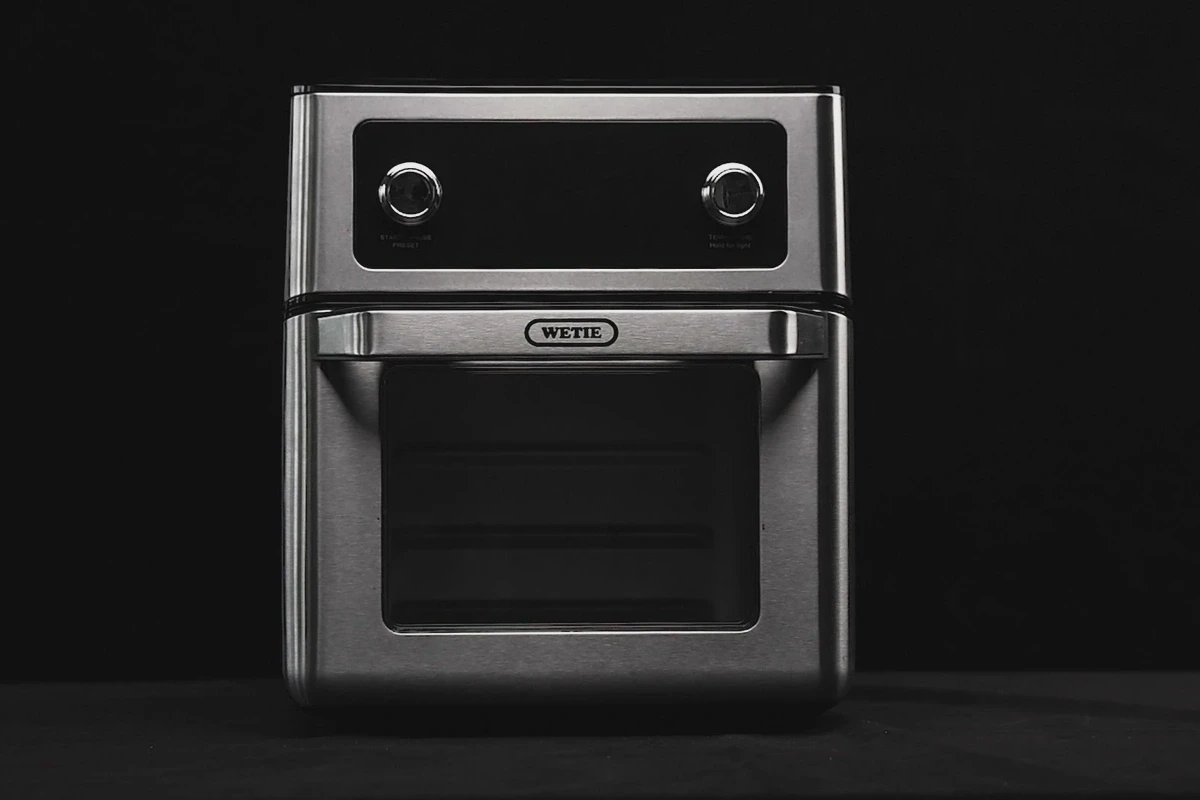
At the 5-second mark, a front-facing shot places the air fryer against a dark background, preserving the body edges, metallic highlights, dual knobs, and bottom-opening door. This shot’s purpose is not to showcase every feature but to establish a product identity, ensuring viewers recognize the product even when cutting to ingredients, drawers, or hands in operation.
In my view, the first hero shot for home products should prioritize scale, structure, and materials over complex camera movement. The metal casing requires a key light that defines its edges, the black panel needs controlled reflections, and the background must provide sufficient negative space to separate the silhouette. ARRI'sLighting HandbookTreating studio and on-set lighting as practical issues means asking what the audience needs to confirm before deciding where the light comes from in commercial production.
Shot 2: Translate features into actions rather than subtitles.
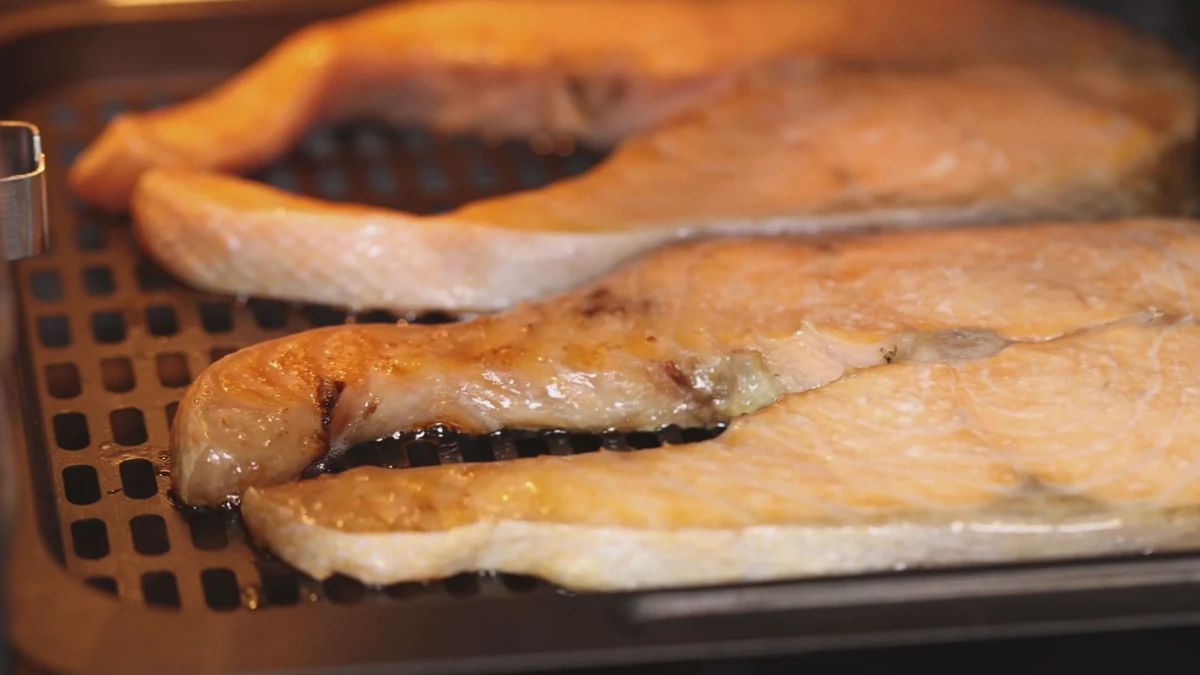
At 27.5 seconds, the focus shifts from exterior appearance to ingredient details. The salmon’s surface texture, tray grates, and warm lighting create an authentic in-use atmosphere. No unsupported performance metrics are needed; the shot effectively demonstrates the interaction between appliance and food.
During production, translate each feature into an action statement: dual-zone cooking becomes different ingredients appearing simultaneously; visual control shows a hand entering frame to turn a knob or open a drawer; easy cleaning depicts removing parts or structural close-ups. Action statements are more actionable for directors, DPs, and editors than abstract terms like tech-savvy or immersive, as they directly inform blocking, framing, and editing rhythm.
Shot 3: Establish capacity and pacing through contextual relationships.
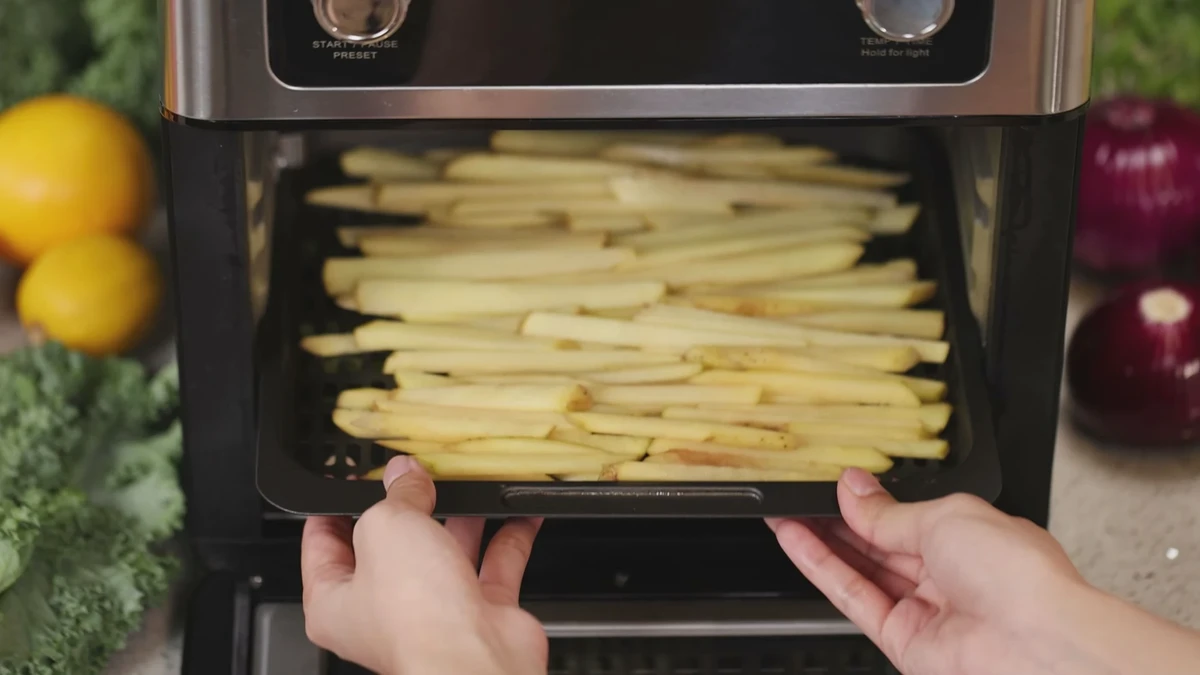
The shot at 40 seconds frames hands, drawer, fries, and unit together, allowing viewers to simultaneously perceive motion direction, container placement, and ingredient arrangement. Such shots suit home products well because purchase decisions often rely on spatial visualization: the footprint on a countertop, which side to operate from, and how contents load into the device—all should be visually referenced.
An easily overlooked professional insight: the usage scene is not mere background decor but a secondary narrative of product function. Ingredient colors, countertop distance, and hand blocking in the background all affect viewers’ perception of capacity and pacing. Amazon’s officialproduct video guidelinesalso list dimensions, features, functions, and real-world usage context as essential elements; translated into production terms, avoid isolated still lifes and include at least one shot showing hands, product, and usage object together.
Lighting and Shot Decision Tree for Shenzhen Home Product Videos
The simplified decision tree below can be included in the brief or used on set as a shot-list checklist. It is not a fixed gear list but derives shots from deliverable goals:
- Viewers cannot read the structure:Start with a front or three-quarter hero shot using medium-long focal length to preserve proportions; use key light to define edges and negative fill to suppress unwanted reflections.
- Selling Points Dependent on Operation:First lock in the hand's entry direction and product blocking, then decide between a close-up or medium close-up; do not cut away before the action is complete—ensure at least the start, process, and result of the movement are captured.
- Selling Points Dependent on Material or Ingredients:Use a detailed shot as a follow-up, and avoid using excessive motion to mask texture; verify that highlights retain texture and that structural details remain discernible in the shadows.
- Selling Points Dependent on Capacity or Lifestyle:Include hands, countertops, drawers, or ingredients as size references, and document the actual placement of props; do not include capacity, speed, or performance metrics in the voiceover if they were not captured on camera.
On-set acceptance can be determined by asking just four questions: What does this shot demonstrate? Why would the audience understand it? Which visual detail serves as evidence? What information would be lost if this shot were cut? Only if all four questions can be answered does the shot qualify for final delivery.
Delivery Acceptance Checklist: Turning Beautiful Footage into Reusable Assets
Home product videos typically deliver more than just a single long-form video; they are also repurposed into product page hero videos, short-form cutdowns, ad clips, and sales presentation assets. During acceptance, it is recommended to document the following items:
- Product Consistency:The model, color, knob positions, and drawer orientation must match the actual prototype; do not substitute partial shots from a different unit.
- Complete actions:Each core action has a clear start and end result, hands do not obscure key components, and editing does not cause misinterpretation of operational direction.
- Readable textures:Metal, glass, black panels, and food highlights show no large blown-out areas; edges and details remain distinguishable in shadows.
- Deliverable versions:Landscape, portrait, text-free, subtitled, and still cover versions are clearly named with timecodes for easy retrieval during future distribution or listing.
If you are evaluating video production teams in Shenzhen, send this card along with the FO12B case study to vendors and require them to respond with shot numbers, timecodes, and deliverable versions rather than just pitching a vague 'premium feel' concept. For further verification of shooting conditions, prototype quantities, and delivery specifications, pleaseLearn about ONCE VISUAL video production services。
Want to turn home products into verifiable, reusable commercial content? Submit prototype dimensions, core selling points, usage scenarios, and the planned delivery version,and submit home product shooting requirements to receive a quote.We will review them alongside the shot list and production scope.
FAQ: What to confirm before filming home product videos in Shenzhen
Can we start filming with only product stills and no complete usage scenario?
Structure and materials can be filmed first, but if selling points rely on capacity, operation, or lifestyle, it is best to include hands, countertops, and users during the brief stage; otherwise, authentic spatial relationships are difficult to recreate in post-production.
Does a higher shot count make a home product video more complete?
No. Shot count must serve specific evidentiary roles: hero shots establish recognition, action shots convey understanding, and result or scene shots inspire imagination. Redundant angles only increase editing workload without automatically enhancing persuasiveness.
How can I tell if a vendor truly understands my product?
Ask them to submit a one-page shot list mapping each selling point to visual evidence, framing, action, lighting focus, and acceptance criteria. Translating abstract selling points into filmable, verifiable, and deliverable shots typically demonstrates real production capability better than showcasing a style reel alone.
References:The lighting practice guidelines in this article reference the ARRI Lighting Handbook; criteria for including dimensions, features, and usage context in product videos reference Amazon Product Video (accessed August 1, 2026). Both sources are used solely for methodological and factual verification; case assessments herein are derived from ONCE VISUAL Public Case 281 and user-authorized screenshots of final deliverables.