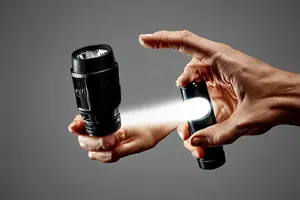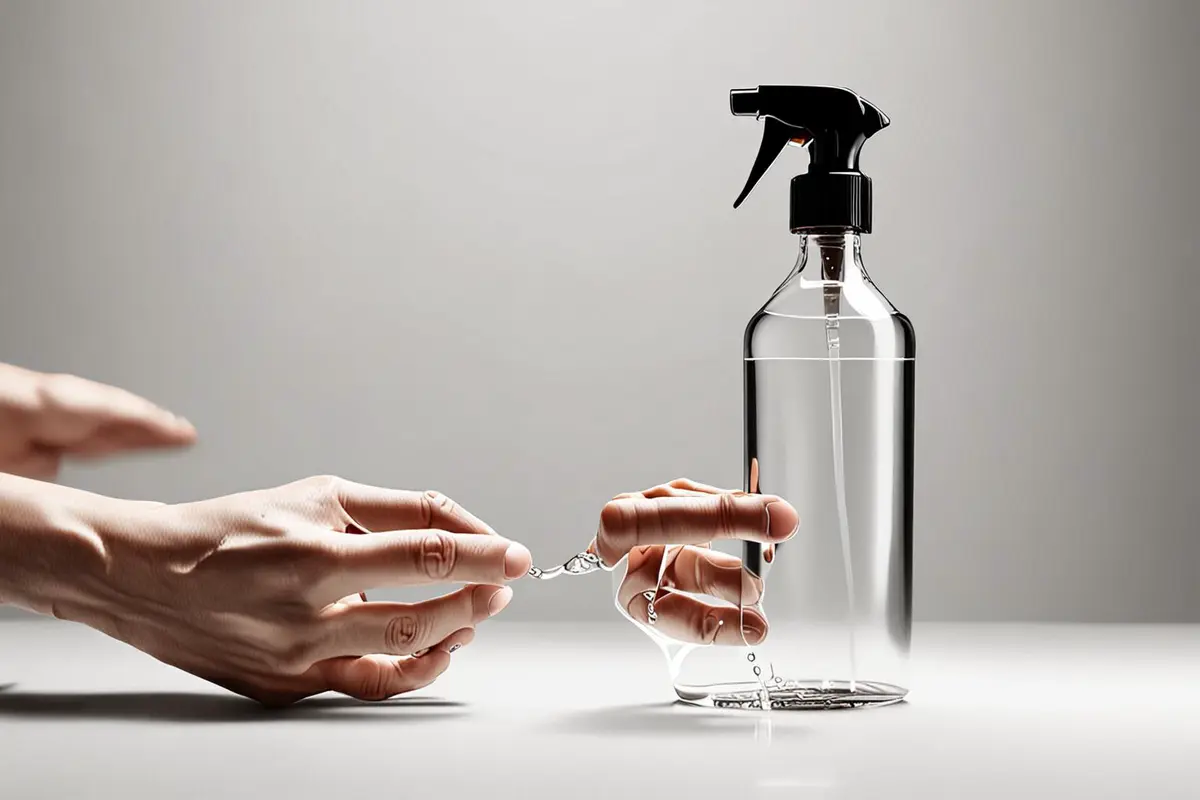
The key moment in a spray product video is brief: a finger presses the nozzle, fine droplets spread out, and the spray reaches its target. If the image shows only a bright cloud, viewers may see that something was sprayed without understanding where it came from or where it landed.
A useful spray demonstration is not simply the densest-looking cloud. It makes the nozzle, the path and the result understandable together. The fictional example below uses a bottle of water; the actual liquid, nozzle and conditions must follow the real product and the brand's confirmed information.
Decide what the viewer needs to see
The same bottle can serve different visual purposes. To introduce the nozzle, show the finger, opening and press; to show direction, leave space in front of the nozzle; to explain the target, preserve the distance between the two. An extremely tight close-up can make two of those three disappear.
Record a continuous action that shows bottle, nozzle and target, then add closer views for details. Before filming, have someone familiar with the product use it as intended and note its direction, hand position and working distance. The camera may be rearranged for clarity, but the product action should remain faithful to use.
Find the spray with background and side light
Place the bottle in the frame and look at the area ahead of the nozzle. Busy texture or a background similar in brightness can make droplets difficult to distinguish. A darker, more even surface may make bright spray easier to see, though it also changes the mood. A local dark area or a new camera angle may provide contrast while retaining the brand's setting.
Light the spray region from the side or behind and observe the separation between droplets and nozzle; use another controlled source for the label. Adjust the background illumination, camera angle and spray direction separately. More front light can clarify the bottle while making spray less distinct against a bright background, so compare the results on a monitor rather than relying on the naked eye.
Separate motion treatment from real time
Slow motion can reveal the shape of a spray but changes the perceived duration of the action. If using a high frame rate, first check whether the camera, lighting and final output support the intended settings. A shorter shutter generally reduces motion blur in each frame and may require more light. The right values depend on the equipment and scene and should be chosen through testing.
Show one press at normal speed and then use a slower shot to observe the spray. A speed change should aid viewing, not suggest that the product actually sprays for longer. Added droplets, duplicated spray or generated additions change the visible demonstration. Such treatment needs a clear distinction as a concept and should not be presented as unverified product performance.
Look after the set as well as the image
Mist settles on surfaces, backdrops and equipment. Use the product's safety information to determine ventilation, protection, cleaning and suitable space. Do not treat an unknown formulation as water or spray toward people and equipment for effect. Before each take, check the front of the lens, background marks and bottle condition so residue from an earlier take does not enter the next.
A substitute liquid may change the appearance of a fragrance, cleaner or other formulation. When a substitute is needed to protect the set, agree with the brand which shots are illustrative and which must use the real sample. Do not describe the substitute's appearance as the product's actual spray pattern or coverage.
Let the viewer see the target
The airborne mist is only part of the action. For a product intended for fabric or an object, a shot of the intended surface can clarify the relationship between nozzle and target. A product intended for air should also be shown according to its real instructions. Visible droplets alone cannot establish disinfecting, deodorizing or other effects.
Review the sequence on a phone: on first viewing, can someone identify the nozzle, direction and target? If not, adjust the composition or add an establishing shot before adding effects. Explore ONCE video production insights for related approaches.
If you are planning a spray product video or visual, contact ONCE to discuss the sample, real operation and filming approach.