Your contract manufacturer sends an engineering change notice: a countertop appliance will ship with a new removable tray. The retail model name stays the same. At your next shoot in China, should you commission one replacement video or keep a second guide in service? Start with the units customers already own. If those units need different parts or actions, the latest cut may be the wrong answer for a portion of your installed base.
Specify the destination before buying the footage
The June 13, 2024 U.S. Consumer Product Safety Commission notice for the Bambu Lab A1 is a concrete example of device identification changing the support outcome. The notice identifies affected A1 units by a character in the serial number on the rear QR sticker and directs owners to contact Bambu Lab; it explicitly rules out owner repair. This is evidence of how that recall identified affected units, not a template for repair or recall decisions.
For an ordinary service project, the same design question is useful: what can a customer check before the page tells them what to do? A warehouse or engineering revision may be precise internally and invisible to an owner. Ask your factory for a confirmed customer-facing identifier. If a reseller can still ship old stock, order date alone is a poor substitute.
Put three routes in the production brief
ONCE recommends specifying three outcomes and naming an owner for each. Give your producer the real sample, the approved identification cue, the destination, and the event that would invalidate that row. A product or support lead signs off before any procedure is filmed.
- Confirmed legacy unit: Keep a valid guide discoverable while the affected units still need support. If the legacy instruction itself is no longer approved, direct the owner to the newly approved support route instead.
- Confirmed current unit: Reuse footage only where the part, starting condition, action and outcome match. Commission a separate module at the first meaningful divergence.
- Unresolved unit: Show the owner where to find an identifier or how to reach support. Do not send them to the newest procedure by default or request full serial numbers in a public comment.
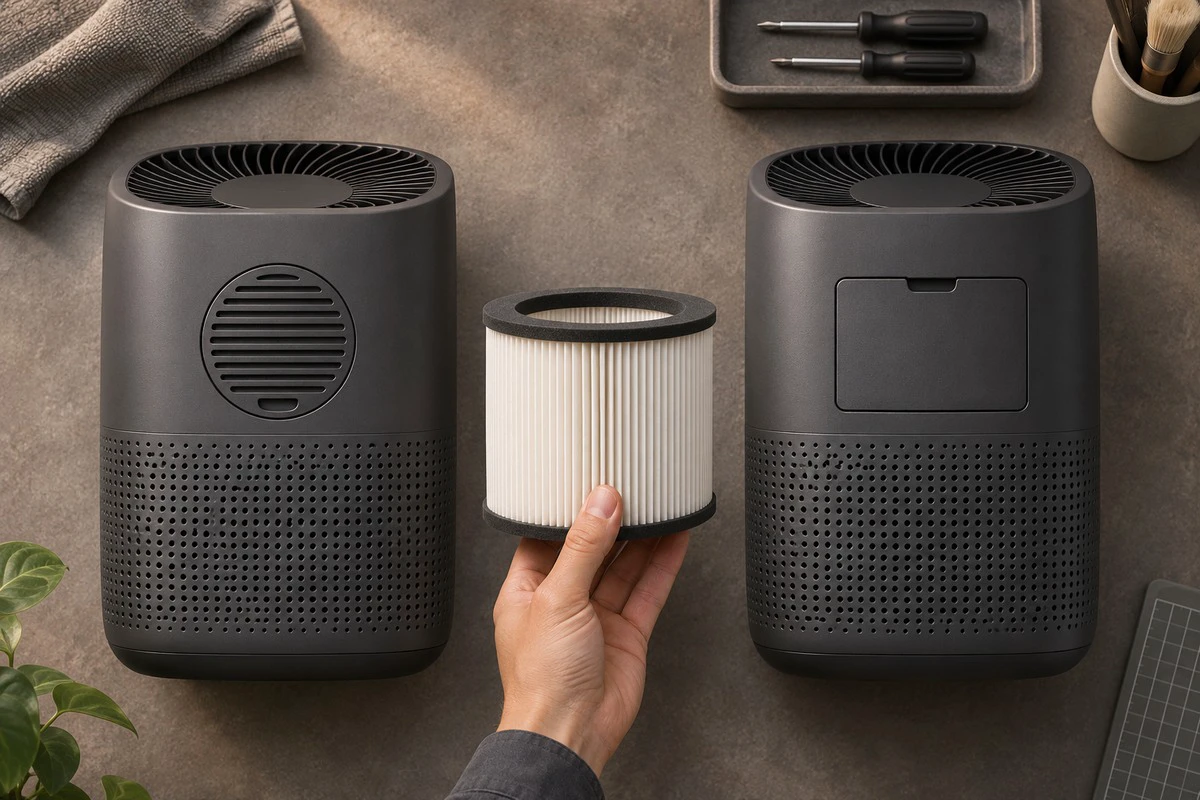
In the hypothetical tray example, the same wide shot might orient users on both revisions, but the tray close-up and removal sequence need their own takes if the release mechanism changes. Film both samples on the same setup where practical and retain the ability to replace each module separately. The page can then change its routing without paying for a new shoot every time a support link moves.
Test the journey that bypasses the help center
Give a support colleague three cases without telling them which video you intend to serve. Start at the path the buyer actually uses: a printed QR code, an email macro or the retailer’s help page. Check that an older unit gets a supported route, a current unit gets the correct module, and an unrecognized unit gets a way to verify. Then open the video directly. A forwarded link or search result may skip the selector, so state applicability in the opening and point viewers back to the selection page where the channel allows it.
Compare quotes by asking for separate lines for shared footage, revision-specific modules, language versions and destination maintenance. Make it clear who updates the route when a component changes and who checks the existing links. If production must begin before samples are locked, use ONCE’s guide to filming before the final sample to plan reusable coverage; leave version-specific instruction until the approved hardware is available.
Bring the engineering change notice, one sample of each supported revision and the current customer entry point to the brief. That gives your brand and factory a concrete way to decide what to retain, reshoot or route to support before either team commits to a new library.