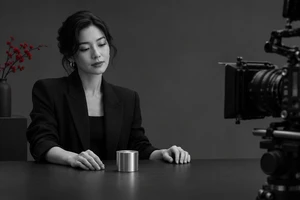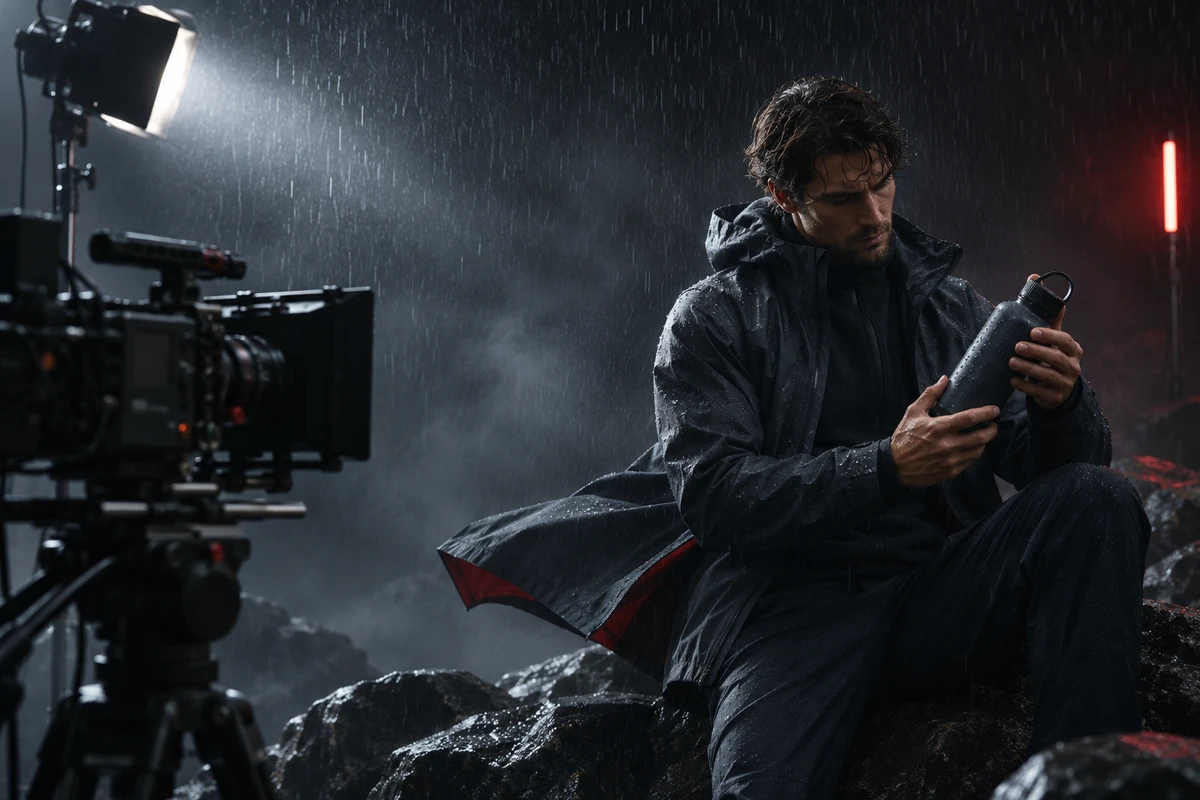
Wind, rain, and fog can make a brand film feel cinematic. They can also become expensive production effects that add no narrative value. Effective weather design changes more than texture. It changes how people move, what resistance the product faces, where sound comes from, and how the story can end. The useful test is simple: if the weather disappeared, would both the plot and the product value become weaker?
Decide what the weather does in the story
Weather can perform three different jobs. It can create resistance: wind complicates opening an umbrella, riding, or building; rain forces choices about movement, storage, and protection. It can change visibility: fog hides distant information and makes people approach, search, or wait. It can also change relationships: rain pushes two strangers beneath the same shelter, or turns a product from background prop into the center of the solution.
When weather only means “make it premium,” the result is often generic slow motion, backlit droplets, and moving fabric. The images may be attractive, but they do not explain why the brand belongs in the scene. A brief should first state whose action changes, which choice becomes necessary, and what result the environment creates. Only then should production decide how much wind, rain, or fog the scene needs.
In commercial video production, weather works best as an action condition in the storyboard rather than a decorative layer added at the end.
Wind is more than a hair and fabric effect
Put the resistance on the performer
Viewers cannot see wind itself. They understand it through affected objects. Hair, fabric, and leaves are familiar indicators, but the story advances when a person changes posture because of the force: lowering their center of gravity, shortening a step, protecting an object with a shoulder, or stopping to adjust. If the performance ignores the direction of the air, a powerful fan still reads as background movement.
Direction also controls eyelines and product position. A person facing the wind may narrow their eyes and turn their head. Keeping the product on the sheltered side can preserve both operation and resistance in one frame. When every setup blows from an arbitrary direction, spatial continuity breaks after the cut. Storyboards should mark wind direction, body orientation, and the affected object instead of writing only “stronger wind.”
Give the product a limited and truthful action
Wind can place tents, umbrellas, jackets, headphones, and outdoor devices in a believable situation. The image must not turn the presence of wind into automatic performance proof. A product remaining stable during one controlled take only establishes the action in that shot. It does not replace laboratory testing or a rated specification. Brand films can express use and context; claims about wind resistance, sealing, or durability still need verifiable product evidence.
Rain changes rhythm and surfaces
Rain rewrites performer rhythm, product surfaces, and the sound field at the same time. People move more carefully and use shorter hand actions. Metal, glass, and fabric produce different water films and reflections. Dialogue, footsteps, and ambience are rearranged by the rain layer. Adding water lines in front of the lens while performance, props, and sound remain in sunny conditions makes the weather feel like a filter.
An effective rain scene usually begins by defining how wet everything is. Is the ground only reflective, or are the performer and product already soaked? Shot order must respect wetness continuity. Once hair, clothing, or packaging reaches a wetter state, returning to the previous look becomes difficult. Production can progress from dry to wet and reserve duplicate dry samples for close-ups, preventing the hero product from being damaged too early.
Rain also invites exaggerated communication. Showing a product in rain does not automatically prove water resistance. The film should separate environmental storytelling from functional evidence. When a brand needs to demonstrate protection, the image should follow documented product conditions rather than treating uncontrolled rainfall as certification.
Fog redistributes space
Use light to show distance without erasing material
Fog makes light paths and atmospheric layers visible, which makes it useful for distance, uncertainty, and arrival. Too much density lifts product edges, surface texture, and black levels together. Viewers see atmosphere but lose the object. A fog scene should first protect the product's material light and silhouette, then use distant sources to build depth. Foreground, subject, and background need different densities rather than an evenly white room.
Fog also changes time. A person emerging from it needs a transition from soft outline to clarity, and rapid cutting may waste that change. When the product must reveal an interface, screen, or material detail, atmospheric effects should remain in the background or backlight zone instead of competing with the information shot.
Design sound and performance with the weather
Wind, rain, and fog are not independent visual plug-ins. Wind affects fabric, breathing, and speech. Rain changes footsteps and the difference between interior, exterior, and shelter. Fog has no fixed sound, but it encourages closer, quieter, and more cautious listening. When audio does not respond to the environment, the image loses weight.
Performance cannot wait until the crew turns on the effect. The performer needs to know where pressure comes from, how it changes, and what role the product plays. As wind rises, a person may protect their eyes before securing the device. When rain starts, they may seek cover before realizing the product can continue operating. That sequence turns atmosphere into causality.
Controlled weather still needs safety and reset time
Artificial fog and haze should not be treated as cost-free air. The motion-picture industry's Contract Services Safety Bulletin 10A recommends eliminating the effect when possible, limiting unnecessary exposure, using the minimum concentration required, ventilating sets, making Safety Data Sheets available, and using qualified technicians who follow manufacturer instructions. These are recommended guidelines; applicable local rules and a production-specific risk assessment still govern the set.
OSHA's respiratory protection standard likewise puts prevention of atmospheric contamination through engineering controls ahead of relying on respirators. A brand film should not convert safety language from another jurisdiction into a universal checklist, but the principle is useful: effects need exposure control, ventilation, and responsible operation.
Rain affects floors, cables, clothing, and handheld equipment. Fans affect lightweight art elements, diffusion, and performer balance. A production plan needs drainage, slip control, electrical isolation, equipment protection, wardrobe changes, breaks, and reset time. The costliest part of a weather shot is often not creating the effect; it is returning the space, performer, wardrobe, and product to a controllable state for the next take.
Preserve weather cues for horizontal, vertical, and short cuts
A horizontal frame can hold the environmental source, a reaction, and a product result together. A vertical crop may retain only the person and product. If every weather cue sits at the frame edges, the vertical version leaves unexplained behavior. Production should capture close cues: droplets landing on a hand, wind pressing a package edge, or haze catching a narrow beam, so a small frame can still explain the environment.
Short cuts also need their own causal closure. A fifteen-second version cannot keep only the prettiest rain shot. It still needs the essential steps from environmental change to resistance, product action, and a changed state. Weather is part of the story structure, not interchangeable B-roll.
In review, ask what the weather removes and adds
Imagine switching every weather effect off. If the performance, product value, and ending remain unchanged, the environment is probably decoration. If removing it eliminates a necessary choice, a meaningful product action, and the logic of sound and space, weather has entered the idea.
The brand must also check whether the effect overwhelms the product. Droplets, light beams, and moving debris can become the most visible elements in the frame. The final edit should leave viewers able to explain what the environment changed and why the brand appeared there. Weather can increase drama, but it cannot substitute for clear product value.
Make the environment an action partner
If you are planning a product commercial, brand film, or a weather scene that combines live action and generative imagery, define environmental force, performer response, product action, and version needs in the brief. Share your brand film or commercial project with ONCE, and we can design executable wind, rain, and fog scenes around narrative causality while using ONCE's live-action and AI hybrid production where it supports the idea.