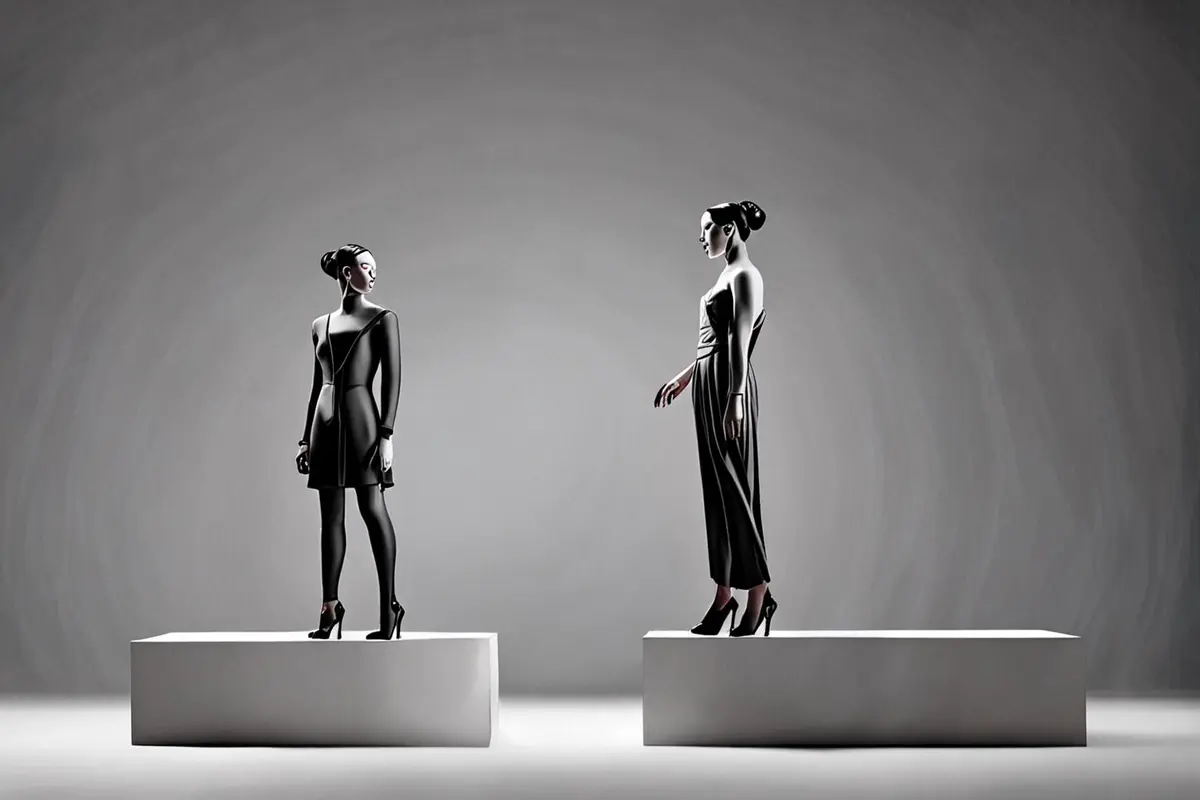
A performer turns toward something outside the frame. The next shot reveals the product. It looks like a simple edit, yet it decides whether the product feels discovered inside the story or inserted as a separate packshot. Viewers immediately infer a relationship: Is this what the person saw? Where is it in the space? What happened between the two shots? When direction, height and timing support one another, the gaze carries attention across the cut. When they conflict, voice-over and graphics can explain the product, but they rarely restore the lost spatial intuition.
Research on continuity editing places this effect within a broader account of visual attention. Tim J. Smith's Attentional Theory of Cinematic Continuity argues that a cut can feel continuous when perceptual expectations are carried from one shot to the next, even if the full space is never reconstructed. Eye-tracking work on viewpoint shifts in edited dynamic scenes and research on event segmentation in narrative film likewise show that viewers actively relate post-cut information to what they have just seen. These studies concern perception and editing, not ad conversion. Their useful lesson for brand work is narrower: a performer's gaze makes a spatial and causal promise before the product appears.
A gaze is a spatial promise, not an arrow
When a person looks down and to screen right, viewers expect the next object to occupy a compatible direction and height. An ad does not need to diagram the room, but four cues should cooperate: the side toward which the performer turns, the height of the eyeline, the side from which the product is photographed, and the scale at which the product answers the look.
A storyboard arrow alone cannot define that relationship. A more useful direction would say: “The performer stands on frame left and looks beyond the right edge toward a device on the table; the product shot keeps table height, and its lit surface faces back toward the performer.” That sentence aligns blocking, camera side, art direction and lighting. It gives the director, cinematographer, product stylist and editor one spatial idea to discuss.
This is also different from the broader relationship between bodies, gaze and products, or from a rack focus inside one shot. Eyeline matching crosses a cut. It asks two discontinuous images to read as one action, one space or one thought.
Decide who knows first, then decide where to cut
Before the reveal, choose the order in which the performer, the audience and the brand statement arrive at the information. They do not need to learn at the same moment. Each order creates a different emotional structure.
The performer knows first: the product confirms
The performer has already heard, seen or remembered something. They turn, and only then does the product appear. This order suits familiarity and reliable response. The acting should lean toward recognition rather than surprise: a brief settled look, followed by a change in breathing, expression or hand movement. If the next shot jumps to an unrelated frontal packshot, that quiet recognition becomes a brand interruption.
The audience knows first: the gaze completes anticipation
The audience sees a product fragment or environmental clue before returning to the performer. We then wait for the character to discover what we already know. The satisfaction comes when two information paths meet. Screen direction established in the first reveal should survive the reaction shot. Flipping the product for a cleaner composition may preserve product recognition while losing the sense that the person and object share a space.
The product moves first: the gaze answers an event
A light activates, a lid opens or a liquid surface trembles; the performer responds. Now the product is the source of an event rather than a still object being presented. Its motion, sound and direction should establish the cause of the head turn. Cutting too early to a pristine studio angle disconnects the event. Waiting too long leaves the reaction without an object. There is no universal number of frames: the useful cut arrives just after the audience forms the question and while the answer can still feel immediate.
Direction, height and action must meet at the cut
Eyeline matching is often reduced to a left-right rule. Credibility comes from several cues making the same claim at once.
- Screen position: if the performer looks off screen right, the product shot should feel as if the object occupies that side of the established space. Avoid crossing the performer-product axis without an orienting cue unless disorientation is the point.
- Eyeline height: a slight downward look followed by a heroic low-angle product shot changes the relationship. Looking down suggests nearby use, care or inspection; looking up can imply scale, authority or distance.
- Motion direction: if the eyes sweep left to right, a light, lid or liquid movement in the product shot can carry that energy forward. It need not copy the motion exactly, but it should not push attention back out of frame without a reason.
- Cut timing: cut as the eyes begin to move and the product shot becomes part of a search. Cut after the gaze settles and it becomes confirmation. Hold longer and the same look can turn into doubt, desire or suspense.
These cues do not have to agree mechanically. A product may need to face camera while the performer stands at an angle, making perfect geometry impossible. A wider establishing shot can first locate both subjects. Alternatively, the product close-up can retain a hand, shadow or environmental reflection from the performer's side as a second spatial cue.
The performer needs a real target, and the product needs an answer
“Look at the product” is not precise acting direction. A near object viewed as if it were distant leaves the relationship empty. Moving only the eyes can feel cautious; turning the head first and letting the eyes search can feel exploratory. On set, give the performer a mark that matches the final product position. Rehearse the product action in real time instead of asking post-production to invent the timing later.
The product shot also has to answer. The response may be a feature action, a shift across the lit surface, a hand entering frame, continuing sound, or a detail placed exactly at the eyeline height. The object can remain still, but the composition must make it legible as the destination of the previous look rather than a different asset in the media plan.
For commercial video production, a useful rehearsal is to play only the performer shot and the product shot with captions and voice-over removed. If they still form one discovery, the relationship has visual support. Then test the actual delivery crops. A horizontal version may work while a vertical crop moves the gaze target outside the safe area. In that case, redesign blocking or product entry for vertical, rather than relying on a centered crop.
Break the match only when the break creates meaning
An eyeline mismatch is not automatically an error. Comedy can establish a solemn off-screen look and reveal something far smaller than expected. Suspense can provide a false destination before the real product enters from another direction. A stylized film can repeatedly reverse orientation to make its world feel unstable. The question is whether the mismatch produces a readable idea.
If the disruption lasts one shot, a wider view, a touch, a matched action or a localized sound can restore orientation. If the film intentionally keeps the audience lost, protect product identity so spatial confusion and product recognition do not disappear together. Breaking continuity earns its place through meaning; viewers should not have to invent a creative justification for an accidental mistake.
Rewrite “sees the product” as a filmable relationship
A workable eyeline handoff answers five questions in the storyboard and previs: Why does the performer turn? Where does the gaze begin? At what direction and height is the product? What action or composition catches the look after the cut? After the reveal, does the audience know more or less than the performer? Those answers affect camera position, performance rhythm, product mechanics, sound and crop strategy.
Brands do not need more generic shots of people looking at products. Each look should change the story: confirm a function, expose a difference, answer a sound, or convert desire into action. If you are developing a brand film built around a performer-product relationship, ONCE can map that eyeline path across script, storyboard, performance and product cinematography. Talk with ONCE about your creative and production brief.