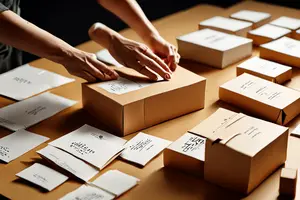
An overseas brand brings its presenter and a supplier’s engineer together for a product livestream. The presenter supplies energy; the engineer supplies detail. Yet the answer the shopper needs can disappear between them: a technical explanation finishes, the presenter thanks the guest, and the show moves on.
ONCE recommends evaluating the handoff before commissioning a full two-person show. Can the pair turn a buyer’s question into a visible demonstration, an appropriately qualified explanation and a useful recap? Two people on camera are a production choice, not proof that those jobs are covered.
A forthcoming museum broadcast offers a useful planning signal
On November 3, 2026, TikTok announced a three-part Lucas Museum livestream for November 9. Its published plan combines creator hosts with curatorial experts and guests, alongside audience questions and themed polls.
As of this article’s November 4 review, that event has not taken place. The announcement establishes a planned format, not measured understanding, retention or sales. A cultural institution is also different from a commercial product launch. The useful connection is narrower: the person welcoming an audience need not carry all the specialist explanation alone.
Rehearse a complete answer, not two separate performances
ONCE proposes four linked moves. This is an editorial production method, not a platform requirement or a completed client trial. Start with a recurring buyer question that the brand has approved for public discussion.
| Move | Owner’s job | What to check |
|---|---|---|
| Clarify | The host turns a broad question into a specific use situation. | Do we know what the shopper is actually trying to decide? |
| Show | The designated demonstrator presents an approved sample, component or action. | Does the visible object answer the question being discussed? |
| Explain | The specialist states the confirmed answer, its conditions and anything unresolved. | Has a sample observation become an unsupported general promise? |
| Recap | The host returns to the original decision in plain language, with correction if needed. | Did the simplified answer retain the important conditions? |
The fourth move deserves its own rehearsal. An accurate engineering answer followed by an inaccurate presenter summary still leaves the audience with the wrong takeaway. Equally, a host asking a basic question can be doing valuable work if it exposes an assumption the audience may share.
A hypothetical kitchen-product launch
Imagine a US brand launching an appliance made by its Chinese supply partner. A viewer asks whether it fits underneath a cabinet. The host first distinguishes storage from operation. The team then uses approved product information and an authorized demonstration to address the relevant question.
The engineer explains any conditions the brand has confirmed for the specific model. The host must not turn “it fits in this space” into “you can operate it there.” Where the viewer’s installation conditions remain unknown, the recap should preserve that uncertainty and point to the appropriate approved information or follow-up route.
This example is a planning illustration, not appliance guidance. The actual product instructions and brand-confirmed facts determine what the pair should say. A visually persuasive demonstration cannot supply missing technical approval.
Choose the second person for a particular explanatory task
A trained solo host may be sufficient when the show covers straightforward, approved material and familiar actions. A specialist can review the script beforehand without appearing throughout the broadcast.
A second speaker becomes more useful when the show must explain trade-offs, distinguish use conditions or answer why a design choice matters. Give that person a specific contribution, such as explaining a component relationship, rather than buying a vague block of “expert credibility.”
For a marketing team working across a China supply chain, language support is a separate decision. If the host cannot understand the demonstration and the specialist cannot deliver a concise answer in the target language, adding both to the set does not resolve the gap. Narrow the topic, prepare language support and rehearse. Where necessary, use reviewed prerecorded explanations with clearly identified live discussion rather than improvising unsupported answers.
Include an unanswered question in the rehearsal
Ask the project owner to prepare three situations: one with a confirmed answer, one whose answer depends on conditions, and one requiring follow-up. The participants can know those categories in advance without memorizing every exchange.
For the unresolved question, success means stating what needs checking, recording an owner and identifying a follow-up channel. It does not mean keeping the conversation moving at the expense of accuracy. For the conditional answer, check the interpretation and the host’s recap. For the demonstration, check whether a remote observer can see the relevant part instead of merely watching two people talk.
Record whether each answer was accurate, corrected during rehearsal or left pending. Those are production observations, not a sales forecast or a universal talent score. Use them to decide whether the proposed show is ready within its intended scope.
Buy preparation and coordination as explicit outputs
Separate question research, product confirmation, language adaptation, host preparation, specialist preparation, demonstration rehearsal, live production and unresolved-question notes in the scope. Different partners may own different tasks; one content lead should own the transitions.
Hiring a specialist does not automatically reduce host training. Hiring an English-speaking presenter does not automatically include technical interpretation. Nor does a good editorial rehearsal confirm the streaming equipment and remote connection. Those checks need their own arrangements.
ONCE’s video production collection covers the wider preparation and delivery work; the video marketing collection addresses how content supports audience decisions.
For recurring production, preserve approved questions, demonstrations, answer conditions and unresolved items. They may support the next broadcast or product film, subject to checking product changes. Any reduction in future preparation time should be established from actual work records, not assumed from having a reusable document.
Before booking a full two-person livestream, take one buyer question through clarify, show, explain and recap. Commission the larger format when that exchange is both understandable and faithful to what the brand can confirm.
Source and scope
The primary signal is TikTok Newsroom’s November 3, 2026 announcement, reviewed through its publicly indexed official text on November 4. The event remained forthcoming. ONCE’s method, hypothetical example and procurement recommendations are analysis; no client broadcast or performance test was conducted.