If a travel steamer campaign has run for three days and earns clicks without product-page orders, investigate what the video explains. Buyers may still be unsure about using it on a business-trip morning, beside a hotel wardrobe, or on different fabrics. Plan evidence for four questions: heat-up, wrinkle removal, storage, and carrying. ONCE VISUAL puts those questions into the brief, then assigns the live-action footage to Shopify, Amazon, and overseas social channels.
Put Buying Questions Into the Brief
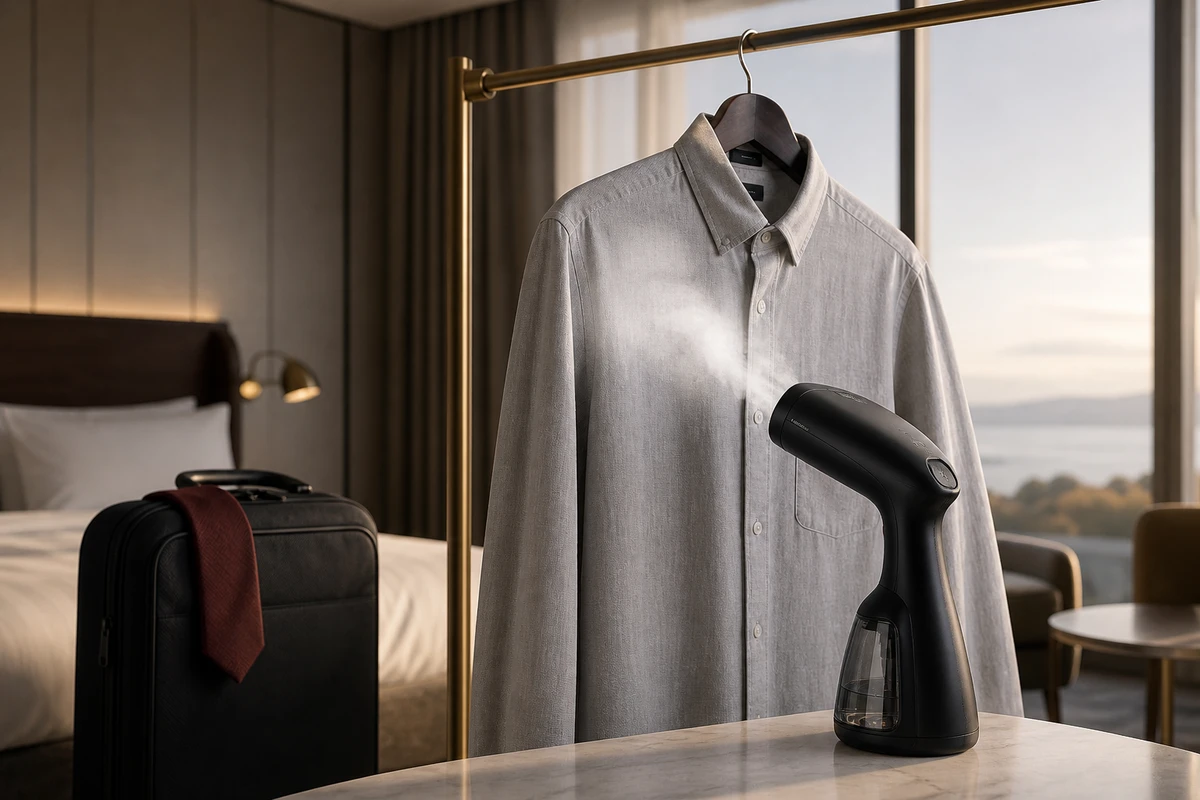
A brief listing high-temperature steam, a removable tank, and light weight still needs to explain the difference from a household iron. Start with practical questions: can a traveler tidy a shirt before a flight, how should the device approach thin cotton, linen, or a suit jacket, does the tank cover one intended session, and how does it fit into carry-on luggage? Let those questions determine the story angle and each shot’s task, using only operation supported by the product instructions.
Match Each Feature to the Right Visible Result
A fast heat-up claim needs evidence of the heat-up sequence, beyond a seconds label or a finished smooth shirt. Use a hotel-window scene in morning light to show wrinkle removal on the same piece of fabric. Explain portability through scale beside a passport, storage bag, and hanger. Side backlighting can make the actual steam visible; macro coverage can explain the tank’s opening, closing, and remaining water. Keep the before-and-after fabric consistent and make the cover’s promise match the result the footage can support.
Give the Main Film at Least Six Shot Tasks
Begin with a three-second visual hook: wrinkled clothing just before leaving. Bring in the product and show the grip to establish size. Show heat-up and steam output as the first functional sequence. Continue with clear operations on a shirt collar, cuffs, and a skirt hem. Add travel storage and power-supply compatibility to explain operating limits. Finish with a clean KV and an action shot. Editors can then extract a product-page demo, Amazon feature cuts, and retargeting versions focused on individual benefits.
Identify the Variable Before Reshooting
When a wrinkle-removal shot is unclear, check the fabric fibers, light angle, steam visibility in backlight, and the performer’s hand rhythm before taking it again. Capture close, waist-up, and overhead views of each benefit to give cutdowns useful coverage. Also plan a silent version without speech that can carry subtitles. Amazon Sponsored Brands video starts muted and its guidance emphasizes the product or an interesting visual in the first few seconds. A Shopify product-page version can explain the full use sequence; that is this production plan, rather than a platform requirement to watch the whole film.
Schedule the Day to Build a Footage Library
Organize the call sheet by selling point, setting, and aspect ratio. A hotel room, leaving for a commute, and wardrobe organization can share art direction and lighting while retaining landscape spatial context, portrait hand actions, and square product details. Label each scene’s role: questions and hooks for new audiences, process for the product page, and storage or lifestyle for repeat-purchase and gifting content. The media buyer can then find variations without repeatedly asking for an entirely new film.
Give Shopify, Amazon and Social Edits Distinct Roles
Shopify supports video and other product media that can carry complete demonstrations and close details; see Shopify’s product media guidance. For Amazon search placements, establish the product and key action early, following the relevant Sponsored Brands video specifications. A social cutdown can focus on the situation ‘five minutes before leaving,’ with one real action that reaches a visible result. That phrase describes the traveler’s situation, not a promise that the device solves every problem in five minutes.
Check the Evidence and Delivery Before Launch
Use actual steam instead of fabricated intensity, keep the outlet visible, and explain fabric limitations rather than showing only white shirts. Plan portrait coverage instead of relying on a forced landscape crop. Before launch, have creative, media buying, and e-commerce operations review the hero frame, subtitle space, landing-page continuity, and version names. Test the story angle with a short problem–operation–result sequence before expanding the matrix. For planning selling points through multi-platform delivery, see ONCE VISUAL’s video production approach. Identify the variable before reshooting to reduce avoidable rework.