A camping water filter video needs to answer practical questions in a little over ten seconds: where the water comes from, how the filter works, how much room it takes in a backpack, and how convenient a refill is outdoors. The number of filter layers alone cannot answer them. Show the product’s operating sequence and limits so overseas buyers can understand its use beyond the appearance of a premium water bottle.
Put Outdoor Buying Questions Into the Brief
Real questions can be specific: running short of water halfway through a hike, finding clear-looking campsite water that may not be safe to drink, keeping hands clean when replacing a cartridge, or transferring filtered water into a hydration reservoir. Organize the brief into source, treatment, drinking, and storage, with demonstrations limited to the product’s supported use. Specifications supply the facts; the user’s concern determines which action opens the film.
Show a Continuous Filtering Process
Film the process clearly: collecting water from a suitable stream source, connecting the device, squeezing or using gravity according to the product’s instructions, and filling a transparent container. Keep the hands and working part visible at each step. An effects transition from cloudy to clear water does not establish drinking safety, and the film must not imply treatment capabilities the product has not substantiated. Keep the important actions in a continuous sequence so viewers can understand how the device is used.
Make the Product Clear in the Hero Frame
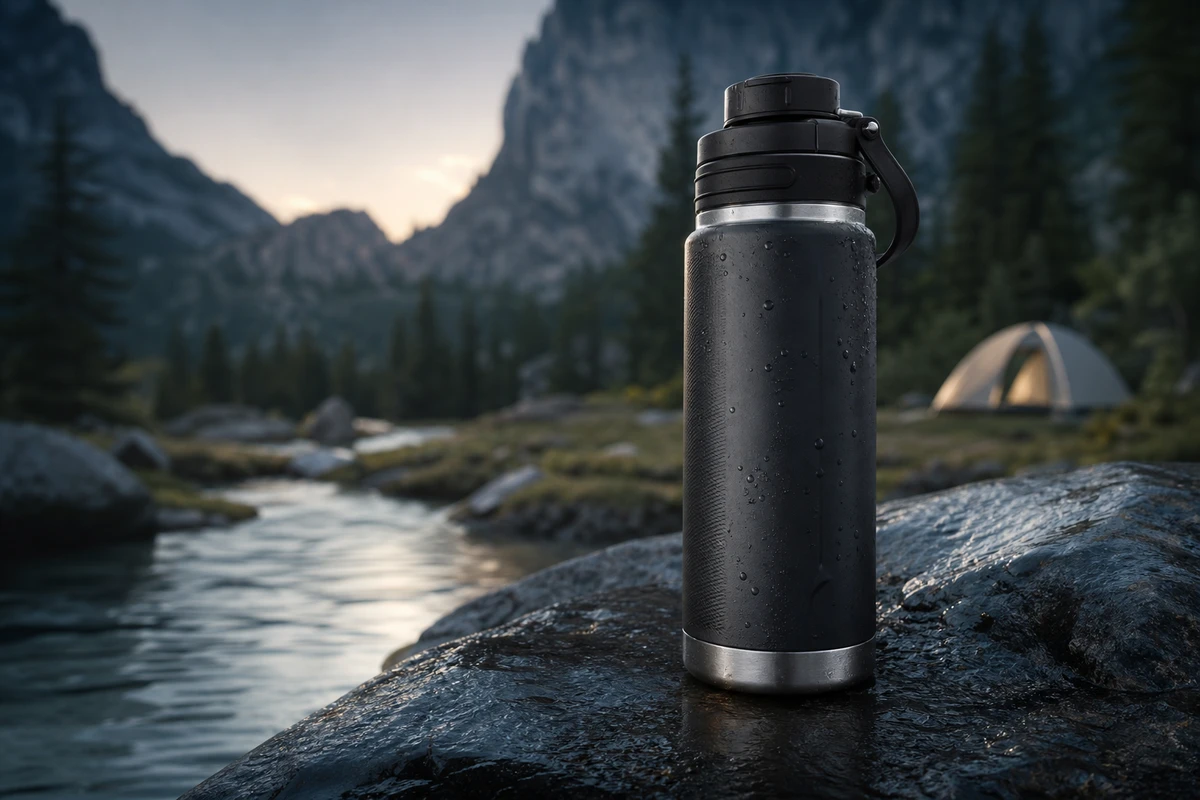
A valley, tent, or morning mist can establish an outdoor mood, while the filter remains the subject. Place it near the real water source with its materials, connections, and droplets visible, and enough background depth to explain the setting. Add four types of coverage: connection close-ups, packed size, one-handed operation where supported, and refilling for several people. The visual motif should make the product’s practical role easy to recognize.
Use the Product Page to Explain and Ads to Address One Concern
The product-page main film can explain the water source, operation, cleaning, and storage. An ad cutdown can open with an urgent need and resolve it through a clear, continuous operation. Shopify’s product media guidance places video alongside other media that explain the product. For brands also managing Google product assets, Merchant Center’s video_link guidance recommends videos of the specific product in real use. Rework a 45-second main film into a 9-second version around the buying concern each placement should address, rather than simply compressing the footage.
Leave Each Location With Reusable Footage
Plan at least five asset groups: finding water, filtering, product structure, compact storage, and refilling at camp. Editors can build four story angles from them—packing before departure, an outdoor refill, a group campsite, and filter maintenance—then deliver a landscape main film, portrait hooks, and product-page loops. During review, check whether the first second makes the concern clear and whether the middle shows a continuous operation. Identify the missing variable before commissioning a full reshoot in response to creative fatigue.
Capture the real conditions on the day: whether the reservoir connection fits, whether the opening works with wet hands, where a removed cartridge is stored temporarily, and how people queue when several need a refill. Every detail need not enter the main film, but each belongs in the footage library. Buyers may pause, replay, and compare. A clear connection close-up they can inspect may explain more than ten repetitions of ‘professional filtration.’ Complete those actions before adding atmosphere.
Confirm Three Things Before Production
First, ask the product team to confirm the sample’s connections, caps, and actual operating method so a staged action does not mislead viewers. Second, translate specifications into outdoor context: filtering speed means how long a companion waits, and packed size means how much room remains in a backpack. Third, align the advertising visual hook with the landing page’s first-screen promise. Use ONCE VISUAL’s video production services to work back to a shot list for the main film and version matrix. Giving each shot a purchase question leaves a useful basis for later campaign tests.
Deliver more than the finished film. Label hero frames, feature close-ups, action sequences, and interchangeable openings by their intended use so the brand can place them on product pages, in email, and in overseas ads. The value of this footage library lies in how clearly the team can find and reuse it.