A kitchen appliance commercial can feature fluent local talent and market-specific packaging yet still feel as if it was shot on a foreign soundstage. The problem is often the relationship between the product and the room: the depth of the counter, the location of outlets, the path of the cable, where everyday tools are stored, and whether the appliance is put away or left on display after use. Viewers may not name every mismatch, but they quickly decide whether the product belongs in their lives.
Localization for global appliance advertising therefore goes beyond changing faces, subtitles, and a few props. Art direction, directing, and cinematography need to answer a more concrete question: once the appliance enters a real home in the target market, how is it seen, used, cleaned, and returned to the order of everyday life?
Looking local begins with spatial relationships
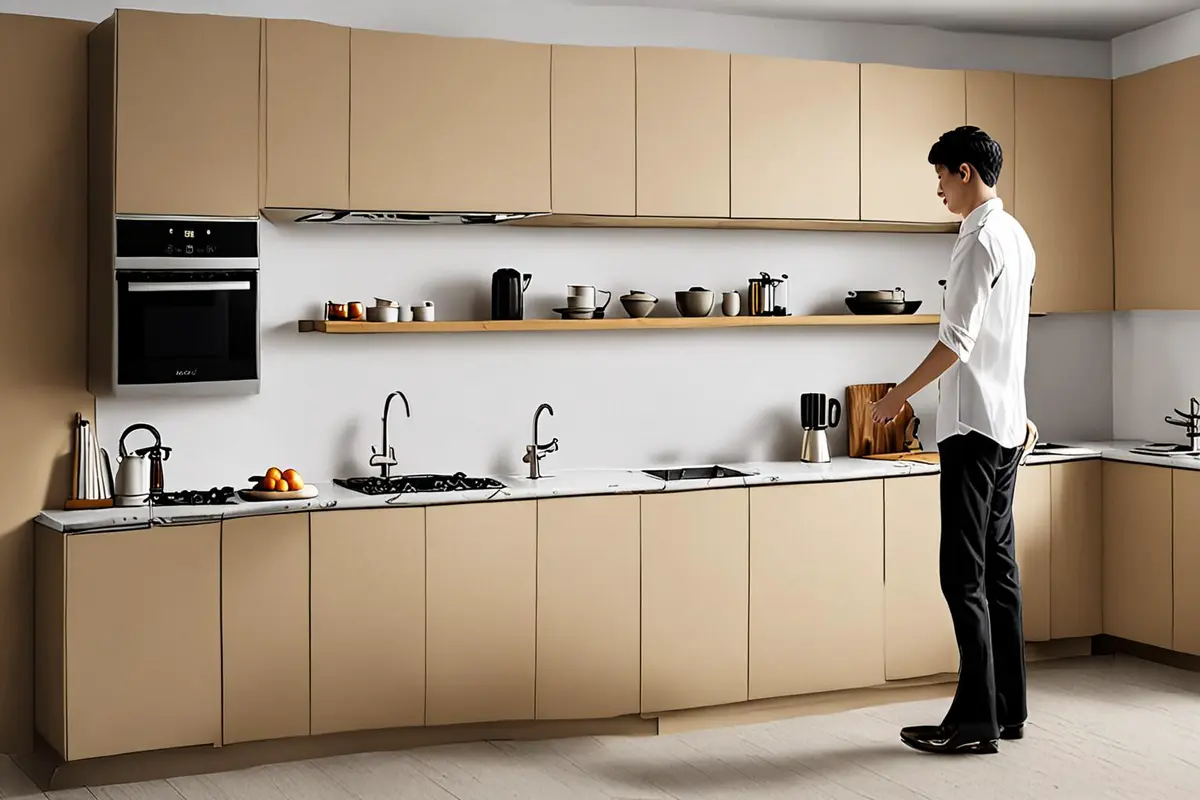
A kitchen is a system of constraints, not a decorative background. Counter depth determines how much operating room remains around the appliance. Cabinet height affects whether a lid can open. The positions of the sink, refrigerator, and cooktop shape the talent's route. Windows, ceiling fixtures, and under-cabinet lights determine how materials reflect.
If these relationships fail, a set can look stylistically Western and still make the product feel temporarily placed. A room with few obvious regional symbols can feel convincing when the distances between product, person, and everyday objects make sense. The broader principles in our video production insights remain useful, but global appliance work adds another question: does this version of everyday life belong to the intended audience?
Start with how the appliance occupies the counter
The apparent size of a small appliance does not come only from a beauty shot. The talent's reach, the scale of a cutting board or plate, and the clearance between the machine and the wall all tell viewers whether it feels compact, stable, or intrusive. Before shooting, the real product should complete a full operating cycle in the proposed set. Supplying dimensions to the art department is not enough.
A top-opening appliance needs room to show the lid at full height. A side-loading water tank or filter needs space for a hand and component to move. Products that release steam, heat, or crumbs need a credible relationship with walls, food, and nearby appliances. The film does not have to explain regulations, but the physical logic must remain believable.
Outlets, cables, and switches reveal a foreign set quickly
Many commercials hide every wire until the appliance starts to look like an unpowered sculpture. For plugged-in kitchen products, cable direction, outlet placement, adapters, and the action before switching on all affect realism. The production team should confirm the plug, cable length, and power requirements of the actual sales version instead of presenting a sample from another market as local use.
The cable does not need to dominate the frame. It can leave naturally along the edge of the counter or appear briefly during a clear start-up action. The point is not to feature the wire; it is to avoid contradicting familiar household logic. Removing a plug in post may create a cleaner frame while also removing evidence that the product can actually be used.
Localized props should participate in the action
Replacing bread, coffee cups, or fruit with locally familiar versions is only the surface layer of localization. Useful props participate in the action: a container fits under the machine, a cup matches the outlet height, the amount of food makes sense for the people in the scene, and cleaning cloths or bins appear along the path after use.
Props also change which benefit should lead. The same food-preparation device can communicate speed and small batches in a solo breakfast scene, while a shared meal makes capacity, repeated use, and serving more visible. Two or three objects that move the action forward usually say more than a table crowded with supposedly local food.
Storage and cleaning decide whether the product can stay
Many commercials stop when the food is ready or the talent smiles. They never show what happens next. For frequently used appliances, wiping surfaces, storing components, and deciding whether the product occupies the counter permanently can matter more to daily judgment than a polished start-up shot.
This is part of localization. A compact home may place more value on folding, stacking, and vertical storage. A larger counter may allow the appliance to remain visible. The commercial does not need to become a specification sheet. A single return-to-place action can show how the product fits the order of the home. The viewer sees more than a completed function; they see that the appliance still belongs after use.
Performance should follow the household route
Local casting cannot fix an implausible path through the room. The director should let the performer work with the space: where ingredients come from, which hand opens a cabinet, where the eyes land during operation, and whether a used container travels to the sink or dining table. The more naturally the movement fits the room, the more the appliance feels integrated into life.
Casting creates one layer of familiarity. Habitual movement inside the home creates a second layer of credibility. For kitchen scenes, the most valuable market-specific material may be a few seconds of reaching, placing, plugging in, cleaning, or storing rather than another translated line.
Lighting should not turn every market into the same premium kitchen
Soft light, low saturation, and broad wood surfaces can produce an international look, but they can also turn different homes into one showroom. Lighting should begin with plausible sources already present in the room, such as windows, ceiling fixtures, or under-cabinet lights, and then use production fixtures to shape the image. Product highlights can retain a premium brand finish without losing their spatial source.
Color should be equally restrained. Exaggerated regional colors are unnecessary. What matters is whether walls, cabinets, counters, and food create a density of life that the audience recognizes. Global brand rules can remain stable while the physical environment changes around them.
Share global product shots and replace only what carries local context
Structural details, material close-ups, mechanism animation, and some operating inserts can usually travel across markets. Plugs, packaging, food, tableware, relationships between people, wide kitchen views, and shots that reveal residential architecture are more likely to require adaptation. Treating those groups separately prevents a single long shot from locking every regional variable together.
The practical goal is not to reshoot the entire film for every country. Establish a stable group of global product shots, then create a smaller set of spatial and performance replacements for priority markets. Brand recognition stays consistent while the home does not feel generic. Any image that genuinely needs replacement should be written as a self-contained beat in the script and storyboard.
When a neutral studio is the more honest choice
If the sales market is still undecided, or if the creative idea focuses on industrial design, materials, and technical mechanisms, a neutral studio can be more honest than a set pretending to be a particular country. Experimental brand films can also use abstract spaces as long as they do not present them as everyday use.
Global hero shots are another exception. Simplifying the environment can keep the product in the lead, while regional shorts and product pages later provide local context. Localization does not require a regional cue in every frame. It needs specific answers at the moment viewers ask whether the appliance can enter their home.
Treat the kitchen as the interface between product and market
The detail global appliance advertising most often misses is not whether a prop looks attractive. It is whether the product completes a believable household cycle in the target market: arrival, power, operation, result, cleaning, and return. When that path works, casting, lighting, and art direction build credibility together. When it does not, fluent subtitles cannot remove the sense that the product is foreign to the room.
If you are planning an international product film for kitchen appliances, personal-care devices, or smart-home products, ONCE can begin with real dimensions, target-market residential references, and full use actions, then separate global hero shots from regional replacement scenes. Explore our cross-border product video solution to turn product value into a spatial relationship audiences can immediately understand.