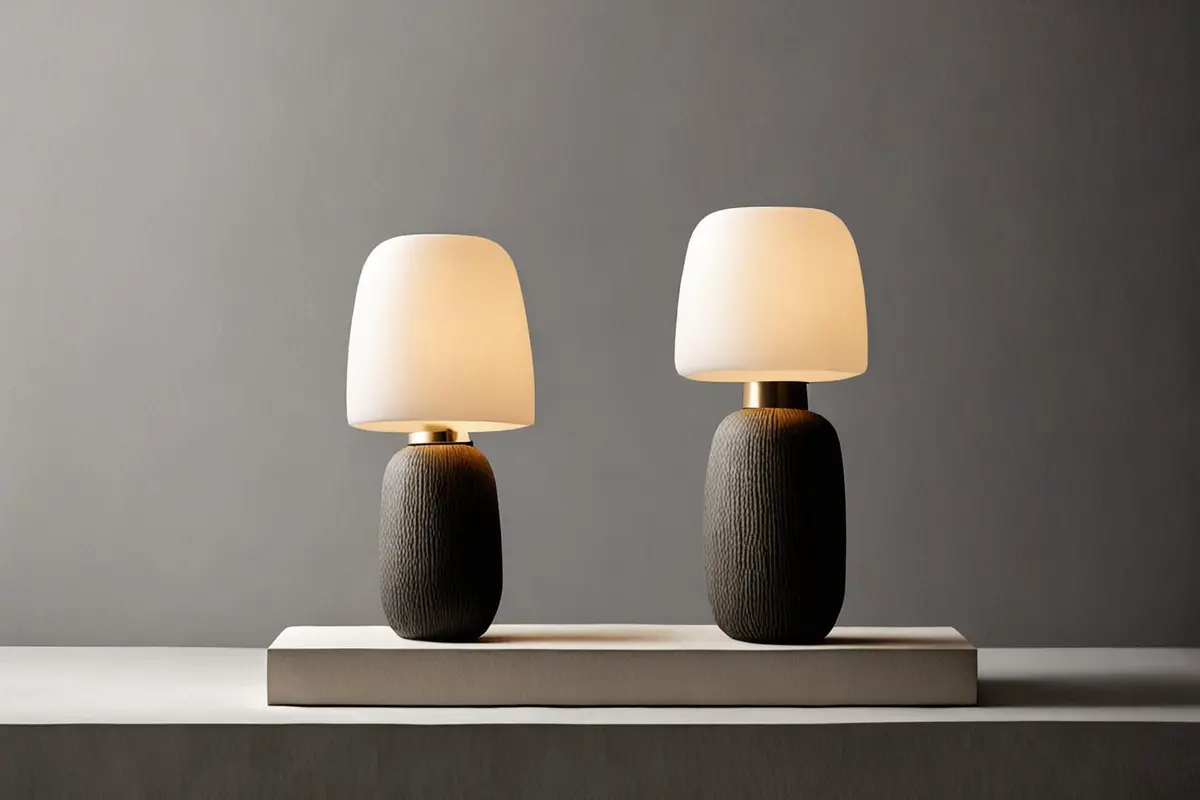
Product advertising often treats shadows as something to clean up. The background should be pristine, the product should be bright, and the surface should appear untouched by light. The result may be clear, yet the product feels pasted into the frame. It has no weight, no readable height above the table, and no convincing contact with the space.
A shadow is not waste left behind by lighting. It records the relationship among product, surface, light source, and time. A contact shadow tells us where the product stands. Projection length suggests where the light comes from. Edge softness reveals scale, while movement can announce an action before the product itself moves. Strong product imagery neither keeps every shadow nor removes them all. It decides what each visible shadow needs to explain.
Start by separating three different jobs
Contact shadow places the product on a surface
Where the product meets a table, plinth, or floor, a narrow contact shadow usually remains. It does not need to be dark, but it should follow the real load-bearing area. Remove it completely and the product may float. Make it too broad and black, and the object looks glued down.
Cast shadow explains direction and distance
A projection extending to one side reveals light position, product height, and the relationship to the supporting surface. It can be faint, but its direction must agree with highlights, human shadows, and environmental light. When those cues disagree, viewers may not name the error, but they feel the composite.
Patterned shadow can carry composition and story
Window frames, plants, blinds, or a passing figure can describe time of day and the world around the product. The pattern stops helping when it covers a logo, connector, control, or material detail that the shot needs to communicate.
Contact shadow first answers whether the product has weight
A speaker on a table without any shadow can resemble a cutout. A compact contact shadow with restrained density makes the casing, internal structure, and battery feel like real mass. With soft packaging, cushions, or silicone, the shadow should also agree with the slight deformation created by pressure.
On set, begin with the main light and one bounce, then observe the true point of contact before adding background, rim, and color. If post-production must rebuild the shadow, use the photographed position and the shape of the product base instead of painting a generic blurred patch.
Longer shadows create a stronger sense of time
A low light source stretches the projection, suggesting morning or late afternoon and strengthening direction and motion. A high, broad source shortens it, which can feel more like midday, an office, or a studio. Neither is automatically more premium. The question is whether the implied time belongs to the product and brand.
A long shadow can place a portable power station near the end of an outdoor day. A window pattern can bring skincare into a morning routine. A short, stable projection can support the order of a work device. When shadow direction reverses between shots, time and space reverse with it.
Soft and hard shadows describe more than mood
Edge softness changes how viewers understand source size, distance, and environmental scale. A large nearby source creates a gradual transition associated with approachable interiors. A small distant source produces a distinct edge that can suggest sunlight, a stage, or graphic order.
Hard shadows demand precision because every button, bracket, cable, and speck of dust can appear on the surface below. Soft shadows are more forgiving, but they can turn the product base into a wide gray haze. Choose the light quality by deciding whether the shadow itself needs to be read.
A floating shot needs the shadow to explain height
When a product is lifted by a motion rig, clear support, or compositing, its ground shadow becomes a major height cue. As the product rises, the contact shadow disappears and the cast shadow often becomes softer, lighter, or differently sized. As it lands, the shadow tightens until it reconnects with the base.
If the product moves while the shadow remains pasted to the floor, the float becomes two-dimensional. Excessive shadow change can make the product appear to travel several meters. Lock the camera and record the product and shadow at the start, midpoint, and landing before dividing the work between production and post.
Do not let surface highlights and shadows describe different lights
Highlights on the product tell viewers where the main light is. The floor shadow answers the same question. If a metal edge shows light from the upper left while the shadow also extends left, the two systems conflict. Multi-light setups can be complex, but the frame still needs a dominant direction.
Our article on camera height in product advertising explains where the viewer stands. Shadow design adds another question: from that position, how does the product prove that it shares the same ground and light as the rest of the scene?
A shadow can anticipate product movement
A hand has not entered yet, but its shadow passes over the table. The product is about to turn, and the projection edge moves first. Before a lid opens, its shadow changes shape. These cues create expectation before the main action arrives.
They must not announce the wrong action. If a hand shadow approaches a control from one side while the real hand enters from the other, direction becomes confusing. Rehearse while watching both subject and surface so the shadow's speed and shape belong to the same beat.
When people enter, shadows redistribute product importance
Hands, bodies, and products sharing one frame create new shadow relationships. A human shadow can cover the product or frame the control area. A light designed only for a still life may hide every key surface when the performer enters.
Block the real operation before adjusting lights and flags. Our guide to first use in product ads shows how attention moves from observation to action. The shadow should support that shift, not conceal the interface before the hand arrives.
Hero shots and functional shots need different shadows
A hero image can use shadow for shape, rhythm, and emotion, sometimes allowing it to occupy more of the frame than the product. A functional shot must keep controls, connectors, scales, and results readable. One dramatic shadow setup rarely serves both jobs equally well.
The production can shoot a brand image with a strong pattern, then adjust fill or flags for the real operation. This acknowledges that the shots answer different questions: one helps people remember the product, while the other helps them understand it.
Change the camera and redesign the shadow
An overhead view expands the flat relationship between product and projection. A low camera compresses the ground shadow and increases product mass. At eye level, the shadow may retreat behind the object. Reusing the same light after changing height can make the projection cut through the silhouette or disappear entirely.
Camera position determines where the audience stands. Shadow determines whether the product still shares a believable world from that position. Test the two together rather than approving them in separate frames.
Vertical versions need the shadow direction, not only the product
In a horizontal frame, a long side projection can balance the composition. Crop it vertically and the product remains while the shadow disappears, leaving an unexplained dark fragment. A steep diagonal shadow may also pull attention outside a vertical frame's title or interface safe area.
For each format, define the shadow endpoint, product position, and CTA safe area. Moving the source, object, or surface for a dedicated vertical take is often better than narrowing the center of the horizontal master.
Lock shadow rules before mixing AI, CG, and live action
A generated background may contain attractive window light that disagrees with the live-action product highlight. A precise CG model can lose weight when its contact shadow is too soft, changes direction, or deforms from frame to frame. Before hybrid production, lock the ground plane, key direction, source size, product height, and camera viewpoint.
If the background carries emotion while the photographed product carries facts, record the lighting with a neutral reference or simple stand-in. The goal is not a shadow that wins a realism contest. It is a shadow that supports one continuous space and action.
Before production, test three useful changes
Keep product, camera, and background fixed. First, vary the contact shadow from nearly absent to compact and readable, then choose the level that matches weight. Second, change key height and see whether projection length shifts time and brand mood. Third, move the product or hand and ask whether the shadow contributes new information.
Remove shadows that have no job. If they explain neither contact, space, time, action, nor composition, they are noise. If they help the product stand, move, and belong to a real environment, they should not disappear simply because the background is meant to look clean.
The frame becomes believable when the product stands
Shadow is rarely the star of a product ad, but it decides whether the product exists. Viewers use it to judge weight, distance, height, time, and movement, even when they never consciously analyze those cues.
If you are planning a product commercial, launch film, or a hybrid of live action, AIGC, and CG, contact ONCE. We can start with the sample surface, supporting plane, action, and required formats so every shadow left in the frame has a clear job.