In a product film, hands often reveal a problem before a face does. A ring does not fit. Nail color pulls attention away from the product. The wrist turns in the opposite direction from the preceding shot. A device suddenly looks larger than expected once someone holds it. The production may then consider a professional hand model or a hand double who performs only the close-ups for the main actor.
A hand double can make precise macro actions more repeatable, but the job is larger than making the hands look polished. Once a film has established a specific character, the double's hands belong to that character. Skin tone, apparent age, joints, habits, sleeve, grip and timing must connect back to the main performer. Otherwise, a beautiful close-up can feel as though it came from another commercial.
Use a hand model when the task exceeds the actor's practical range
A professional hand model is valuable when an action must be repeated accurately within shallow depth of field and a tight composition. Jewelry fitting, cosmetic dosing, food placement, precision connector insertion, screen gestures and dial operation may require fingers to stop within a few millimeters while keeping the logo, mechanism and light readable.
If the main actor can perform the action safely and naturally, and their hands suit the character, there is no reason to replace them simply for perfection. A double becomes useful when the action must be repeated many times without damaging the sample, when a small product demands unusually fine control, or when the actor's face and performance are right but their hand condition, schedule or specialist skill cannot support the key shot.
A double should not quietly change the character's age, ethnicity or way of life. If the story establishes someone who works with their hands, an immaculate double with none of that history may weaken the character even when the image is attractive.
Decide whether the shot belongs to the person, product or mechanism
Different hand close-ups perform different jobs, so they do not require the same kind of match. Classify the shot before assigning every insert to the hand model.
Character shots must preserve behavior
When a hand hesitates, cares for someone, works through fatigue or moves with practiced confidence, the gesture is part of the performance. The double needs to know what the character has just experienced, why they are reaching now and where their attention moves afterward. Copying hand position alone does not copy intention.
Product shots must protect scale and structure
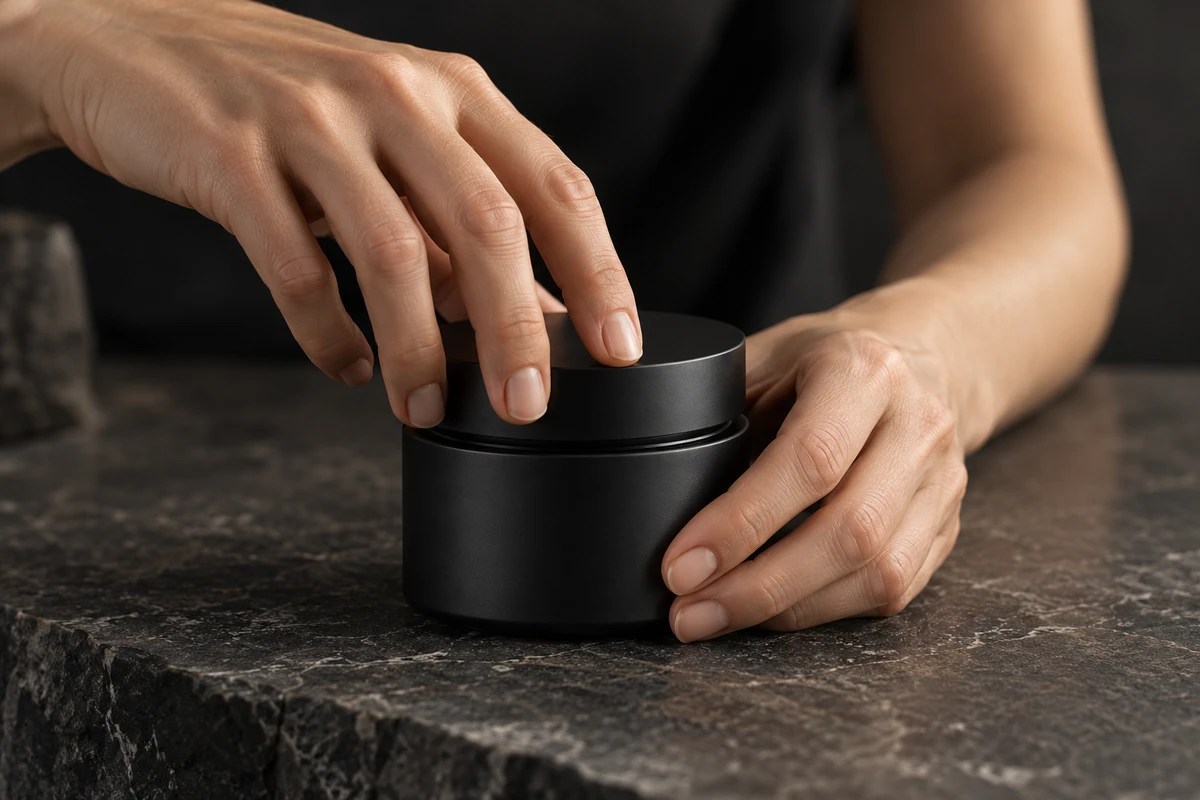
A product shot is more concerned with proportion, whether important structure is covered, where the mark faces and whether the operational result stays visible. The hand can be restrained, but it should not become a rigid display stand. ONCE's article on making buttons, dials and hinges feel tactile explains how real force creates visible cause and effect. A hand model should preserve that force rather than offer only elegant finger shapes.
Mechanism shots must follow the real sequence
Insertion, fastening, dosing, cleaning and assembly each have a real order. A double may slow the action, divide it into beats and add editorial holds, but should not change the actual method of use. For specialist products, let an experienced operator demonstrate the movement first, then teach the hand model the pressure points and sequence. The same principle appears in ONCE's discussion of directing professional gestures in corporate films: visual polish follows accurate meaning.
Match the identity of the hand, not only skin tone
Skin tone is only the first layer of casting. Palm proportion, joint shape, veins, texture, nail length, dominant hand, wrist bones, hair, jewelry marks and grooming can be more obvious at the edit point. The closer the camera moves, the more visible these differences become.
Do not cast from a standard hand-model card alone. Ask candidates to pick up the actual product, hold it, touch it, put it down and pause, then record those tests with the intended focal length. Long fingers that suit jewelry may not make a power tool feel stable. A strong hand can also alter the apparent scale of a small earbud.
Wardrobe belongs to the hand's identity too. Sleeve length, fabric weight, watch, rings and nail color must continue from the actor's footage. If the actor has already wrapped, keep references that show face, wrist and sleeve together rather than relying on a phone photo to judge color.
The real product changes the casting decision
The same hand can create different scale judgments beside different products. A palm around a small appliance may make it feel compact or hide its main structure. Fingertips holding jewelry can reveal detail while turning real use into an unnatural display pose.
Test with a production sample at the correct size, or an accurate substitute. Record finger landing points, how much of the product disappears, the required wrist rotation and whether the model can finish in the same position repeatedly. Products that collect fingerprints, endure repeated opening or have delicate finishes also need backup samples.
Hand performance begins with the approach, not the final pose
Many inserts record only a polished endpoint: the hand is already placed, the product is already facing camera, and the lens slowly pushes in. This may extend a still-life image, but it is difficult to connect to a human action. An editable hand performance preserves the necessary part of approach, contact, force, result and release.
Direct the model with a verb rather than simply asking for elegance. Place, confirm, test, pass, protect and reach quickly produce different wrist speeds, finger tension and pauses. Perform the action at normal speed first, then decide which part needs to slow down. Making every movement slow can turn an experienced character into someone using the product for the first time.
The model also needs to know where the character's face is, even when it is outside the insert. Eye line and breathing in adjacent shots affect the rhythm of the hand. A character who has just made a decision reaches directly; one who is still observing may pause outside the product first. The double continues a performance rather than creating an isolated hand demo.
Continuity often breaks in five small places
- Dominant hand: a wide shot using the right hand should not switch to the left without a reason.
- Entry direction: the side from which the hand enters must match the actor's position and screen axis.
- Grip: finger placement over ports, marks and pressure points must connect between angles.
- Sleeve and accessories: folds, sleeve length, watch direction and ring position can expose the double.
- Speed: a fast reach in the wide shot and a slow caress in close-up change the character's attitude.
The production should not leave these decisions for the editor to guess. Before each double shot, replay the corresponding actor shot; afterward, view the two clips in sequence. If the actor's shot has not been filmed, record a bridge shot including face, shoulder, hand and product to establish pose and timing for the later insert.
Light skin and product together without making them equally bright
Macro photography magnifies skin texture, dryness, moisture and small highlights. Excessive diffusion can make the hand look plastic, while hard side light may let joints and veins compete with the product. Establish the main reflection for the product material first, then add restrained fill for the skin. This is usually more reliable than lighting a beautiful hand and trying to fit the product into it afterward.
Normal grooming, cleaning and minor emergency makeup are useful, but skin should not become a surface without touch. Compression at the fingertip, joint movement and changes in reflection after contact help the operation feel real. Postproduction may remove a temporary scratch, hangnail or obvious dust without erasing anatomy, age and natural texture.
Actor, double and product need one production logic
The strongest workflow records bridge shots while both actor and hand model are available, then moves into the double's macro work. Note camera height, focal length, wrist angle, sleeve, accessories, product state and action duration. When screens, indicator lights or mechanical feedback are involved, record the real state before and after activation as well.
If budget or schedule requires separate shoot days, the reference must be more than a still frame. Preserve video of the actor's action at normal speed, the product orientation and the full entrance and exit. After the double's close-ups, include a medium shot the actor can perform safely so the audience recognizes the person again around the insert.
A professional hand model does not replace every character with one standard pair of beautiful hands. The model helps the smallest images remain accurate, controlled and believable. A successful hand double is almost invisible: viewers simply understand more clearly how the character uses the product and what the product means in those hands.
If your product film includes jewelry, cosmetics, consumer electronics, appliances or precision operations, contact ONCE to discuss casting, action tests and close-up production.