On a product-ad set, shadows are often treated as defects. The tabletop looks untidy, the edge of the pack falls too dark, or a performer's hand blocks the key light, so the crew keeps adding fill until the product is bright on every side. The image becomes safer, but it may lose something essential: where the product stands, how far it sits from the background, which surface is turning and what time of day the moment belongs to.
A shadow is not a leftover created by the absence of light. It is the result of a product meeting a space. A cast shadow reveals the direction of light. A contact shadow places the object on a surface. Shading across the object helps viewers understand curves, thickness and structural breaks. Product ad lighting becomes more convincing when the team decides what the shadow must explain before deciding how faint it should be.
Separate three kinds of darkness before shaping them
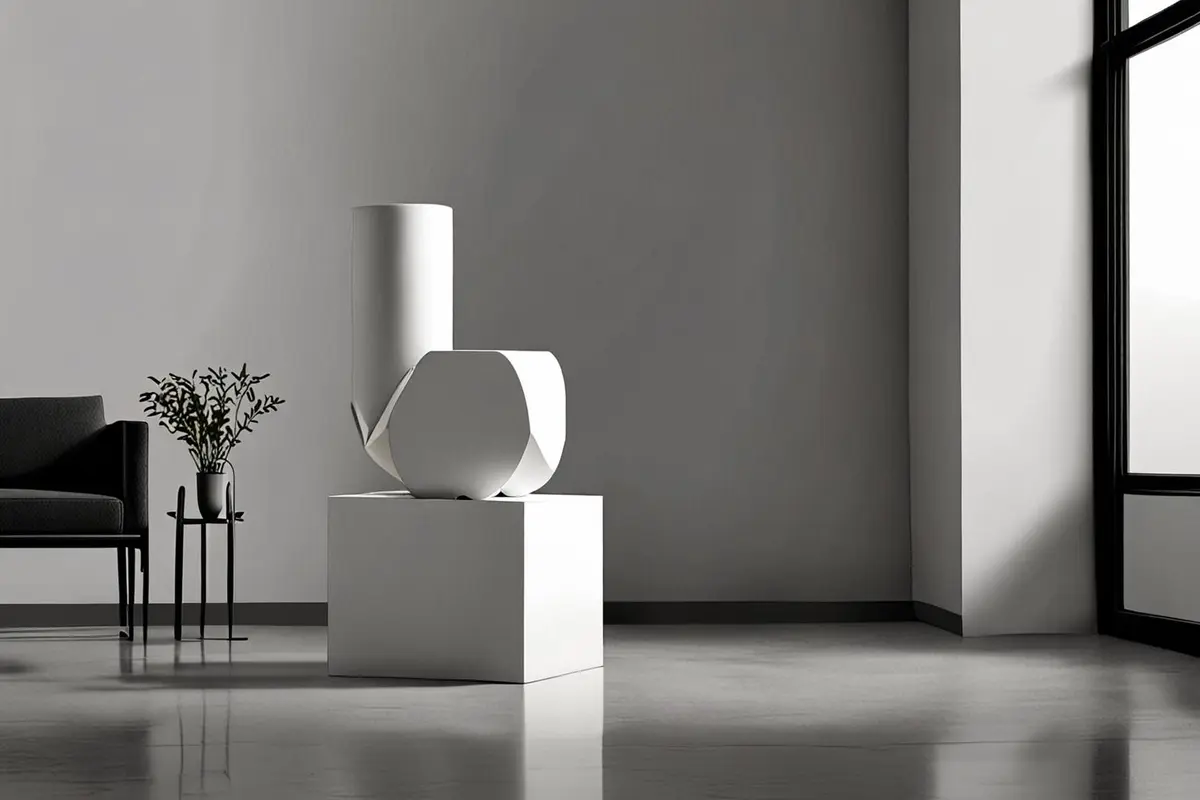
Shading on the object comes from surfaces turning away from the light, and it describes volume. A continuous transition from bright to dark helps a cylinder feel curved. A sudden change at a structural break helps viewers distinguish one plane from another.
A cast shadow on the environment describes light direction, silhouette and spatial distance. It can fall across a table, wall or haze, changing shape with the angle between product and receiving surface. A contact shadow sits where the product comes closest to its support. It may be small, but it decides whether the product feels firmly placed, lightly suspended or pasted into the frame in post.
All three can exist in one shot without carrying equal weight. A hero image may preserve object shading for structure and use the cast shadow as composition. A functional demonstration may reduce the cast shadow and retain only the contact relationship so that buttons, ports and state changes remain clear.
Ask what the shadow explains before asking whether it looks good
The same product can give a shadow several different jobs. A clear bottle may need it to reveal base thickness and refraction. A countertop appliance may need a contact shadow to establish weight and position. Headphones can use changing shadows to explain the folding angle. A lamp may turn the light it creates and the shadow it casts into the product benefit itself.
At storyboard stage, write one sentence for the shadow in each important shot: “show the clearance beneath the stand,” “leave the direction of rotation on the wall,” or “let the window pattern move the scene toward evening.” These statements are more useful than “make it premium.” They also help lighting, art, camera and post-production teams agree on which dark areas must survive.
A shadow can complete a shape that the camera only partly sees
A dark product against a dark background can lose its outer contour. One answer is an edge light. Another is to place the product's shadow on a lighter surface. Even when the body only carries a narrow highlight, viewers can read the overall shape of a handle, stand, bottle neck or antenna from the shadow.
The shadow can also introduce structure before the product arrives. A silhouette crosses the tabletop before the body enters frame. A gap changes in the shadow before the lid fully opens. This sequence creates anticipation, but the shadow still has to correspond to the physical product. Redesigning it purely for a prettier shape can contradict the real opening direction, number of parts or proportions.
The gap between product and shadow changes perceived weight
When an object rests on a tabletop, the closest area usually appears darkest and the shadow becomes softer as it travels outward. If the darkest area separates from the base, the product feels airborne or supported somewhere outside the frame. Viewers are highly sensitive to this relationship. A perfectly cut product can still look weightless when its contact shadow is wrong.
For floating, dropping or magnetic actions, record product height, key-light direction, receiving-surface texture and shadow separation together. Live action can use a clear support or fine rig to capture a truthful relationship before the support is removed. A fully rebuilt shot still needs the continuous change from contact to separation. Weight comes from that transition, not only from adding a low-frequency impact at the landing frame.
Moving shadows can bring time into a static product shot
A stationary product does not require a stationary image. A window-grid shadow can travel slowly, leaves can shift gently, or a rotating product can change a long shadow into a shorter one. Compared with constant camera movement, shadow motion can keep package copy and structural detail stable while giving the shot a sense of change.
The movement needs a source. If exterior light moves right while the tabletop shadow drifts left, if leaf patterns race while curtains and people remain untouched by air, or if the product rotates ninety degrees while the wall silhouette barely changes, the scene loses credibility. Change only one variable among light, product and receiving surface during an early test. The useful motion becomes much easier to see.
Shadow hardness suggests light scale and scene character
A hard shadow has a clear edge. It emphasizes structure, rhythm and graphic design, while revealing dust, supports and small deformations. A soft shadow has a wide transition. It can make home, care and lifestyle scenes feel natural, but it may erase small height changes and fine silhouettes.
Hard and soft do not mean cheap and premium. They result from the size and distance of the light relative to the product. Begin with a slightly harder source to confirm that the shape is accurate, then enlarge or diffuse the light until the shadow is as soft as possible without losing the intended structure. If the environment is filled flat from the start, post-production cannot easily rebuild a believable three-dimensional relationship.
Not every product needs a dramatic shadow
A standard product-page shot first needs readable ports, screens, package copy and controls. Strong blind patterns, colored projections or multiple shadows can create an expressive hero frame while interfering with explanation. Use the graphic treatment for the campaign image, then capture a clearer neutral-light set for the product page and functional cutdowns.
The same shadow treatment can behave differently on different materials. A matte shell may retain information in the dark side. A black mirror finish may also reveal fixtures and the studio around it. Transparent material can produce bright refracted patterns inside the shadow. ONCE's Pearl River Delta location and studio resources allow walls, tabletops, window direction and product material to be tested together before the grade reveals that the dark side contains no useful information.
When a performer enters, the shadow becomes part of the action
As a hand approaches, its shadow can arrive on the control area first and prepare viewers for the action. A person passing a window can briefly cover the product and create a natural transition. When the product is lifted, the loss of contact shadow immediately communicates a new state.
These relationships need rehearsal. A hand can press a button while its shadow falls elsewhere. A performer can cross a light zone without changing the product highlight. The product can return to the table while the contact shadow appears a beat late. The director should watch more than whether a hand blocks the logo. The shadow must deliver the same action information at the correct time.
Horizontal and vertical versions need different shadow landing zones
A horizontal composition can extend a long shadow to one side and turn it into a visual path toward the product. A vertical crop has less width. The same shadow may be cut away until only an unexplained dark patch remains. Display both safe frames on the monitor and check that the product, the end of the cast shadow and the key action survive in each composition.
If a shot only works when the full shadow is visible, the vertical version needs a different light direction or receiving surface. Cropping the middle of the horizontal frame is not enough. ONCE's global launch content approach treats campaign masters, product-page assets and social cutdowns as different jobs. The shadow should be recomposed for each job as well.
Live action, CG and AIGC must share one light relationship
Live action is strongest at preserving physical contact, material reflection and fine changes in shadow. CG can control the geometry among product, light and receiving surface precisely. AIGC can explore graphic shadows and scene moods, but it can contradict itself in part silhouettes, light direction and continuous motion.
For hybrid work, lock key-light direction, source size, product height, receiving-surface color and the deepest point of the shadow. If a generated background changes the sun direction, the live-action dark side and cast shadow must change with it. A more attractive background cannot belong to a different lighting system. Shadows are among the fastest ways to tell whether hybrid elements occupy the same space.
Use four short tests to find the shadow's role before filming
Place the product on its final surface. Capture a neutral soft-light pass to confirm structure and copy. Then use a harder side light to inspect the cast silhouette. For the third pass, move either the product or the light and ask whether the shadow explains the action. Add a performer's hand for the fourth pass and check contact, occlusion and state change. These tests do not need to appear in the film. They allow the team to decide how much shadow deserves to remain before the set is locked.
Review without music or captions. Ask whether the product sits in the space, whether its form is understandable, whether the action direction is consistent and whether the sense of time is credible. If the shadow adds no information, reduce it. If removing the shadow makes the product look pasted, floating or flat, it is already carrying part of the story.
Make the shadow part of the product information
If your product needs one lighting language that stays recognizable across a campaign film, product page and social cutdowns, ONCE can begin with material, action, scene and aspect-ratio tests. A short lighting study can establish shadow shape, hardness and motion before the full shoot. Contact ONCE to discuss product ad production.