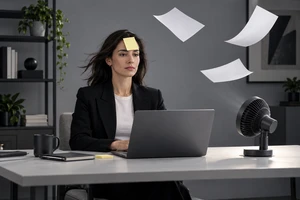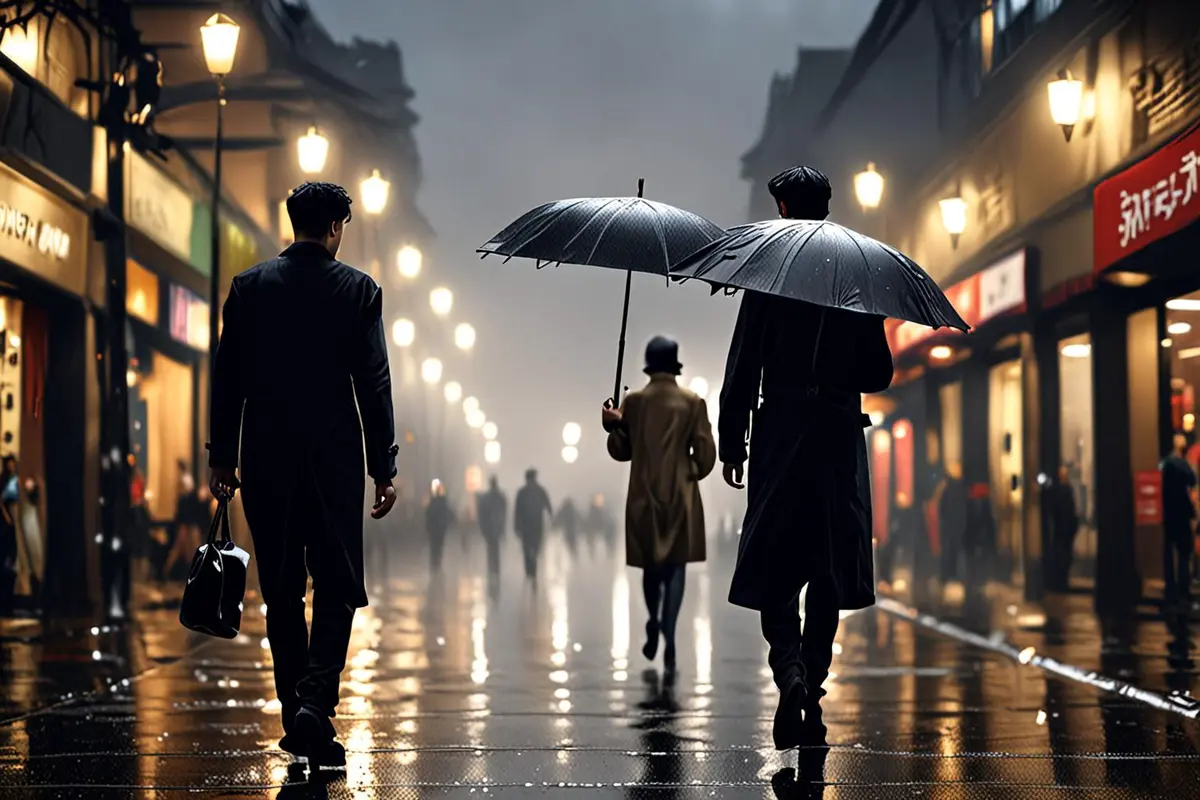
Rain, wind, fog, or hard sunlight can give a brand film an immediate atmosphere. But weather becomes part of the story only when it changes what a character does next. If the character walks, speaks, and handles the product exactly as planned, the rain is merely a texture added to the image. If rain changes the route, shortens a pause, brings two people closer, or gives the product a new task, the weather has become a dramatic condition.
A useful first test is simple: remove the weather from the scene. Do the character's actions, choices, and relationship with the product remain unchanged? If they do, the weather is probably styling. If the scene loses a key turn, the weather has earned its place.
Weather Is a Condition That Creates a Problem
Brand films often begin with emotional shorthand: rain means comfort, fog means mystery, wind means freedom, and sunshine means hope. Those associations can inspire a mood, but they are not yet a shot. The creative team still has to translate each adjective into a physical condition.
- Wind changes direction, posture, speech, and the movement of light objects. It can make stability, fit, protection, or weight visibly relevant.
- Rain changes routes, speed, visibility, and the distance between people. Whether an umbrella can cover two people or whether wet hands can complete an action creates behavior.
- Fog reduces visible distance, turning searching, recognizing, and approaching into events. If nobody needs to see anything clearly, the fog is only visual packaging.
- Heat is more than a warm grade. It makes people seek shade, adjust clothing, slow down, or handle food, drinks, and devices differently.
The more specific the problem, the less the brand needs a voice-over claiming that it understands real life. Viewers can read the pressure in the character's behavior and understand why the product appears at that moment.
Write the Character's Choice Before the Weather Image
An effective weather scene usually has three beats: the environment changes, the character makes a choice, and that choice creates a visible consequence. A storyboard should not begin with “a beautiful street in the rain.” It should begin with “who changes what because it starts raining?”
Give the Character at Least Two Plausible Actions
When there is only one prescribed action, performance easily turns into a product demonstration. Give the character two believable options so that weather can create a decision. They may keep walking or wait under an awning; keep the umbrella to themselves or angle it toward another person; switch on a device immediately or dry the connector first. The chosen action reveals both character and product role.
Bring the Product Into an Existing Chain of Action
The product should answer a problem that is already visible. After wind lifts a brim, the character adjusts how it is secured. After fog hides a distant marker, lighting or navigation has a reason to matter. After heat stops a person in their tracks, a drink, shade, or cooling device can enter naturally. The product needs a cause before it appears and a changed state afterward.
This differs from placing a product inside an attractive setting. For more on how an environment can support product meaning, explore ONCE's video production insights. Weather adds another demand: the environment must act over time.
Weather Must Leave Physical Consequences
A believable environment does not depend on the number of particles in the frame. It depends on what contact leaves behind. Rain changes pavement reflections, fabric weight, hair, footsteps, and grip. Wind cannot push hair, clothing, leaves, and a lightweight product component in unrelated directions. Heat should affect breathing, pace, skin, and how a character touches a surface.
A scene does not need to magnify every consequence. Choose one primary consequence and two supporting ones. The primary consequence moves the story, such as a character protecting a wet package inside a coat. Supporting consequences, such as the direction of droplets and the room tone, make the world credible. This keeps the scene focused without reducing it to a fashionable overlay.
Track Irreversible States for Continuity
Weather scenes are unusually vulnerable to continuity errors. A sleeve is soaked in one shot and dry in the next. Wind changes direction while hair remains fixed. Fog density changes but distant visibility and acoustic space remain identical. Continuity notes should record fabric wetness, water level, wind direction, haze density, and the product surface, as well as ordinary prop positions. Irreversible states should be filmed from clean to light to heavy.
Let Sound Establish the Weather Before the Image Explains It
Weather is often heard before it is seen. Distant wind pressure, rain moving from sparse to dense, or tires crossing a wet road can create anticipation before a cut. Sound should also give action a timing cue: equipment is covered after the first thunderclap, steps accelerate as rain becomes heavier, or a line lands during a brief pause in the wind.
If the image shows light rain while the mix suggests a violent storm and the performer remains relaxed, those three layers contradict one another. Weather storytelling needs visual intensity, sound intensity, and bodily response to belong to the same world. ONCE's video marketing journal offers related approaches to building meaning across images, sound, and distribution contexts.
Divide Live Action, Controlled Effects, and AIGC by Causality
The first production question should not be which method is easiest. Ask which part of the weather touches the performer or product and therefore carries the causal action.
- When rain, wind, or heat directly changes performance and product handling, controlled practical effects usually preserve contact most convincingly. The shoot needs protection, reset procedures, safety planning, and clean plates without the effect.
- When weather mainly occupies the distance or needs tightly controlled density, compositing can extend the environment. Added layers still have to match light direction, depth of field, motion blur, and consequences on the ground.
- AIGC can help explore the weather world in pre-production, test color, and try camera directions. It can also support clearly identified conceptual passages. When a shot carries real product appearance, actual performance, or a verifiable use result, stable source assets and human review must protect accuracy.
A dependable hybrid starts by filming the cause-and-effect relationship between character and product, then extending the environment. Weather may be stylized, but it should not silently alter product geometry, action outcomes, or functional conditions.
Short Edits Must Keep More Than the Prettiest Rain Shot
When a complete weather sequence is cut down to fifteen seconds or reframed vertically, it often loses everything except an atmospheric image and a product close-up. The result may look polished but no longer explains why anything happens. Even a short cut needs three nodes: the environment presents a problem, the character responds, and the product or relationship changes. They can be compressed, but the edit cannot keep only the ending.
Vertical versions also need the weather clue inside the safe frame. A puddle at the edge of a wide shot, a curtain moving in the wind, or a distant sign disappearing into fog may vanish after a 9:16 crop. The shoot should capture a closer alternative for each essential environmental clue. Visit ONCE's video production section for more on planning footage for different versions and formats.
Not Every Brand Film Needs Weather
If weather does not change the product's value or a character's decision, artificial rain or haze only adds complexity. Products that depend on a clear interface, accurate color, precise material, or delicate operation may also lose information through moisture, reflections, and reduced contrast. A moving pool of light, a shift in sound, or a smaller performance beat can be more accurate than a manufactured storm.
Weather storytelling works best when the story cares about conditions for action: how people continue, care for someone, protect an object, find a direction, or revise a plan. If the brand only asks for a premium, comforting, or cinematic look, the creative team should keep asking: who makes a different decision because of this weather?
Use a No-Weather Test Before Committing to the Scene
Temporarily remove the weather from the storyboard. Does the character still do the same thing? Does the product appear at the same moment? Does the relationship reach the same result? Does the short-form edit still work in exactly the same way? If every answer is yes, weather is likely a replaceable layer.
When weather changes a choice and leaves consequences that image, sound, performance, and product action can all confirm, it stops being a background. It becomes a force that moves time through the film.
If you are developing a brand film that depends on wind, rain, fog, or intense sunlight, share the character relationship, product sample, use conditions, and target formats through ONCE's video production solutions. We can define what the weather must make happen before moving into storyboards and production.