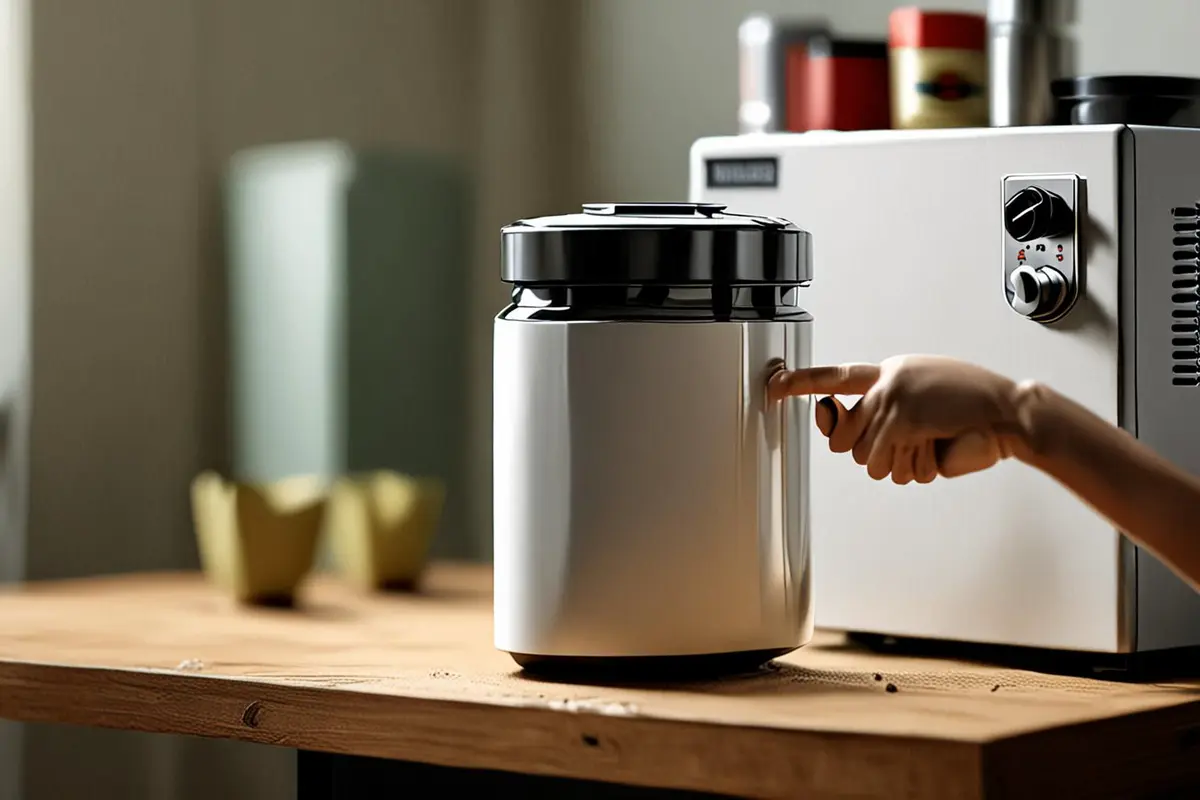
An overseas marketing team asks its China production partner for a shot of a hand releasing a latch before removing a dust container. Searching “dust container removal” returns a relevant tutorial. But the tutorial talks about the procedure; the useful action is in a different, unnarrated recording. This is a hypothetical example, and a useful purchasing question: what extra work does visual search actually do?
For brands commissioning repeated product edits, the answer should affect the scope of an archive contract. A search box that locates spoken terms may already be sufficient. A service that finds unspoken actions could be worth an additional trial. Test those contributions separately before expanding the commitment.
Make sure the test requires looking
The October 4, 2026 preprint VideoResearchAgent: Grounded Task Synthesis and Sim-to-Real RL for Open-Web Video Research describes constructing video research tasks while filtering out questions answerable without video or through text web search alone. Its subject is open-web research, not commercial product archive acceptance.
ONCE draws a procurement inference from that method: a correct answer is weak evidence of added visual capability when a title, caption or description already supplies it. Text retrieval can still deliver real value. The point is to establish which service the buyer is paying for, rather than infer a system’s architecture from one successful response.
VideoDB’s October 26 video AI platform PoC checklist also recommends testing a buyer’s own recordings and distinguishing a relevant hit from sufficient coverage of the event. It is vendor-authored guidance illustrated with robotics tasks. We do not use its platform comparisons to rank tools for brand production.
Build a visual-only question set, then qualify the questions
This is ONCE’s proposed trial method, not a report of a completed client test. Start with a recurring editorial request. Have an authorized reviewer identify the source files and moments that genuinely satisfy it. Keep the original recordings intact and use only material approved for the proposed processing.
For each question, inspect the text the trial tool can access: filenames, tags, descriptions, subtitles and transcripts where applicable. Record whether that information already answers the question. If some fields cannot be checked, label the text comparison incomplete. A question qualifies as visual-only within the inspected information, not as proof that no hidden textual clue exists anywhere.
Keep three groups separate: requests answerable from text; requests whose answers require inspecting the footage within the checked information; and requests with no valid answer in the manually reviewed test collection. That last qualification matters. Failure to retrieve a clip cannot establish that an unreviewed archive contains no such clip.
Record wrong matches, no match and uncertainty separately. A confident near-match should not become a successful answer simply because it looks plausible.
Ask for an action, and check its necessary sequence
In the hypothetical appliance task, “a hand operates the latch, then pulls out the container” is more useful than “product cleaning.” Do not include the known filename or answer timestamp in a question intended to test discovery. Keep those in the reviewer’s answer sheet.
The returned segment should show enough to establish the requested relationship: the latch operation, movement of the container and its removed state. A frame of a hand touching the housing does not establish the sequence. Nor does an image of an already detached container. If an obstruction or edit prevents a reliable judgment in the source recording, exclude or mark that question unjudgeable.
Allow several correct clips when the archive contains several valid demonstrations. Matching the reviewer’s favorite file is not the objective. Visual style, current product eligibility and permission for the intended campaign remain separate selection decisions.
Price the confirmed result, including the checking work
Track retrieval time, the human time spent opening and checking candidates, and any further viewing needed to repair the returned segment. Compare the workflow with your existing filename, tag or transcript search on the same authorized collection. Record task order: a second attempt may benefit from the reviewer already knowing the footage.
ONCE proposes a management measure: actual trial indexing, query and human review costs divided by the number of distinct clips confirmed to meet the task. Retain the component costs and hours. Do not calculate a unit cost when the denominator is zero, or inflate it by counting repeated copies of the same action. This is a proposed accounting view, not a market rate or a promised saving.
If text-based requests dominate and the existing workflow handles them well, retain it. If visual-only requests recur and the trial reduces combined search and confirmation effort, expand cautiously. If additional candidates increase checking work, narrow the use case. A small trial supports a next purchasing step; it does not establish archive-wide savings.
Write the service scope around the added work
A useful brief can name one recurring request, an authorized test collection, a manually checked answer sheet and an end date. Quote archive preparation, text indexing, visual search, candidate verification and new filming as separate activities. Assign responsibility for maintaining product information and reference answers.
For an overseas team working with a Chinese supplier, this also makes the handoff concrete: the result is a traceable source segment that answers an editorial request, followed by the usual campaign suitability review. For ONCE, the potential long-term asset is a maintained understanding of what clients need to find and how to verify it. Whether that supports a recurring service must be demonstrated through actual demand and delivery effort.
Sources were checked on October 27, 2026. The research is a preprint; the purchasing framework and appliance example are proposed and hypothetical respectively. No client results or platform performance claims are implied.