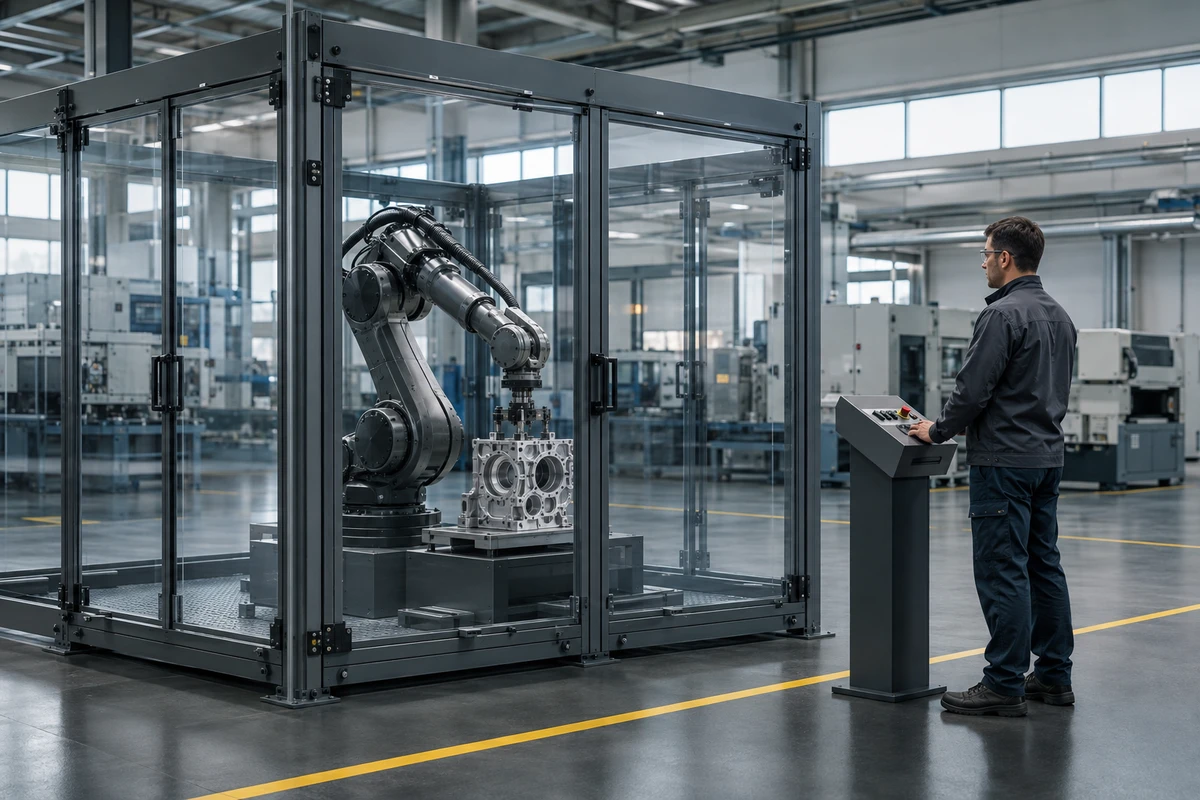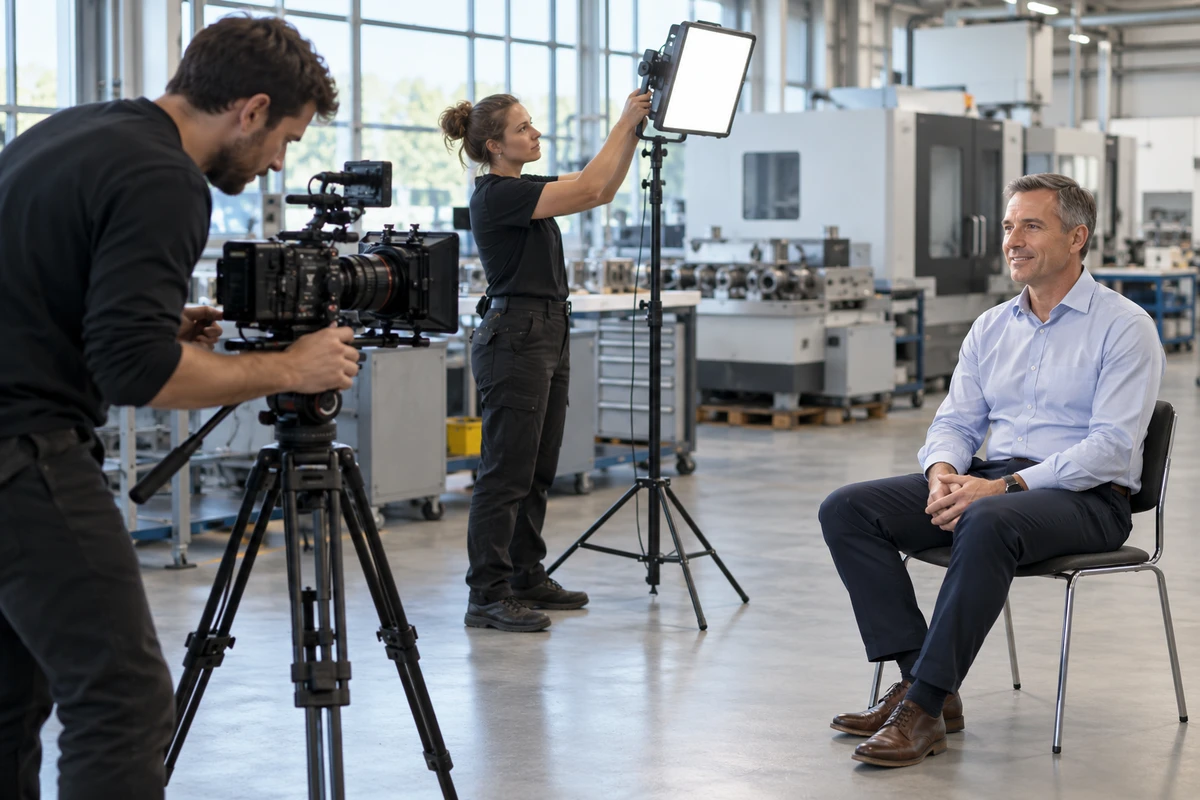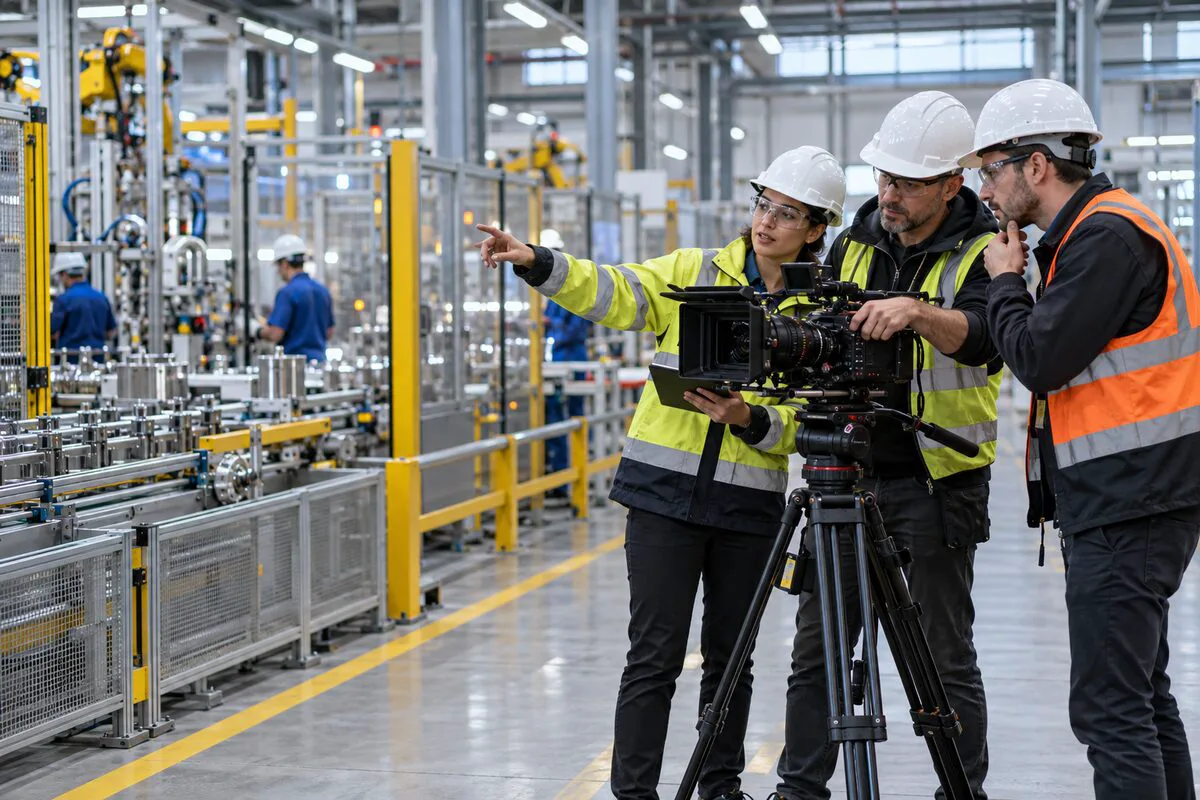
Imagine a familiar call-time problem. The camera has already been wheeled onto the factory floor and the lighting team is halfway through its setup when the safety lead notices that the proposed position crosses the visitor lane. Behind the machine that marketing wants to film, a display is showing a customer name and order status. The shoot has not really started, but everyone is waiting for an answer the location cannot give quickly: are we allowed to film here?
Confidentiality and safety problems in factory video production usually begin before the crew enters the site, not after the edit is finished. A signed NDA and verbal reminders such as “do not film the screens” or “wear a hard hat” cannot replace specific rules for areas, people, equipment and footage.
A more practical approach is to complete four working documents before the call sheet is issued: an area access map, a people and equipment authorization list, a PPE and camera-position checklist, and a footage release form. They are not extra layers of approval. They show the factory, the brand and the production team who can decide, when work must stop, and what must happen before the footage is genuinely releasable.
List 1: Map Where the Camera Is Allowed to Go
The access map does not need to be a complex engineering drawing. Use an approved location plan, a public copy of the evacuation plan, or a simple site sketch as the base, then mark three filming zones:
- Green areas: the approved shot list can proceed normally, such as the exterior, public walkways, finished-goods displays or a prepared interview area.
- Amber areas: filming requires a named escort, a time window or a restricted angle, such as a live production line, an inspection station, warehouse labels or a workstation with visible process settings.
- Red areas: cameras, audio recorders and personal phones may not enter or record, such as unreleased-product areas, dedicated customer lines, R&D labs, security systems and spaces explicitly listed as containing trade secrets.
The colors are a communication method, not a substitute for the factory's own security or safety rules. Each area also needs four details: opening time, escort, permitted camera direction and the person authorized to stop filming. “Filming permitted” leaves room for an argument on set. “10:20-10:40, escorted by the production supervisor, machine right side and operator's hands only, no control screens” can be executed.
The map should also show the camera's exit route. A large tripod, slider, jib or cinebot occupies a movement envelope rather than a single point. An operator stepping back for a wider frame can also leave the visitor path. Plotting equipment positions, movement paths and the route out on one map lets visual ambition and site traffic conflict in the planning room, not beside running machinery.
If the film also supports remote supplier assessment or sales conversations, put each shot task beside its approved disclosure level. ONCE's Shenzhen factory-video shot list focuses on turning production, quality and delivery into useful buying evidence. This article focuses on who grants access to those places and where the camera must stop.
List 2: Authorize People and Equipment
The people list starts with visitor identity. Directors, camera crew, lighting, sound, producers, talent, drone pilots and equipment technicians should enter under a confirmed name list. A temporary assistant, client guest or behind-the-scenes operator should not bypass the process because they will “only be there for ten minutes.” The factory decides what identification, visitor pass, briefing, escort and phone-control rules apply.
The list should also distinguish three kinds of appearance: identifiable on camera; permitted only as an unidentifiable wide shot or rear view; and not permitted in frame. Badges, name labels, shift boards, vehicle plates and screen accounts can identify people even when faces are soft or out of frame.
Article 51 of China's Personal Information Protection Law includes internal rules, classified management, operating permissions and measures against unauthorized access among the controls personal information processors should take. For a corporate film, this does not mean a crew can decide that a worker “looks willing” and publish the footage. The employer's HR, legal team or designated owner should confirm the authorization method, use, territory and retention period for employee images, names, roles, IDs and international versions. The production team follows that decision; it does not make the legal decision for the company.
Equipment needs authorization as well. The list should at least cover cameras, lights, stands, sliders, drones, wireless video links, radio microphones and any device that could connect to a site network. The point is not to count every battery. It is to identify materials that cannot enter a clean area, equipment that could obstruct traffic, unapproved radio devices, and kit that needs a specialist operator or electrical provision.
If someone or something is added late, the same site owner should approve the addition. One list, one version number and one final approver are more reliable than ten separate “should be fine” messages.
List 3: Match PPE and Camera Positions to the Real Workplace
Hard hats, eye protection, antistatic clothing, hearing protection, safety footwear and high-visibility vests are not art-department props. The factory's EHS team, safety lead or area owner should determine what each area requires, how it must be worn and what may not be brought inside. A crew should not remove PPE for a cleaner frame or copy one visually consistent costume across unrelated production areas.
China's current Work Safety Law includes safety education, operating rules and correct use of personal protective equipment among basic workplace requirements. Those provisions do not by themselves define a visitor procedure for a film crew. They do show why the factory, based on the actual risks, should specify visitor training, PPE, escorts and stop-work conditions before call time rather than leaving the crew to guess.
The PPE list should sit beside the camera-position checklist. Every position needs answers to six questions:
- Where do the camera and operator stand?
- Where do stands, cables, ballast and track sit?
- Do they obstruct pedestrian, vehicle, fire or maintenance routes?
- Does the equipment's movement envelope approach machinery, vehicles or robots?
- Who confirms power-up, shutdown, reset and emergency-stop conditions?
- Who can order the crew to withdraw when production conditions change?
This does not have to make the film visually conservative. The earlier the cinematographer knows where the camera cannot stand, the more time there is to change lenses, reverse the move, isolate with a longer focal length, build foreground from a safe area, or replace an unfilmable sensitive detail with approved 3D animation. ONCE's field note on following one production instruction across a smart-manufacturing line offers one way to structure the story once access is approved. Any narrative method still has to yield to the site's real operating conditions.
List 4: Separate Permission to Record from Permission to Release
Permission to record on site is not permission to publish the footage. The release form should create three review points instead of pushing every decision to final delivery.
Same-day spot check: isolate footage that cannot travel
At the end of each day, the crew and the factory's designated reviewer should quickly inspect high-risk shots: the edge of an R&D area, control screens, drawings, customer labels, test parameters, identifiable workers, access control and security equipment. Mark footage as approved for edit, review again after masking, or isolate and exclude from the project drive. When an obvious accidental capture occurs, follow the agreed handling process before it is copied to several drives and cloud services.
Rough-cut factual review: confirm that the picture says the right thing
At rough cut, production, technical or quality owners check equipment names, process order, parameters and operating actions. Marketing checks whether the story is understandable. Legal or security reviewers assess only the risks they own. When everyone comments on the overall “feeling,” factual corrections and creative preferences quickly become mixed together.
Master and language approval: approve a specific file
Final approval should identify the filename, version, language, aspect ratio, release date and permitted channels. Approval of the Chinese master does not automatically approve English captions, an international voice-over, a 15-second cutdown or a sales team's new edit. Translation can turn a cautious process statement into a stronger promise, while a vertical crop can make an employee badge or screen at the edge of the master much more prominent.
China's 2025 Anti-Unfair Competition Law continues to prohibit disclosure or use of trade secrets in breach of a confidentiality obligation or a rights holder's confidentiality requirements. What qualifies as a trade secret is for the rights holder and its professional advisers to determine. The crew's job is to record no-film items, masking decisions, reviewers and handling actions, not to replace a pre-shoot decision with the promise that “post will blur it.”
Four Documents Need Four Types of Owner
Marketing can explain the business question the film must answer, but it should not approve production-line safety alone. Production and EHS can set entry conditions, but they should not determine international marketing claims by themselves. Legal or security owners can assess risk, but they need technical owners to explain what a shot actually reveals. The film crew can design shots and versions, but it cannot decide for the factory which areas and data may be disclosed.
The four documents therefore need at least four kinds of ownership: business or marketing, production or area operations, safety, and legal or confidentiality. In a smaller factory, one person may hold several roles, but every decision still needs a named owner. The crew supplies the shot list, equipment list, call sheet, footage IDs and version record so that each approval refers to something specific.
This method is most useful for a live manufacturing site, an external crew, customer information or unreleased products, and a film intended for websites, exhibitions, sales or international channels. A closed studio shoot of an already public product does not need the whole process. Military, critical-infrastructure, medical, chemical or other tightly regulated locations require the company's policies, applicable law and specialist safety advice; these four documents are production coordination tools, not substitutes for formal security, safety or compliance procedures.
A mature factory film does not reveal every secret. It helps customers understand capability, quality and responsibility inside an approved disclosure area. ONCE VISUAL can plan these four documents together with location scouting, scripts, camera positions and version delivery. To turn real factory conditions into a filmable, reviewable and deliverable plan, explore our corporate film production service and book a factory or industrial-video production assessment.
Production examples and next steps
Build a factory-film brief around observable work and approved access. The Jiyang equipment and automated-manufacturing film provides an example of industrial subjects.
Review Factory and corporate video production in China and Jiyang Zhuyun: New Energy Equipment and Automated Manufacturing Corporate Film. To discuss your project, send the processes to show, filming permissions, interview roles and sales uses through the English project enquiry form.