Assessing the Narrative Necessity of Interface Logic During Project Initiation
Before launching an AIGC commercial or AI product video project, marketing leads must first confirm whether interface demonstrations carry core communication tasks. If product selling points rely on user interaction flows, data visualization feedback, or real-time algorithm responses, interface logical coherence is the cornerstone of final video quality. If selling points lie only in brand philosophy or hardware appearance, forcibly embedding complex interfaces will distract the audience and increase production risks. During assessment, list all planned interface frames and judge one by one whether they directly support conversion goals or cognitive education.
Brands must clearly define specific standards for "logical coherence" in project initiation documents. This includes whether interface element state transitions match real product behavior, whether motion pacing matches the information density of voiceovers or subtitles, and whether UI text length changes in multilingual versions disrupt layout balance. Without these upfront definitions, post-production teams cannot establish effective verification benchmarks, leading to repeated revisions or deliverables deviating from expectations. It is recommended that product managers, designers, and video directors jointly sign an interface logic confirmation checklist during the project kick-off meeting, serving as the binding basis for all subsequent production stages.
Beware of the misconception that technical demos equate to marketing content. Some interface jumps considered correct in engineering validation may appear abrupt in video narratives due to time compression or perspective limitations. During initiation, plan simultaneously which interfaces can be simplified, which need enhanced visual guidance, and which should be omitted entirely. This decision directly impacts script structure and storyboard design, avoiding situations where key interactions are found unclear within limited time only after entering the production stage.
Interface Assets and Verification Materials Required from Brands
To ensure the logical credibility of generated visuals, brands cannot provide only static screenshots or blurry screen recordings. They must deliver interactive prototypes with complete state machines or high-fidelity design source files, noting trigger conditions and feedback rules for each interface element. For features not yet launched, provide simulated datasets and exception handling plans confirmed by the product team to prevent cognitive conflicts between video presentation and real-world experience.
In addition to visual assets, provide a timeline annotation table for interface operations. This table should specify start and end times for actions such as clicks, swipes, loading, and success prompts down to the frame level, along with corresponding sound effects or narration positions. If multi-device linkage or backend data synchronization is involved, additionally explain latency tolerance ranges and visual compensation strategies. Without such timing information, editors can only splice footage based on subjective feelings, easily causing operation feedback to precede or lag behind user expectations.
All delivered materials must pass copyright and compliance reviews. Third-party icons, fonts, sample data, and user avatars appearing in interfaces must obtain commercial authorization or undergo desensitization. If AIGC tools are used to generate supplementary interface elements, record the models, prompts, and generation parameters used for subsequent auditing or replacement. Unverified materials entering the production process may force rework during final editing or even trigger legal risks. It is recommended to appoint a dedicated asset manager to sync refresh the material library and compliance status with each version update.
Execution Standards for Interface Embedding in Shooting and Generation Stages
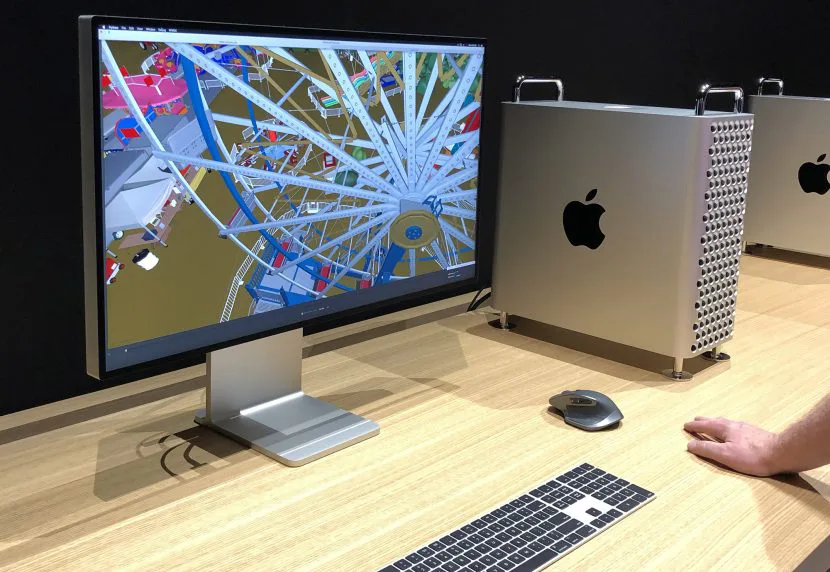
When combining live-action shooting with screen recording, photography teams must unify device parameter judgments with UI motion designers in advance. Mismatches among screen refresh rate, camera shutter angle, and ambient light color temperature will cause moiré patterns, flickering, or color shifts, drastically increasing post-production repair costs. Conduct makeup tests before formal shooting, displaying dynamic interfaces on actual playback devices, and confirm no interference stripes via monitors. If on-site conditions cannot meet synchronization requirements, decisively switch to green screen compositing or full CGI interface reconstruction.
When using AIGC tools to generate interface segments, do not directly adopt single-output results. Establish a layered verification mechanism: first layer checks text readability and icon semantic accuracy; second layer verifies physical rationality of interaction animations, such as button press deformation, list scrolling inertia, and loading progress bar uniformity; final layer compares overall style consistency with brand design guidelines. Each layer requires manual review and retention of modification records to avoid hidden errors introduced by model hallucinations.
Actors or hand models' operation actions must strictly follow the preset timeline schedule. Assign dedicated personnel on-site to monitor in real-time whether interface feedback synchronizes with performance, using hidden earpieces or metronomes for rhythm control if necessary. If operation speed is too fast or slow, naturalness will be lost even if speed adjustments are made in post-production. For complex gestures, pre-record reference videos for actors to mimic rather than relying on improvisation. Any performance deviating from established logic should be reshot immediately, not left for post-production fixes.
Methods for Verifying Logical Consistency in Post-Production
When assembling interface shots, editors must use user cognitive models as the verification yardstick, not merely pursue visual fluency. Every transition, zoom, or focus shift should answer one question: Can the audience understand what is happening at this moment? If the answer is vague, even exquisite visuals constitute ineffective expression. It is recommended to invite internal personnel not involved in production to watch the rough cut, collecting their confusion points regarding interface behavior as a basis for refinement.
Color grading and special effects processing must not impair interface information recognizability. Operations such as HDR mapping, sharpening, and noise reduction may alter text contrast or icon edge clarity, making small-font content unreadable on mobile devices. Check brightness and saturation thresholds for key information areas frame by frame under the final output format, applying protective masks to interface layers separately if necessary. Sound design must also participate in logical verification; timbre, volume, and spatial sense of operation sound effects must correspond precisely to on-screen actions, as misplaced sounds weaken interface realism.
Re-verify logical integrity when adapting for multiple versions. Scenarios such as converting landscape to portrait, cutting long versions to short, or replacing audio with silent versions may interrupt key interaction sequences or remove necessary prompt sounds. Treat each derivative version as an independent work for full-process review, not assuming sub-versions are automatically correct if the main version is. Establish a version matrix table clarifying interface display scope, duration limits, and information priority for each version to ensure self-consistency after cropping.
Interface Logic Verification Checklist for Delivery and Acceptance Stage
Acceptance should not stop at "looking fine" but execute structured testing. The checklist must include at least the following dimensions: whether interface state transitions match actual product behavior; whether all text, icons, and data are error-free and comply with latest brand guidelines; whether motion pacing synchronizes with audio and narration without deviation; whether key information is clearly discernible across different terminals and resolutions; whether text overflow or truncation in multilingual versions is properly handled; and whether copyright and compliance risks are cleared. Each item requires designated person signature confirmation.
In addition to static checks, conduct contextual playback tests. Simulate target audiences' real viewing environments, such as playing audio on phones while commuting on subways, projecting in conference rooms, or browsing silently in social media feeds, to observe whether interface information effectively transmits under various conditions. If logical breaks or information loss are found in specific scenarios, return to the previous stage for correction rather than accepting them reluctantly.
Retain complete interface logic annotation tracks when archiving source files. This includes links to original design drafts, timeline annotation tables, AIGC generation parameters, manual verification records, and version change logs. These metadata are the foundation for future iterations, localization, or troubleshooting. Delivering only the final video without process documentation will significantly increase subsequent maintenance costs, potentially forcing new projects to rebuild interface assets from scratch.
Applicable Boundaries and Risk Warnings for AIGC Interface Videos
AIGC is not a panacea. When product interfaces are highly customized, interaction logic changes frequently, or sensitive financial/medical data is involved, the risks of pure generative methods far outweigh benefits. In such cases, adopt traditional screen recording with post-production beautification, or use AIGC only for background and decorative elements in hybrid workflows. Forcibly using AI to generate core function interfaces may lead to detail distortion or compliance loopholes, damaging brand professional image instead.
For brand promotional videos emphasizing emotional resonance or lifestyle, excessive focus on interface logic may be counterproductive. Audiences remember the pleasant state after using the product, not how buttons change color. In such cases, interfaces should be weakened as environmental props, ensuring only that they do not break immersion. Only in tech or SaaS videos where the product itself is the protagonist is it worth investing resources to polish interface coherence.
Clearly recognize current AIGC technology limitations in temporal consistency. Even if single frames are perfect, continuous playback may still exhibit flickering, deformation, or semantic drift. If projects have extremely high stability requirements, reserve sufficient budget and schedule for manual repairs. Do not blindly trust "one-click generation" promises in tool marketing; in actual commercial projects, the workload for manual verification and correction often exceeds the generation stage itself.
Pragmatic Next Steps for Project Advancement
If you are preparing a video project involving interface demonstrations, it is recommended to first organize a cross-functional logic walkthrough, with product, design, and video parties jointly confirming the minimum viable demonstration scope. Then compile a high-fidelity interface asset package with timeline annotations and complete compliance pre-review. Based on this, communicate technical solutions with the production team to avoid wasting trial-and-error costs on ambiguous requirements.
ONCE provides production support for AIGC commercials, AI product videos, and brand AI video workflows, covering corporate promotional videos, TVC commercials, overseas marketing videos, and other types. Specific cooperation methods and delivery standards require further communication based on actual project needs; please refer to official website public information and mutual confirmation.
If you are preparing an AIGC commercial project, you can first organize the Brief, reference visuals, product or company materials, delivery platforms, and copyright scope, then view theAIGC Video Services Page, to ground communication from abstract preferences to executable production boundaries.