Assess whether static key visuals are suitable for animation during project initiation
Not all static visual assets have the potential to be converted into TV commercials. Brands must evaluate how core messages are conveyed before launching a project. If a static key visual relies on complex typography or extremely fine local textures to convey information, forcing it into video format may cause reading difficulties or distract from the visual focal point. In such cases, prioritize retaining static displays or using minimal motion graphics rather than pursuing full dynamic reconstruction.
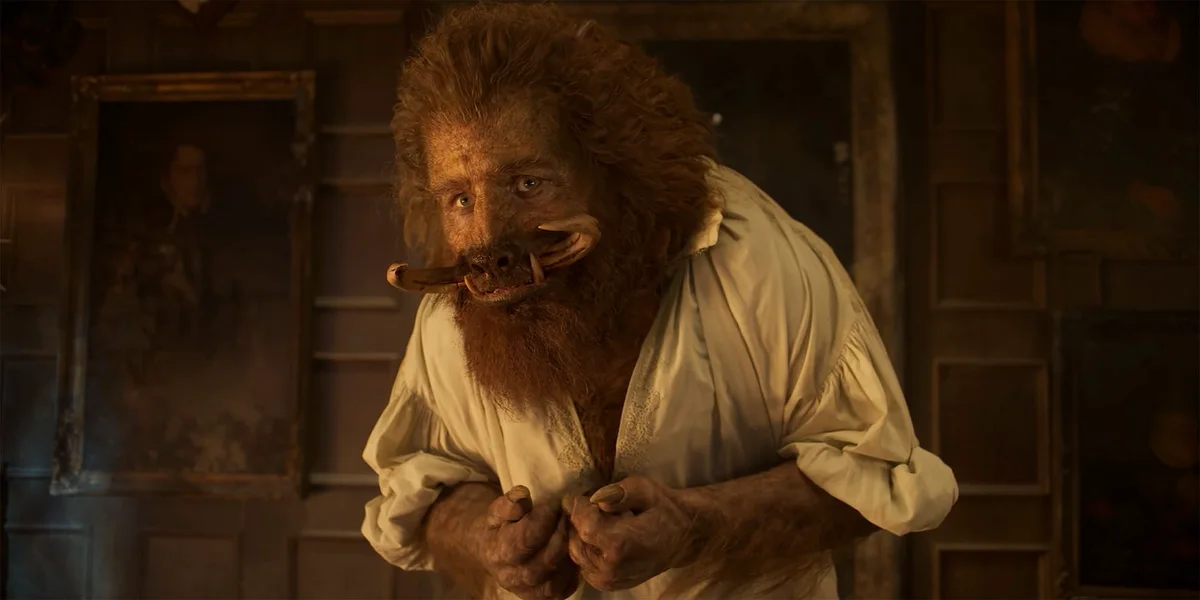
The key to decision-making lies in identifying the "potential energy" within the frame. Observe whether the static design contains implied motion trends, such as the flow of light and shadow, the extension of a character's gaze, or the tension in the product's form. If the image is absolutely static with no internal logical connection, the production team must rethink the narrative thread; otherwise, the final cut may feel disjointed, moving for the sake of moving. Misjudgment at this stage will directly lead to skyrocketing post-production revision costs, or even require reshooting.
Deconstruct visual elements and motion logic during pre-production
Once the conversion direction is determined, the production team must deconstruct the static key visual at the layer level. This step requires the art director and director to jointly confirm which elements belong to the foreground, midground, and background, and to plan their respective motion trajectories. Brands must provide high-resolution source files to ensure clean, alias-free edges after separation; otherwise, glitches will appear during dynamic stretching or rotation.
Simultaneously, a detailed dynamic storyboard must be developed. Unlike traditional narrative-driven TVCs, these projects emphasize rhythm and transition matching. The duration, speed curves, and camera movement for each shot must be rehearsed on paper. A key risk is over-relying on post-production VFX to compensate for pre-production design deficiencies. If physical laws such as gravity, inertia, or light reflection logic are not defined beforehand, post-production compositing will face huge computational costs and authenticity verification challenges, ultimately affecting delivery efficiency.
Restore lighting texture and spatial relationships during shooting execution
When static key visuals involve live-action footage, lighting setup must strictly correspond to the original image's light positions and color temperature. Cinematographers must use light meters to precisely record the intensity ratios of key, fill, and rim lights, ensuring that lighting changes in dynamic shots adhere to physical common sense. If the original key visual is a pure CG render, the live-action team must set up green screens or specific reference objects to facilitate perspective matching in post-production.
Another focus of on-set execution is the smoothness of camera movement. Since converting static to dynamic often involves subtle push-pull-pan-tilt movements, any handheld shake or unstable dolly sliding will be exposed when viewed at larger scales. We recommend using motorized gimbals or slider systems and recording high-frame-rate footage for slow-motion processing. Ignoring this detail may result in flickering or abnormal motion blur in the final cut, reducing brand quality. Additionally, ambient sound or Foley materials should be captured synchronously to provide spatial references for subsequent sound design, avoiding audio-visual disconnection.
Handle perspective distortion and dynamic transitions in post-production compositing
In the post-production phase, editors and VFX artists must address the perspective issues of converting 2D images into 3D space. Using camera tracking technology or manual keyframe adjustments, static elements are given reasonable displacement within the virtual space. Attention must be paid to depth-of-field changes, simulating the optical characteristics of real cameras by adding motion blur and focus shifts. Ignoring depth-of-field logic will make the image appear flat and lack immersion.
Color management is another core task. Colorists must ensure that the tone of dynamic shots remains highly consistent with the original key visual, avoiding color deviations caused by codec conversion or monitor differences. Brands should provide standard color value references at this stage and perform frame-by-frame checks on calibrated monitors. A risk lies in color space conversion errors between different software; we recommend unifying color profiles at the start of the workflow and conducting multi-platform preview tests before output to prevent color casting during distribution.
Acceptance of sound design and subtitle layout coordination
Once visual animation is complete, sound design must fill the auditory void. Sound effects should not only match visual actions but also reinforce brand tonality. For example, metallic movements require crisp impact sounds, while soft light flows suit ambient atmospheric audio. Brands must audit the copyright scope of sound effect libraries to ensure compliance for commercial use. Unauthorized sound effects may trigger legal disputes, leading to project removal.
Adding subtitles and graphic packaging must follow the principle of minimal interference. The timing, font size, and duration of dynamic subtitles should align with reading habits, avoiding obstruction of core product information. During acceptance, check subtitle readability against different backgrounds, adding strokes or shadows if necessary. Additionally, confirm layout adaptability for multilingual versions to prevent layout breakdowns due to character length differences. This step is often overlooked but directly impacts communication effectiveness in overseas markets.
Standardized operations for delivery lists and version management
At the project closure stage, the production team must submit a complete delivery package. In addition to the final cut, this should include versions without subtitles, audio-only files, and key frame stills. Brands must verify resolution, bitrate, container format, and audio channel configuration item by item according to the contract. For versions distributed on different platforms, generate landscape, portrait, and square aspect ratios separately, ensuring core content remains within the safe area.
Archiving source files is equally important. Although project files are typically not delivered, brands should request retention of layered assets and project backups to facilitate minor future modifications or derivative creations. If the retention period for source files is not agreed upon, hard drive failures or staff turnover will pose reconstruction risks for subsequent iterations. We recommend both parties sign a data handover confirmation sheet before project completion, clarifying storage media, backup quantities, and destruction timelines to safeguard asset security.
Identify unsuitable scenarios and select alternative solutions
It must be clear that animating static key visuals is not suitable for all marketing scenarios. If the communication goal focuses on complex feature demonstrations or deep emotional storytelling, the limitations of static conversion will become evident. In such cases, traditional live-action TVCs or 3D animation production should be chosen to build a complete storyline. Forcing rich narratives into a few seconds of dynamic visuals will lead to information overload, weakening user memory points.
Additionally, when budgets are limited and timelines are tight, simple motion graphics may offer better cost-effectiveness than high-precision compositing. Brands should allocate resources based on actual strategies, avoiding excessive investment in unnecessary visual effects. If core selling points cannot be effectively conveyed through visual dynamics, return to copywriting and strategy levels to optimize information architecture rather than purely pursuing formal innovation. Rational assessment of ROI is the key to ensuring project success.
If you are planning a TVC or brand promotional video project, we recommend first assessing the quality of existing visual assets and communication goals. ONCE provides end-to-end video production services from creative breakdown to post-production delivery, covering corporate promotional videos, product videos, and AIGC video production. We assist teams in defining execution paths, avoiding common pitfalls, and ensuring precise implementation of every creative idea. Contact our advisory team to obtain customized project assessments and recommendations.
If you are preparing for a TVC project, you can first organize your brief, reference visuals, product or company materials, delivery platforms, and copyright scope, then view theTVC Service Page, to translate abstract preferences into executable production boundaries.