Define Core Spatial Narrative Goals During Project Initiation
Before launching a product video project, brands must clarify which user pain points the video aims to address. For home products featuring folding, telescopic, or modular characteristics, the core objective is often demonstrating how to maximize functionality within small spaces. Marketing leads should confirm communication goals and define whether the audience consists of renters or large households, as this determines the visual focus. If the target audience prioritizes storage efficiency, the script must emphasize compactness when collapsed; if user experience is key, focus on stability and comfort when expanded. This phase must yield a brief outlining core selling points, visual style references, and platform delivery requirements to prevent costly reshoots caused by strategic misalignment.
Scene and Prop Matching Logic in Pre-Production
Scene selection directly determines the authenticity of spatial perception. Production teams must build or rent locations based on product dimensions to ensure the background highlights the product's spatial transformation capabilities. For example, when showcasing a folding table, retain sufficient negative space on background walls to avoid visual clutter. Brands must provide accurate prototypes and operation manuals for the director to break down action sequences. Confirm shooting conditions, including whether lighting direction enhances material texture and if there is adequate space for camera support equipment like sliders or jibs. If live demonstration is involved, talent must familiarize themselves with the product's mechanical structure beforehand to ensure smooth, natural operation and avoid awkwardness or pacing issues.
Prop styling must follow minimalist principles, retaining only essential items that suggest a living context, such as a magazine or a glass of water, to establish scale. Strictly prohibit bright colors or clutter conflicting with the product's palette to prevent distracting viewers from the form transformation. Floor flatness requires rigorous testing to ensure wheeled or sliding components move without abnormal vibration, guaranteeing image stability and professionalism.
Camera Movement and Pacing Control During Execution
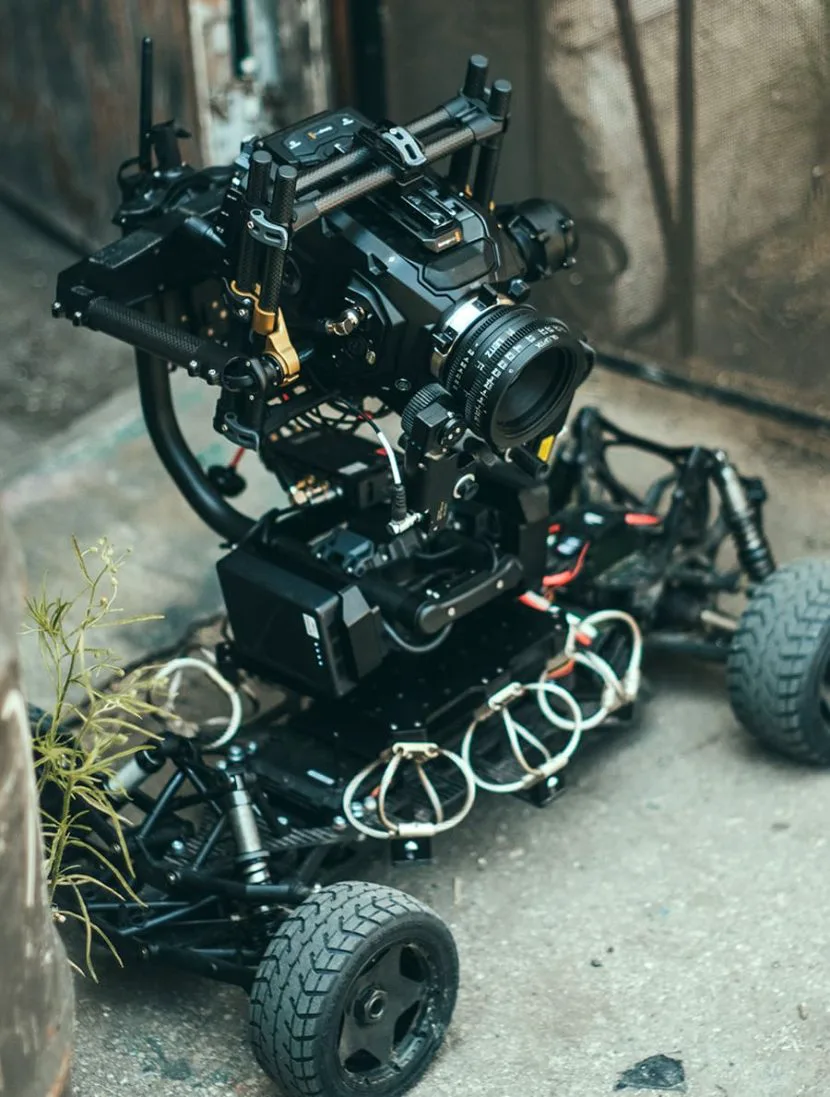
The key to filming lies in reinforcing the visual impact of spatial changes through cinematography. Cinematographers should combine static shots with push-pull movements while keeping reference points stable, allowing viewers to intuitively perceive volume changes. Use slow motion during expansion to capture key locking mechanisms, highlighting precision craftsmanship; use fast-paced editing with close-ups when collapsed to emphasize convenience. Lighting must balance ambient environment light with local rim lighting to ensure product visibility during transitions. Sound recordists should simultaneously capture mechanical sound effects like hinge rotation or fabric friction, as these auditory details enhance realism and provide source material for post-production sound design.
Multi-camera setups effectively improve efficiency, with the main camera recording the full workflow and secondary cameras capturing detailed close-ups. Directors must monitor feeds in real-time to verify accurate focus tracking, ensuring key structural components remain sharp even under shallow depth-of-field macro shots. Review footage immediately after each demonstration to check for continuity errors or lighting flaws, reducing post-production remediation costs.
Visual Guidance and Information Hierarchy in Post-Production
During editing, restructure the timeline to distill lengthy operations into keyframe sequences. Colorists should unify the overall tone to maintain consistent product color across varying lighting conditions, preventing color discrepancies from misleading consumers. Motion graphics designers can add auxiliary lines or semi-transparent overlays to indicate floor space usage when expanded or savings when collapsed, as visualized data is more persuasive than voiceovers alone. Sound design must balance background music with ambient audio to ensure key operational sound effects are not obscured. Subtitle typography should be clean and unobtrusive, avoiding obstruction of the product, while reserving interfaces for multi-language versions to accommodate cross-border e-commerce distribution needs.
Information hierarchy must follow visual flow patterns, placing key selling points near golden ratio intersections. Transitions should utilize hard cuts or simple fades, avoiding flashy effects that distract from functional comprehension. For complex expansion logic, use split-screen comparisons or arrow-guided animations to lower cognitive load and ensure efficient, accurate information delivery.
Multi-Dimensional Acceptance Checklist Upon Delivery
Acceptance must proceed step-by-step rather than relying solely on the final cut. First, verify script and storyboard execution to confirm all core selling points are covered. Second, audit technical specifications including resolution, frame rate, and bitrate against target platform requirements, noting specific duration and format restrictions for different e-commerce platforms. Check audio for stereo balance and noise levels to ensure no clipping or excessive noise floor. Verify color accuracy on calibrated monitors to guarantee faithful reproduction of skin tones and product colors. Finally, confirm copyright scope, including music licensing territories, commercial font licenses, and model release validity periods to avoid legal risks. Archive source and project files as agreed to facilitate future modifications or asset reuse.
Cross-device compatibility testing is indispensable; playback on mobile, tablet, and desktop to check text readability and detail clarity on smaller screens. If color banding or audio desync occurs on specific devices, adjust encoding parameters and re-export immediately to ensure consistent end-user experience.
Identifying Special Cases Unsuitable for Video Expression
Not all home products are suitable for demonstrating spatial changes via video. If structural adjustments are extremely complex and lack intuitive visual feedback, video may fail to explain the logic concisely; illustrated manuals or interactive 3D models might be more efficient. If primary selling points involve tactile texture or scent, video cannot convey these sensory experiences, and forced filming may lead to expectation gaps. Furthermore, if target markets have poor network infrastructure, slow-loading HD video hurts conversion rates; consider optimizing file size or adopting a static-image strategy. Brands must rationally evaluate ROI to avoid blindly pursuing video formats at the expense of actual communication effectiveness.
For products relying on long-term durability proof, short videos struggle to demonstrate performance over time; combine user testimonials or long-term test reports for comprehensive marketing rather than relying solely on visual demonstrations.
Risk Anticipation and Boundary Definition
Throughout project execution, remain vigilant regarding filming risks caused by physical limitations. For instance, large furniture may not fully deploy in cramped studios; calculate minimum clearance radii in advance and prepare contingency plans. Define content boundaries to avoid over-beautification causing significant discrepancies between video and reality, which triggers after-sales disputes. For steps involving safety warnings, add prominent text overlays complying with advertising laws and industry regulations. Production teams and brands must jointly confirm disclaimer clauses, clarifying that demonstration failures resulting from inherent product design defects do not constitute production errors.
Personnel safety is equally critical; moving heavy furniture requires professional protective gear and spotters to prevent crushing or pinching injuries. Establish safety zones on set and strictly prohibit non-essential personnel from entering operational areas to ensure zero accidents during production.
Next Steps and Collaboration Preparation
Brands are advised to organize existing asset libraries before project launch, including high-resolution renders, past marketing copy, and user pain point feedback, to help production teams quickly understand product characteristics. Clarify internal approval workflows and key decision-makers to shorten feedback cycles. For cross-border e-commerce, research cultural preferences and compliance requirements in target markets beforehand to ensure localized content adaptation. Production teams should provide standardized quotes and schedule estimates based on published service scopes, reaching written consensus on acceptance criteria. Rigorous pre-planning combined with professional execution yields high-quality video content that aligns with brand identity and effectively drives conversions.
Establish regular communication mechanisms with centralized reviews at key milestones like script finalization and rough cut completion to prevent fragmented feedback from causing strategic drift. Conduct post-project retrospectives to summarize successes and shortcomings, accumulating standardized processes and data assets for future video series.
If you are preparing a product video project, organize your brief, visual references, product or corporate materials, delivery platforms, and copyright scope first, then reviewE-commerce Product Video Services Pageto translate abstract preferences into actionable production boundaries.