Why R&D Processes Are Difficult to Film Directly
R&D typically takes place in labs, at test benches, on data screens, and during engineering discussions—settings inherently unsuitable for direct filming. Cameras require visible action, perceptible changes, and understandable logic, yet most R&D activities are invisible, such as algorithm debugging, material formulation, parameter optimization, and failure analysis. Simply pointing a camera at a lab bench yields footage resembling security surveillance, lacking narrative tension and failing to convey the value of R&D to viewers.
Brands must first define whether the R&D process serves to demonstrate capability, explain principles, or showcase team culture. Each objective requires a distinct visualization strategy. Demonstrating capability highlights equipment, facilities, and rigorous processes; explaining principles relies on animation and graphics; showcasing team culture demands authentic work environments and interpersonal interactions. Mixing these objectives results in an unfocused approach where every element remains superficial.
The filmability of the R&D process must be determined during project initiation. Some R&D stages involve confidentiality, such as formulas, core algorithms, or unpublished patents, which cannot appear on camera. Brands should prepare shootable and non-shootable lists in advance, marking the confidentiality level of each stage. Only after receiving these lists can the production team determine which parts require live filming, which need animation substitutes, and which can only be expressed abstractly.
The risk is that brands often want to showcase cutting-edge R&D, yet such content is frequently the least suitable for filming. Topics like quantum computing, gene editing, or nanomaterials are invisible to the naked eye; live filming captures only equipment casings and user interfaces. In such cases, the production team must propose alternatives, such as using CGI to reconstruct microscopic processes or data visualization to present experimental results. If the brand insists on live filming, the final video may lack both informational value and aesthetic appeal.
An exception occurs when the R&D process itself has strong visual characteristics, such as robotic arm movement, chemical reagent color changes, or material deformation under high heat. These processes can be filmed directly to create visual impact. The criterion is whether the footage shows a discernible change within three seconds. If so, live filming is worthwhile; otherwise, consider animation or graphic aids.
Visualization Levels to Confirm During Project Initiation
R&D visualization can be divided into three levels: authentic documentation, dramatized reenactment, and abstract expression. Authentic documentation suits work environments, equipment operation, and team collaboration; dramatized reenactment fits key experiments or test scenarios; abstract expression illustrates principles, data flows, and system logic. Brands and production teams must confirm item by item which level applies to each R&D stage.
Authentic documentation has the lowest production cost but requires adequate lighting, sound, and personnel readiness. Laboratories typically enforce strict dress codes and operational protocols, preventing crews from entering freely or altering layouts. Brands must coordinate with lab managers in advance to schedule shooting windows and prepare backup plans. If on-site audio recording is unfeasible, ambient sounds must be added in post-production or covered with music.
Dramatized reenactment requires set construction or actors, such as simulating an experiment or posing engineers at specific stations. This approach offers visual control and precise storyboard execution, but risks appearing artificial to viewers. The standard is whether the reenacted actions reflect real procedures and whether actors convey professional credibility. Inaccurate reenactments can undermine brand credibility.
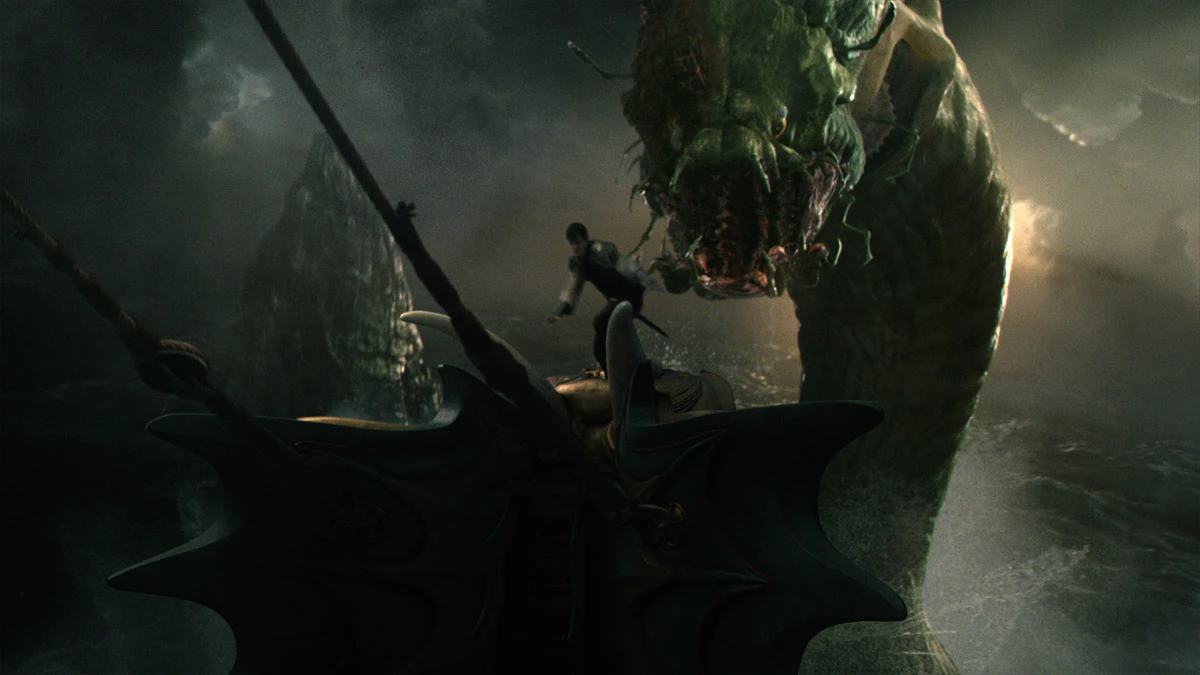
Abstract expression typically employs CGI, motion graphics, or data visualization to explain invisible R&D processes, such as electrical currents inside chips, drug molecule binding, or software algorithm iterations. Production teams must obtain accurate data and logic from R&D departments to prevent inaccurate animations. Brands should provide principle explanations, flowcharts, and key parameters; the more detailed the materials, the more persuasive the animation.
Visualization is unsuitable when the R&D process lacks visible physical changes or clear logical chains, such as pure theoretical mathematics or long-term observation projects. Forcing visualization in these cases yields empty graphics; it is better to highlight team backgrounds, published papers, or industry recognition. Brands should accept these limitations and avoid visualization for its own sake.
Checklist of Materials Brands Need to Prepare
Before filming, the brand must prepare a comprehensive R&D package, including process documentation, key equipment lists, sample lab records, team introductions, patent lists, and publishable results. These materials help the production team understand the R&D logic and determine which stages to film and which require animation.
R&D process documentation should chronologically list every stage from concept to prototype, noting inputs, outputs, and key decision points. The production team uses this document to design shot sequences, such as moving from requirements analysis to solution design, then to prototype testing and iterative optimization. If documentation is missing, the team must rely on interviews to fill gaps, increasing communication costs and risking the omission of critical steps.
The key equipment list must include names, functions, physical characteristics, and operational status. Some equipment, like server racks or test fixtures, may be bulky and visually plain, appearing cluttered if filmed directly. The production team needs advance notice on which equipment is camera-ready and which requires covering or replacement. The brand may suggest using close-ups to capture indicator lights, displays, or moving parts to add visual detail.
Sample experiment records, whether paper notes, digital logs, or screenshots, demonstrate the rigor of the R&D process. However, confidentiality is essential, as records may contain unpublished data or internal annotations. The brand should provide redacted versions or permit filming only covers and binding methods rather than content.
Team introductions should include core R&D staff names, titles, areas of responsibility, and availability for filming. The crew must determine who is willing to appear on camera, who will provide voiceovers only, and who will not participate at all. The brand must communicate this in advance to avoid last-minute changes. If key personnel cannot appear on camera, consider substituting lab scenes or using back shots and hand close-ups.
Patent lists and performance data enhance credibility, but attention must be paid to sources and timeliness. The brand must provide official documents or public reports as evidence; verbal assurances are insufficient. When citing data in the final video, the production team must attribute sources to avoid misleading viewers.
Shot Design Principles for Filming Execution
Shot design for R&D processes follows three principles: demonstrating action, emphasizing details, and establishing logic. Demonstrating action shows viewers what R&D staff are doing; emphasizing details highlights unique features of equipment or materials; establishing logic creates causal or temporal connections between shots. Every shot must answer a question so that viewers understand what is happening in the R&D process and why it matters.
Action shots should primarily use medium and close-up framing, such as engineers turning screws, adjusting knobs, recording data, or exchanging samples. These actions often require multiple takes to yield smooth editing material, so the production team must allocate sufficient shooting time. The brand should coordinate R&D staff cooperation, potentially interspersing staged shots within normal workflows, but staged actions must reflect real procedures and not be distorted for aesthetics.
Detail shots should focus on visually distinct elements, such as solder joints on circuit boards, crystal lattices under microscopes, color changes in reagent bottles, or curve fluctuations on screens. Capturing these shots requires macro lenses and auxiliary lighting; the production team must test light reflection and focus control in advance. The brand can provide equipment specifications or samples to help the camera crew prepare appropriate lenses.
Transitional shots connect different stages, such as moving from blueprints to physical prototypes or from test data to conclusions. These shots may use pans, tilts, zooms, or focus pulls, but pacing must be controlled to avoid viewer discomfort. Production teams can design match cuts, such as transitioning between objects with similar shapes or movements, to enhance visual continuity.
The risk is that filming may distract R&D staff, disrupting work or creating safety hazards. Brands should establish filming protocols, including time limits, restrictions on touching hazardous equipment, and maintaining safe distances. Crews must follow lab regulations and never move chemicals or open protective guards for a shot. If an incident occurs, filming must stop immediately to prioritize personnel safety.
Exceptions include R&D processes involving high-speed motion or extreme environments, such as crash tests, high-temperature combustion, or vacuum experiments. These scenarios require expensive high-speed cameras or specialized equipment and offer very limited shooting windows. Brands should assess the necessity of these shots; if merely decorative, animation or stock footage can replace risky live filming.
How Post-Production Enhances R&D Storytelling
The core task in editing is organizing fragmented R&D footage into a compelling narrative. Editors must first understand the logical sequence of the R&D process, then arrange shots according to the audience's cognitive pace. A problem-to-solution structure is typically used: presenting challenges, showing how the team overcame them, and revealing the final results. This structure helps viewers appreciate the effort and value of R&D.
Editing rhythm should match the intensity of the R&D process. For example, during algorithm debugging, rapid screen recording cuts and keyboard sounds create urgency, while material observation calls for slow zooms and soft ambient audio to highlight details. Teams must avoid uniform pacing throughout to prevent viewer fatigue. Brands may provide feedback on pacing during reviews, but editors retain final authority based on professional judgment.
Color grading must balance environmental realism with brand identity. Labs often have cool tones that enhance a technological feel, but excessive blue can distort skin tones. Teams should use correction tools to ensure accurate white balance while adding depth through grading. Brands should provide color references but avoid forcing brand colors onto every frame, as this undermines authenticity.
Sound design is crucial to R&D storytelling. Ambient sounds like machinery, keyboards, and ventilation enhance immersion but must be balanced to avoid overpowering dialogue. If location audio is unclear, post-production ADR or sound libraries are required. Music should reflect R&D stages, using low-frequency pulses for tension and bright strings for success. Mixing must ensure clear dialogue with distinct layers for music and effects.
Subtitles and graphics explain technical terms or data. For instance, dynamic annotations can highlight key points on test curves. However, excessive text distracts viewers. Brands must provide accurate terminology and definitions, while production teams verify spelling and formatting. For English abbreviations, confirm whether to retain the original or translate.
CGI and animation post-production require significant time, so brands must allow adequate lead times. Animation involves modeling, texturing, lighting, rendering, and compositing, each requiring approval. Brands should assign a technical lead to liaise with the production team to ensure accuracy. Mismatches between animation and live footage, such as inconsistent lighting or perspective, will appear artificial.
Delivery Acceptance Checklist
Acceptance should be carried out in stages, not just by reviewing the final cut. The brand side should inspect every stage—script, storyboard, rough cut, fine cut, color grading, sound, subtitles, and master—and document revision notes. Each stage has clear acceptance criteria: for example, the script must confirm narrative logic, the storyboard must confirm visual language, the rough cut must confirm pacing and structure, and the fine cut must confirm details and fluidity.
Script acceptance should verify whether the development process is accurate, whether key information is missing, and whether it suits the target audience. The brand side should check professional terminology sentence by sentence to avoid errors. If the script contains data or quotes, sources must be confirmed. Storyboard acceptance should inspect each shot's composition, movement, and duration to ensure there are no unreasonable designs. The brand side may ask the production team to provide storyboards or animatics.
Rough-cut acceptance should focus on whether the overall narrative is coherent, whether shot transitions feel natural, and whether music and sound effects match. The brand side may provide revision notes, but should distinguish between major and minor issues and not overturn the structure based on personal preference. Fine-cut acceptance should inspect image details such as whether focus is accurate, exposure is consistent, and there are no continuity errors. Color-grading acceptance should compare color consistency across different scenes to ensure natural skin tones.
Sound acceptance should check dialogue clarity, ambient sound layers, and music volume. The brand side should listen on different devices, such as phone speakers and headphones, to ensure there is no clipping or distortion. Subtitle acceptance should check text accuracy, timing, and style consistency. Master acceptance should confirm that format, resolution, and encoding meet the publishing platform's requirements, while source files are kept for future revisions.
Copyright and licensing are important parts of acceptance. The brand side must confirm that all materials, including music, fonts, images, and third-party videos, have legal authorization and obtain authorization documents. Portrait rights of individuals involved in the R&D process need to be covered by authorization agreements, especially recognizable engineers' faces. If AIGC-generated content is used, copyright ownership and compliance must be confirmed.
The risk is that the brand side may request changes beyond the contract scope during acceptance, such as adding new R&D stages or changing the narrative angle. The production team should clarify the number of revisions and additional fees to avoid unlimited revisions. The brand side should agree on the number of revisions and the boundaries of each revision at project kickoff, for example only allowing detail adjustments and not script rewrites.
Conditions Where It Does Not Apply and Alternative Solutions
Not all R&D processes are suitable for visualization; some cases require abandoning live-action filming or lowering expectations. For example, if the R&D cycle is extremely long, taking several years from project approval to mass production, the promotional video can only show a few milestones and cannot present the complete process. In such cases, the focus should be on key milestones, such as prototype completion or passing tests, rather than trying to cover every stage.
If the R&D content is highly confidential and no details can be disclosed, then visualization can only remain at an abstract level, such as using flowing light or particle systems to symbolize innovation. Although this expression lacks specific information, it can convey brand temperament. The brand side must accept this ambiguity and cannot require the animation to accurately reproduce confidential content.
If the R&D team is very small, with only two or three members, and the work environment is ordinary, live-action footage may lack visual richness. In this case, consider using still photos with camera movement, or focus on application scenarios of the R&D outcomes, such as product usage at client sites. Brands should adjust their expectations and avoid forcing lively scenes simply because the team is small.
If the budget is limited and cannot cover CGI or high-speed photography, rely on editing and sound design to enhance impact. For example, use screen recordings paired with typing sound effects, or dynamic data chart animations. Production teams should leverage existing assets, such as internal training videos or archival photos, while being mindful of copyright and image quality.
Another unsuitable scenario is when the R&D process itself lacks visual variation, such as backend software maintenance or data cleaning. Such tasks can be converted into screen recordings or flowcharts, but they rarely evoke emotional resonance. Brands should consider combining the R&D process with user stories, demonstrating R&D value through customer case studies rather than directly showcasing backend operations.
Finally, if the brand cannot provide accurate R&D materials or the R&D team is uncooperative with filming, the project may stall. In such cases, the production team should pause and re-communicate rather than force the shoot. Brands must recognize that the quality of a promotional video depends on the quality of information provided; without proper materials, high-quality content cannot be produced.
Next Steps
Before launching a corporate video project, brands are advised to prepare a visual feasibility report for the R&D process, listing the filmability, confidentiality level, and required resources for each stage. Then, hold an alignment meeting with the production team to discuss which stages suit live action, which require animation, and which can be omitted. This meeting does not need to produce a final plan but should clarify direction to avoid rework later.
If conditions permit, produce a 30-second test clip first by filming the most visually distinctive stage of the R&D process. A test clip helps both parties verify shooting techniques, lighting, and post-production style, while also helping R&D staff get comfortable on camera. Proceeding to formal production after a successful test reduces project risk.
Finally, remember that visualizing the R&D process is about capturing moments that best represent the R&D spirit and brand values. Prioritize precision over comprehensiveness. One memorable shot is better than ten mediocre ones.
If you are preparing a corporate video project, start by organizing your brief, reference visuals, product or company materials, delivery platforms, and licensing scope, then review theCorporate Video Services Page, translating abstract preferences into actionable production boundaries.