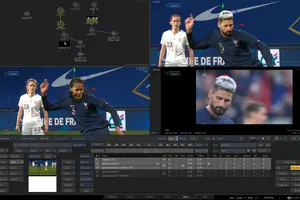
The first three seconds memory hook focuses on the decision output of the project initiation stage.
The first three seconds of a TVC commercial determine whether the audience will continue watching, and also determine the completion rate and brand recall during media placement. Many teams treat the first three seconds as an accidental discovery during post-production editing; in fact, it must be defined as a verifiable communication goal at project initiation. Brands need to answer three questions: first, in what state will the target audience see this video in a fragmented context; second, can the brand's core selling point be compressed into a visual symbol; third, does this symbol still hold up under muted, small-screen, fast-scrolling conditions.
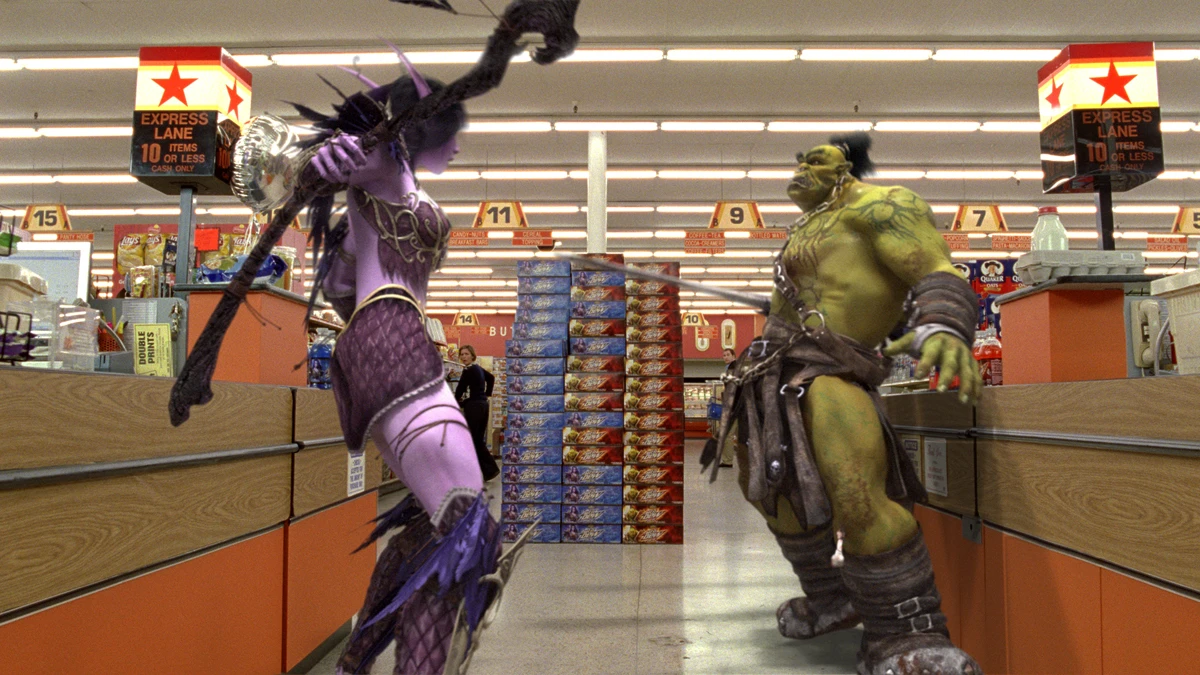
The key output of the project initiation stage is a visual memory hook specification document. This document needs to describe the subject, action, color, rhythm, and sound elements of the first three seconds of footage, and provide at least three alternative options. Each option must correspond to a specific audience reaction, such as pausing, rewatching, clicking, or searching. The production team must use this document to assess filming feasibility, including set construction costs, actor scheduling difficulty, VFX production timelines, and copyright risks. If the option requires expensive CGI or complex live-action compositing, it should be evaluated at the project initiation stage to determine whether the investment is worthwhile, rather than discovering budget shortfalls during post-production.
The judgment criteria are whether the concept can be explained in a single sentence, and whether that sentence, even without the brand name, allows the audience to remember the visual. For example, in a shot of orange liquid splashing, the audience might remember the color and motion rather than the product itself. During project initiation, avoid over-reliance on post-production fixes, because if the memory hook for the first three seconds is not designed in pre-production, it is difficult for the edit to create it out of thin air. The risk is that brands tend to write creative briefs that are too abstract, while production teams tend to make concepts overly flashy; both parties need to align their understanding at the kickoff meeting using reference visuals and storyboard sketches.
When deconstructing reference visuals, distinguish between visual elements and narrative functions.
Studying visuals from case studies can inspire ideas, but they cannot be directly copied. When deconstructing reference visuals, brands and production teams must distinguish which elements are visual, such as color, composition, lighting, and motion paths, and which are narrative, such as character actions, scene transitions, and emotional buildup. Visual elements can be borrowed for their rhythm and impact, but narrative functions must be redesigned to fit the brand's own logic. For example, if a beverage commercial uses high-speed photography to capture the moment of liquid collision, the visual elements are motion blur and color contrast, and the narrative function is to convey freshness and energy. The brand must consider whether its own product has similar attributes; if not, it must find another way to express this.
When deconstructing reference visuals, also record the audience's first reactions; it is best to have people unfamiliar with the project watch it and state what they remember. This test can be conducted internally or involve target audience members. If the test results show that the audience remembers an irrelevant detail, such as a prop in the background or an actor's clothing, it indicates that the memory hook design lacks focus. The production team should adjust the weight of visual elements based on the test feedback, scaling up the core elements to dominate the frame and reducing distracting information.
The risk is that reference visuals can easily lead the team into imitation, especially when the case comes from a well-known brand. The way to avoid this is to extract only one reusable visual principle, such as using high-speed motion to create suspense, or using extreme close-ups to magnify details, and then create anew around this principle. An exception is when the brand explicitly requests benchmarking against a certain style; in this case, the scope of reference should be noted in the contract to avoid later copyright disputes.
During the production execution stage, the first three seconds require separate storyboard design and on-site verification.
TVC commercial shoots often require multiple days or multiple camera setups, but the shots for the first three seconds must be listed separately in the shooting plan, with sufficient on-site verification time scheduled. The production team must design detailed storyboards for the first three seconds before shooting, including camera positions, lens focal lengths, movement methods, lighting directions, and actor blocking. The storyboards should annotate key information for each frame, such as the subject's proportion in the frame, the degree of background blur, and foreground occlusion relationships. On the day of the shoot, the director should prioritize shooting the first three seconds, as the actors' conditions and scene settings are most ideal at this time. If insufficient footage is discovered in post-production, the cost of reshoots will be very high.
The on-site verification method involves immediately playing back the footage after shooting and checking several key points on the monitor. The first point is whether the main subject of the frame is recognized immediately; the second point is whether the movement rhythm meets expectations; the third point is whether the color and lighting have sufficient visual impact. If the subject is found to be not prominent enough, this can be resolved by adjusting the depth of field, adding fill light, or changing the composition. If the movement rhythm is too slow, the actors can be asked to speed up their movements or the speed of the camera push-ins and pull-outs can be increased. These adjustments must be completed on-site and cannot rely on post-production speed ramps or cuts to remedy, as post-processing will lose image quality and realism.
The risk is that the shooting location is susceptible to environmental interference, such as weather changes, venue noise, or fluctuations in actors' conditions. The production team must prepare backup plans in advance, such as using indoor studio shoots to replace exterior shots, or using CGI to supplement shots that cannot be completed in live-action. An exception is that certain creatives require the contingency brought by real environments, such as impromptu street reactions; in this case, a certain degree of uncertainty must be accepted, but the core elements of the first three seconds must still be controllable. The consequence of delivery is that if verification is not conducted during the shooting stage, and the footage is found to not meet expectations during post-production editing, the only options are re-editing or reshooting, which will directly impact the project timeline and budget.
In post-production editing, the rhythm of the first three seconds must go through multiple rounds of testing and adjustment.
In the post-production editing stage, the pacing of the first three seconds is key to determining whether the memory point is established. Based on the storyboard and footage, the editor must combine the first three seconds of shots into a complete visual unit and control the duration of each frame. Generally, a complete visual event arc should be completed within the first three seconds, such as an object appearing and bursting, or an action from start to finish. The editor must repeatedly adjust the cut points so the pacing meets visual expectations, neither too fast to see clearly nor too slow to lose interest.
The testing method involves creating multiple versions, each slightly different in pacing, shot order, and sound effects, then inviting the target audience to watch and recording their reactions. Testing can be done online or via offline focus groups. The criteria are whether viewers can accurately state the brand or product type after watching the first three seconds, and whether they are willing to continue watching. If test results are poor, the editor must analyze whether it's a visual, pacing, or audio issue, and make targeted adjustments. For example, if the visual impact is insufficient, increase color saturation or adjust contrast; if pacing drags, cut intermediate frames; if the audio isn't prominent, design a unique sound effect or musical accent.
The risk is that post-production adjustments can easily go too far, causing visual distortion or pacing chaos. The production team must set an adjustment limit, such as keeping color saturation within a certain range and shot cuts below a certain number, ensuring the adjusted visuals still match the brand tone. An exception is when certain creatives intentionally break the pacing, such as using freeze frames or slow motion to build suspense; here, ensure the audience understands this expression rather than feeling confused. The consequence of delivery is that if post-production testing is insufficient, the final film may not achieve the expected effect upon release, and the brand will need to re-edit or produce a new version, increasing extra costs.
Sound design is the invisible support for the first three seconds' memory point.
Sound is often overlooked in the first three seconds of a TVC, but it is crucial for establishing the memory point. Viewers often watch on mute in fragmented scenarios, but once sound is on, audio elements can reinforce visual memory. Sound design includes sound effects, music, and voiceover. The first three seconds need a unique sound mark, such as a short impact sound, a melody's opening note, or a brief narration. This sound mark must sync with the visuals to form a multi-sensory associative memory.
The production team must design a separate audio plan during post-production and adjust it in sync with the picture edit. The criteria are whether viewers can associate the brand or product when listening to the audio alone with the screen off, and whether the sound enhances visual impact when the screen is on. For example, a liquid splash visual paired with a crisp crash sound is more memorable than the visual alone. Sound design must also consider the playback environment of the delivery platform; for example, phone speakers and headphones sound different, requiring adjustments to volume balance and frequency response.
The risk is that sound design can easily be overdone, such as music being too loud or sound effects too harsh, which interferes with visual memory. The production team must follow the principle of restraint, making sound an aid to the visuals, not the dominant element. An exception is when the brand wants to use sound as the core memory point, such as an original song or a signature slogan; here, the visuals should be simplified to avoid information overload. The consequence of delivery is that if the sound design is improper, viewers may skip the ad due to discomfort, and the brand will need to remix or replace the music, affecting the launch schedule.
The acceptance phase must establish a quantifiable checklist rather than subjective feelings.
Acceptance for the first three seconds of a TVC cannot rely solely on the subjective feelings of the director or brand manager; a quantifiable checklist must be established. The checklist should cover four dimensions: visual, audio, pacing, and information delivery, each with specific criteria. The visual dimension checks if the subject is prominent, colors are vivid, and composition is balanced. The audio dimension checks if the sound mark is clear and volume is appropriate. The pacing dimension checks if shot transitions are smooth and duration is proper. The information delivery dimension checks if the brand name or product appears within an acceptable timeframe.
Acceptance also requires actual playback testing, including playing on different devices like phones, tablets, computers, and TVs, and across different platform environments like social media feeds, video sites, and outdoor screens. Each platform has different aspect ratios and audio standards, and the brand must confirm the final film meets publishing requirements. Test results must be recorded as acceptance evidence. If any dimension falls short, the production team must propose revisions and redeliver until all pass.
The risk lies in unclear acceptance criteria, leading to different understandings of the results between both parties. The brand should jointly develop an acceptance checklist with the production team at project kickoff and sign to confirm it. An exception is when certain creatives need to break convention, such as intentionally blurring the brand's appearance time; in this case, exception clauses must be noted in the acceptance checklist. The delivery consequence is that if acceptance fails, the production team needs to make free revisions, but the number and scope of revisions must be agreed upon in the contract to avoid indefinite rework.
Applicable boundaries and inapplicable scenarios for the first three seconds' memory point
Not all TVC commercials are suitable for designing a visual memory point in the first three seconds. When the brand's goal is focused on building a long-term brand image, the first three seconds may be better suited for atmosphere creation rather than impactful visuals. For example, for luxury brands or public service announcements, the audience needs emotional resonance rather than visual stimulation; here, the first three seconds can unfold slowly, using details and negative space to establish quality. The brand must judge its communication objectives: if the goal is to increase awareness, the first three seconds' memory point is effective; if the goal is to change attitudes, a longer narrative buildup may be needed.
Inapplicable scenarios also include categories with complex product information or requiring explanation, such as financial products or medical devices. If the first three seconds of these ads pursue visual impact too much, the audience may remember the visuals but ignore the product features. In such cases, the first three seconds are better suited for introducing a problem or pain point to arouse curiosity, followed by gradual explanation. Additionally, if the placement platform is a pre-roll ad for long videos, the audience has more patience, so the first three seconds can be relatively mild; if it's a short video feed, the first three seconds must quickly grab attention.
The risk is that the brand blindly applies memory point design, resulting in a creative mismatch with the brand's tone. The production team should proactively explain the applicable boundaries during the pitch and advise the brand to adjust its strategy based on communication objectives. An exception is when the brand explicitly requests to benchmark a specific case's style; even if inapplicable, it must be executed, but the risks should be noted in the contract with revision rights retained. The delivery consequence is that if the creative direction is wrong, the final film may not meet expectations, and the brand will need to remake it, wasting time and budget.
Next step: start with a visual memory point test
If you are preparing a TVC commercial project, it is recommended not to rush into writing a script or finding a production team, but to spend a week doing a visual memory point test. Collect at least ten commercial cases from different industries, capture the first three seconds of footage, and have the target audience watch and state what they remembered. This test helps you understand which visual elements are truly effective and which are just self-satisfying. Then, based on the test results and combined with the brand's core selling points, write a visual memory point specification document for the first three seconds, and take this document to communicate with the production team.
During communication, ask the production team to provide an analysis of the first three seconds of their past works, rather than just watching the final films. If they cannot clearly explain how they design memory points, be cautious about collaborating. After project kickoff, attach the visual memory point specification document to the contract to clarify acceptance criteria. During filming and post-production, insist on on-site verification and testing, and do not compromise easily. Finally, conduct multi-platform playback tests before delivery to ensure the final film is effective in real environments. These steps won't guarantee the ad's success, but they can significantly reduce the risk of failure, giving your TVC commercial a better chance of being remembered in the flood of information.
If you are preparing a TVC commercial project, you can first organize the Brief, reference visuals, product or company materials, delivery platforms, and copyright scope, then viewTVC Commercial Service Page, translating communication from abstract preferences into executable production boundaries.