A customer sends your support team a photo of a travel mug and asks for “this one.” They might want a similar look, a second identical mug, or a replacement lid for the mug they already own. Those requests need different confirmations, even when they begin with the same photograph.
For overseas brands commissioning content from a China production partner, ONCE recommends defining the request before adding shots to the brief. Some gaps need photography. Others need a model record or a product-approved relationship between a part and its host product.
A new shopping entrance, several different tasks
Amazon's November 6, 2026 announcement introduced shopping by text to a subset of U.S. customers by invitation, with expansion planned over the following weeks. Its examples include sending a photo to find similar products and reordering a detergent bought the previous month.
The announcement describes Amazon's service. It does not establish universal adoption or guarantee exact model identification and compatibility from an arbitrary photo. ONCE has not tested the account experience. Our inference concerns content preparation: a photo-led request needs a clear statement of what has, and has not, been confirmed.
A separate reference comes from IKEA's U.S. missing-parts guidance. It directs customers to part codes in assembly instructions and provides a customer-service route when a code is unavailable. This illustrates a role for identifiers and assisted identification; it is not a rule for other brands.
ONCE's request routing table
| The shopper's task | Confirmation needed | Content to prepare |
|---|---|---|
| Find a similar style | Which shape, finish, material or use matters | Clear overall and detail views, scale references and accurate attributes |
| Buy the exact item again | Brand, model, revision and configuration | Identifier-finding guidance, distinguishing views and the matching product record |
| Buy a part for an existing item | Host identity, part identity and approved fit relationship | Model location, part details, applicability information and relevant installation guidance |
This is ONCE's planning framework, not an Amazon acceptance standard. Exact identity describes one product. Compatibility describes a relationship. One part may fit several models; two similar-looking models may use different parts. The brand's product team must establish that relationship.
A brief clarification can route the work: “Do you want a similar style, the identical item, or a part that fits the item you own?” Until the answer and supporting information are available, treat a result as a candidate rather than a confirmed match.
A replacement lid changes the photography brief
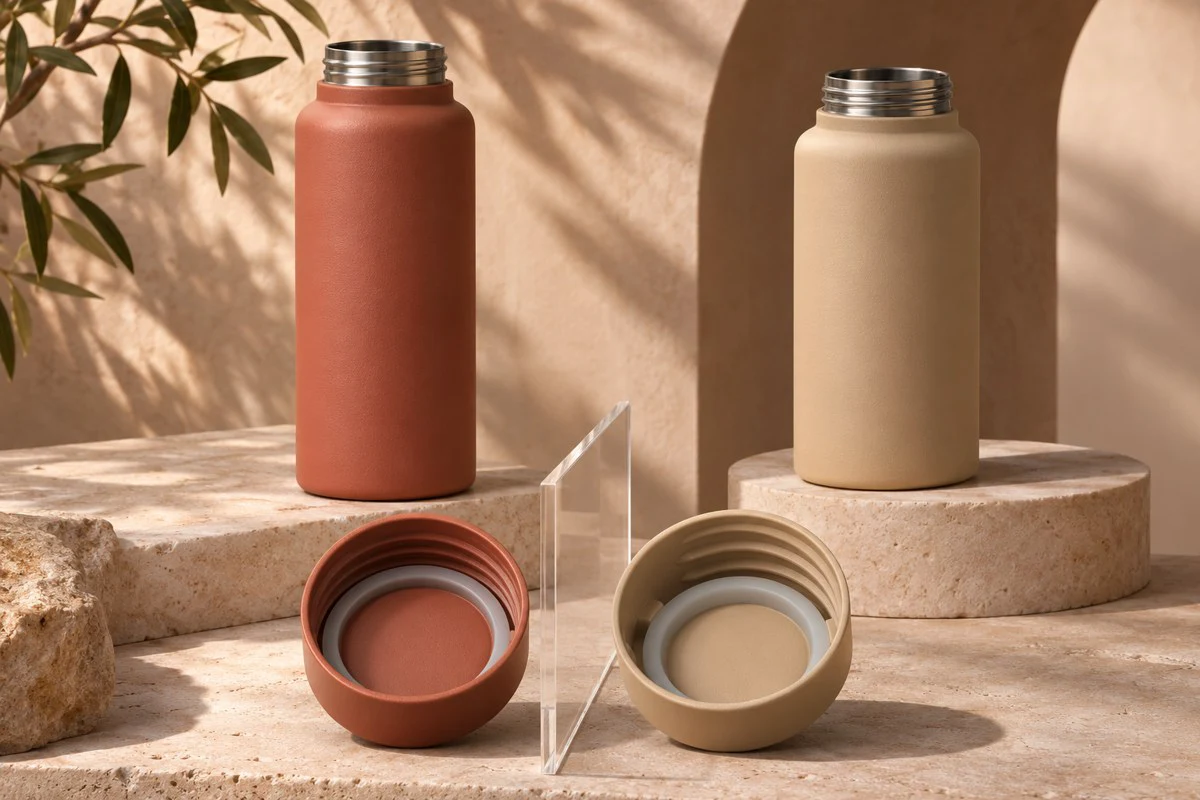
Imagine a fictional drinkware brand with two nearly identical mugs that use different lid fittings. This is a hypothetical production example, not an ONCE project or a statement about a real product.
For a style search, overall shape, finish and hand-held scale may help the customer compare options. For an exact reorder, show where the model can be found and connect it to the current selling configuration. For a replacement lid, the useful addition may be an underside detail, model-finding image and product-approved fit table.
If the source records are missing, commission that confirmation first. AI can help with layout or scene exploration, but a generated identifier or plausible-looking connection does not supply product identity or fit approval. Installation footage should follow a confirmed pairing, rather than being used to infer it.
Give your product content production team the unresolved customer question along with the product. That makes it easier to specify the missing view without turning a small information gap into an unnecessary complete shoot.
Accept content against the question it can answer
Start with one priority product family. Ask a colleague who did not create the materials to attempt all three tasks using the available images and records. Log where they get stuck: an obscured feature, missing model identifier, absent fit information or a mismatch with the currently sold version. This is an internal content check, not a simulation of a shopping algorithm.
Route unclear visuals to photography, missing item mappings to catalog operations and unconfirmed fit relationships to product specialists. An accurate instruction to supply a model number or contact support is a useful outcome when the available information is insufficient.
For each deliverable, retain its purpose, applicable product revision, approver and record-review date. When the product changes, that index helps identify the model-location image, part table or installation sequence that needs attention.
For ONCE's ongoing content services, maintaining that index is a possible extension of a one-off production brief. Its effect on returns, inquiries or production effort requires real measurement. We do not claim that an AI shopping service will ingest every supporting image or that this preparation guarantees recommendation visibility.
Sources verified November 8, 2026. IKEA's page publication date was not established. The routing framework and scenarios are original ONCE analysis; the original AI cover is conceptual.