The agency's weekly summary says no significant issues were found. Your team approves another batch of product videos. Further down the report, several checks are marked as not assessed. Did the summary establish what you needed to know before approving that work?
This is a hypothetical handover, not an ONCE client account. For overseas brands coordinating a Chinese supplier, studio and media partner, the useful question is not whether every possible check ran. It is whether the assessment covered the decision you are making.
A documented limit is part of the finding
Supermetrics published How to audit and monitor your ad campaigns on November 6, 2026. The guide describes Audits and Monitors as open beta, with Audits supporting Google Ads and Meta Ads. Fixed checks compute findings; an AI tool then explains them and suggests actions.
The guide also says audits list checks they could not run, such as keyword checks in an account without search campaigns. This prevents an unassessed area being mistaken for a healthy one. The page was verified November 8, 2026; no advertising account was connected or tested for this article.
That establishes the described product workflow, not comprehensive creative evaluation or industry-wide adoption. ONCE's inference is that as audit findings enter conversational reports, their limits need to travel with the summary.
The ONCE coverage handover
Start with the business decision, then list the checks it needs. Do not define the whole assignment by whichever data the tool happens to return. This proposed handover method is not a Supermetrics feature name.
| State | What the report should retain |
|---|---|
| Assessed, no exception found | Object, period, data and rule; no broader assurance than that check supports |
| Assessed, exception found | The finding, affected object, owner and review action; uncertain causes remain uncertain |
| Not assessed | What is missing, whether it affects the decision, who will supply it and when reassessment becomes possible |
Explain the difference between not applicable and missing evidence. A search-specific check may be irrelevant to a campaign without search activity. An expected account that was never connected is another matter. Neither should be silently presented as a pass.
Avoid a universal coverage score. Numerous minor checks do not compensate for one unanswered question essential to the purchase. The rows have different consequences and should not be added into a reassuring percentage.
What an account check may leave unanswered
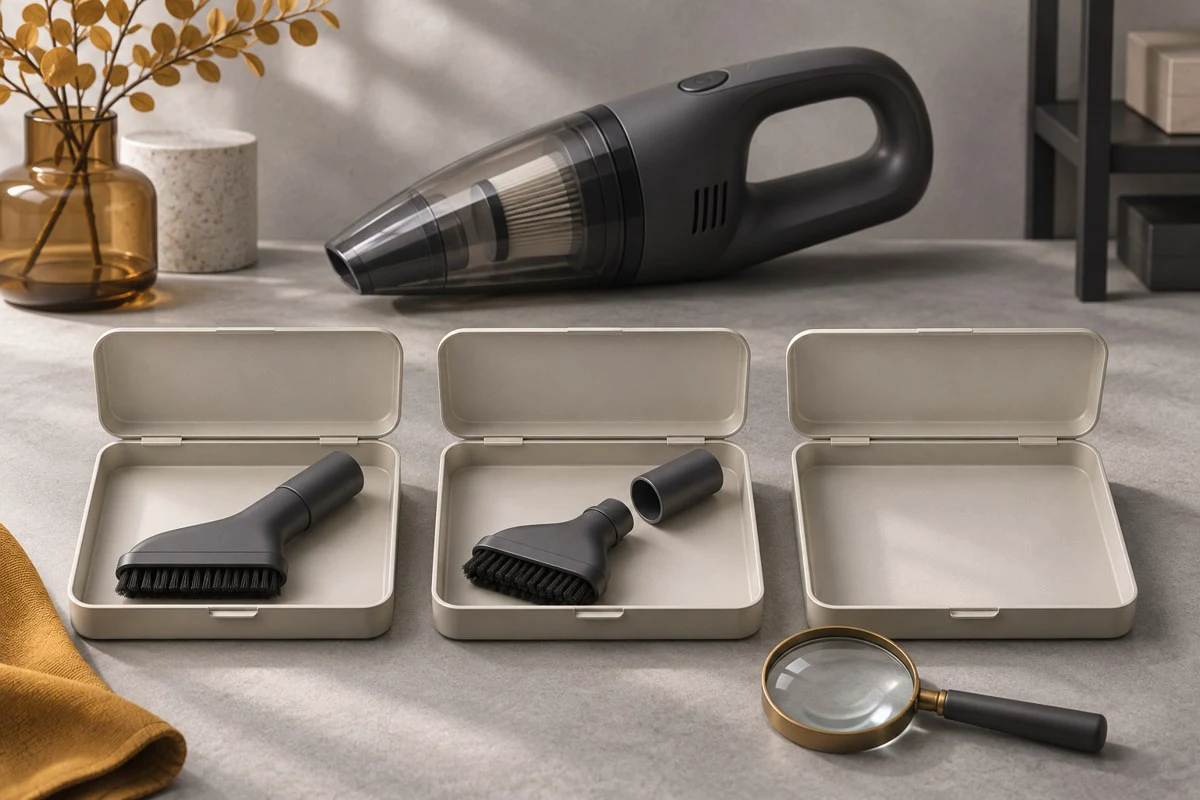
Imagine a portable cleaning tool whose assessed campaign settings show no exception. The brand may still need to establish whether the displayed video is the approved version, whether the demonstrated attachment belongs to the advertised bundle, and whether viewers understand the installation step.
Those require different material: asset-to-ad correspondence, product and offer records, and suitable comprehension evidence. These are business examples, not claims that Supermetrics promised to perform those particular reviews.
Distinguish a tool's unoffered scope, unavailable evidence and a provider's missed contractual task. They carry different responsibilities. If bundle contents are unconfirmed, resolve that before approving new claims involving the attachment. Other approved work that does not depend on that question may continue.
Keep explanation attached to the original check
When a report recommends replacing a hook or labels a creative as fatigued, ask which finding supports it and what remains untested. A triggered rule can justify investigation without establishing that the script, performer or pacing caused the result.
A production brief can say: “The available assessment supports action A. Item B was not assessed and must not be described as passed. Item C does not apply. New production addresses the confirmed communication gap; other ideas remain hypotheses.” This is a suggested instruction, not a guarantee of tool behaviour.
Retain the original result, the interpretation and the approved decision together. A short summary should provide a route back to the relevant row. Later evidence should create a dated reassessment rather than rewriting the limitations out of an older report.
Buy follow-through on the gaps
Scope coverage reporting, exception review, follow-up on unassessed items, creative recommendations and production separately. Specify what the brand, media partner, supplier and studio must provide. A polished AI summary does not complete every review; additional videos do not fill a data gap.
For a continuing content service, retain the supported decision, the unanswered question and the next owner and input. ONCE sees this as useful operational memory for later work, not a claim of proven margin improvement or autonomous campaign management.
Explore ONCE's video marketing resources. Bring the actual report and its unassessed items to the next brief so the production request follows a clear decision.
The coverage method and product example are original analysis. The AI cover is conceptual artwork, not a customer dashboard or a test result.