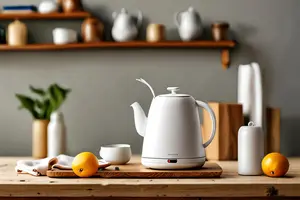
Your brand film builds atmosphere before revealing the appliance. That pacing may serve a complete commercial. But should the same reveal be carried into a placement beside credits and the next-episode choice?
For a brand commissioning content around its Chinese supply chain, the first decision is not how many seconds to cut. It is what the placement lets the asset do, which existing shots can serve that task and what information is still missing before production can be priced.
An announced environment is not a universal specification
Amazon Ads' Canadian Upfront recap, dated June 12, 2026, describes Next Up ads alongside end credits and the next-up carousel, with sponsorship partners getting first access to associated sequential experiences. Its Australian announcement of September 23 describes a local beta planned for later that year and sponsorship priority.
We rechecked both on October 31. These statements establish announced contexts and plans, not current access for every account or country. They do not supply a universal duration, aspect ratio or obstruction template in those descriptions. Nor do company case studies forecast this brand's return.
ONCE's inference is that placement context creates a distinct adaptation task. Confirm the actual media opportunity and creative requirements before treating the announcement as a reason to book a large shoot.
Review the task, layout and exit
Task: choose what the asset should leave behind
Choose a primary job: establish the brand and product, communicate one useful result, or support an action the placement actually provides. Do not load full product education, a brand story and an immediate purchase request into an undefined format.
A recognition task can retain a distinctive setting without withholding the product's identity until the end. A demonstration task needs an identifiable product connected to its actual outcome, rather than an isolated attractive detail. For an interactive task, verify the supported action instead of borrowing a button from another format.
These are creative hypotheses for review, not measured laws of attention. The final choice depends on the actual placement, objective and available footage.
Layout: inspect the brand asset with its surroundings
Ask the media owner or authorized platform contact for current specifications, templates or a preview process. Establish where the brand material appears, what surrounds it and where essential information can go. If that material is unavailable, label the design a concept awaiting layout confirmation.
In the confirmed environment, review the product outline, branding, necessary qualifications and meaningful action. Avoid placing the sole demonstration result where navigation may obscure it. Do not invent a universal safe area that claims to cover every device and format.
On set, consider adjustable framing and independently useful result shots or still candidates. That does not mean one loose composition will suit all future placements. The actual brief must determine whether a new image, video or other deliverable is required.
Exit: check what remains if viewing stops
Do not assume completion. Stop the review at different points and examine the meaning already conveyed. Does an early result lose an essential qualification? Does a late product reveal leave the earlier atmosphere unattributed?
This is a diagnostic review, not an estimate of audience exit rates or a mandatory timing rule. It identifies excessive dependence on a final explanation. Product owners and the final media requirements must guide how necessary conditions are presented.
Scope the missing material before a reshoot
Imagine a fictional organizer brand with a film that moves from an untidy room through a character scene to a final product reveal. If the new task is simply product recognition and the organized result, first look for existing product-wide, use and outcome shots. Reorder a self-contained asset rather than trimming the film from its opening.
If the shoot only captured extreme material close-ups, or the person obscures the product, a limited pickup may be appropriate. If the needed shots already exist, a new format does not inherently require recreating the entire lifestyle production.
| Finding | Work to scope first |
|---|---|
| The footage exists; the reveal is too late for the intended task | Information and pacing edit, followed by contextual preview |
| No independent product identity or result shot exists | A defined pickup of the missing material |
| Access, specifications or templates remain unknown | Media confirmation; concept work stays provisional |
| The brand wants a story across exposures | Separate verification of delivery and sequence conditions |
This is a planning example, not a client test. An episode-transition placement describes program context; it does not alone establish that a viewer saw the brand's previous ad. A sequential story needs its own media and creative design.
Buy environmental adaptation explicitly
For video production procurement, separate common footage, concept and framing work, specification adaptation, necessary pickups and contextual previews. Name the owners of media buying, platform approval and production. A production partner should not promise account eligibility it does not control.
Start with representative assets and the actual template before extending the work across a catalog. Record what can be reused and what needs a new layout. That creates a basis for estimating effort without assuming a standard saving or a conversion lift.
For ONCE's ongoing services, the reusable knowledge is the relationship between footage and its viewing environment: which outcome fits which framing, which information needs protection and which adaptation has actually been previewed. More episode transitions may become commercial opportunities; that is a future possibility, not a completed industry shift. Today, task, layout and exit provide a concrete way to decide what to commission.
Sources checked October 31, 2026. The review method and fictional scenario are ONCE analysis. No live advertising account, delivery or effectiveness test was performed. The original AI cover is conceptual.