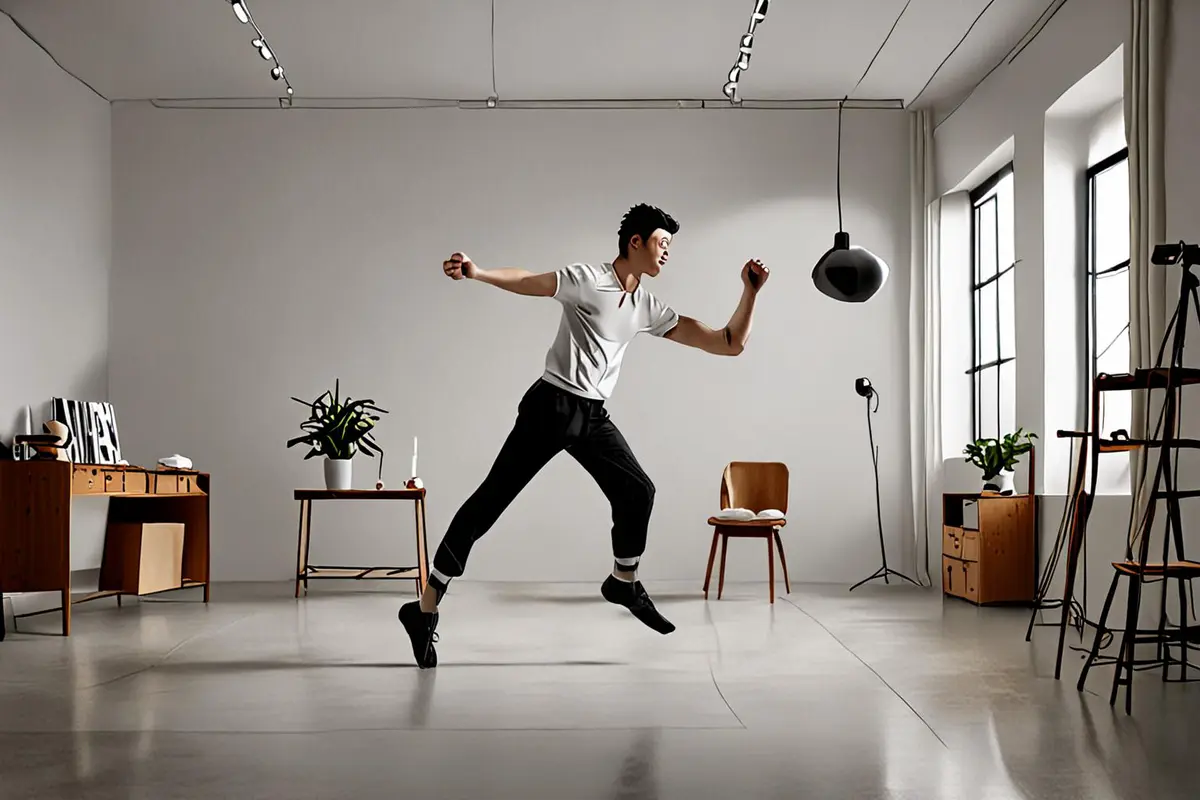
On September 1, 2026, IKEA U.S. introduced a pair of films in its official newsroom. The English-language film was called Knock Your Socks Off; the Spanish-language version was Te Mueve El Piso. In the first, socks fly through an IKEA showroom. In the second, an expression about being so captivated that the ground moves beneath you becomes a different physical idea. Both films promise the excitement of discovering something new, but they do not force two audiences to share the same joke.
This public example raises a practical question for global ad localization: when an idiom is the engine of the idea, should a brand translate the line or rebuild the visible cause and effect? This analysis is limited to IKEA U.S.'s official September 1, 2026 newsroom account. It does not claim access to production files, campaign performance data, or a frame-by-frame review of masters that were not provided.
The two films do not really share socks or a moving floor
IKEA places both films under the same brand platform. A new color, pattern, piece of furniture, or practical solution can change how a familiar home feels without requiring people to start over. The flying socks and moving ground turn the same emotional shift into two filmable actions: discovering something desirable briefly makes the ordinary world feel unstable.
The shared layer is therefore an audience experience and a brand role: new design can make a familiar space feel newly possible, and IKEA is where that discovery happens. Socks and floors belong to the market-specific expression layer. If socks become part of the global big idea, every other language has to explain an English idiom. If the brief keeps only the vague word “excitement,” almost any retailer could use it.
This goes beyond replacing actors or subtitles in a general global marketing video. The team must isolate an emotional cause and effect that can travel, then find a different physical action that makes it immediate in each language.
Literal translation can weaken both language and image
An idiom does two jobs. Its everyday meaning lets people understand the emotion quickly; its literal reading gives a director an action that can be enlarged. Complete only the first job and the film falls back into a slogan over a product montage. Keep only the literal action and viewers may see an elaborate oddity without knowing why it is funny.
Imagine Spanish-speaking viewers watching socks fly while the local copy does not naturally use the same expression for delight. Subtitles would have to explain the action after it happened. The order of the joke would be reversed: viewers first see an unexplained spectacle, then wait for the brand to tell them what it meant. Conversely, translating Te Mueve El Piso into a generic line about being inspired, while showing no change in ground, posture, or space, removes the bodily force of the expression.
Three things must work at once: a phrase people would actually use, a physical change that reads immediately, and a clear causal link between product discovery and that change. Remove one of them and the idea may shift from “I cannot believe they filmed that phrase” to “Why is the brand doing this?”
Fix the brand promise before each market reinvents the entrance
Global teams often worry that local rewrites will fragment the brand. What needs to stay fixed is the relationship viewers can repeat after the film. In this case, the discovery of new products begins the event; the transformation belongs in a recognizable home or retail world; the humor remains light and does not ridicule the shopper; and the products cause the delight instead of being pushed into an end card by the gag.
The idiom, prop, bodily reaction, spatial mechanism, voice rhythm, and ending can remain open. Flying socks need enough motion to be legible without turning the showroom into chaos. A moving floor needs readable instability without suggesting an earthquake or safety incident. The creative task is not to make two films look more alike. It is to make two different routes return to the same brand judgment.
For brands expanding from China, this decision belongs before a global master script is locked. Write the promise once without a pun. Then invite native-market writers and directors to propose expressions that can be supported by performance, props, sound, and space. The video marketing conversation becomes about the creative mechanism, not only linguistic accuracy.
An idiom-led gag needs three rehearsals before production
Let native speakers say it without pictures
The question is not merely whether the grammar is correct. Would people actually use the expression when sharing surprise or delight? Do different age groups, regions, or communities hear roughly the same emotion? If a native reviewer can explain the phrase but would never volunteer it in conversation, the idea has not yet reached living language.
Remove the line and test the action
Shoot a low-cost blocking test on a phone. A character begins in a normal state, notices a product, experiences the physical change, and returns attention to the product through a reaction. With the sound off, viewers should still understand that a discovery caused a change in body or space. They should not read it as a fall, a failed magic trick, or a product malfunction.
Check whether the gag has displaced the brand
Cut the most exaggerated action and ask whether the remaining sequence still communicates what was discovered. Hide the brand name and ask whether viewers can identify the category and the product's role. If every memory belongs to flying socks, a tilted floor, or a performer's face, spectacle and product do not yet need each other. A physical gag should be triggered by the product and return attention to it.
A rewritten idea changes the production plan
If the English concept relies on many socks in motion, production has to define their material, color, flight path, and landing points. It may need separate passes for performance, a clean set, products, and controllable prop layers so postproduction can change density without covering furniture. If the Spanish concept relies on the floor moving, the director must decide whether the effect comes from camera movement, performer balance, a practical platform, or VFX, while preserving believable contact, shadows, and furniture stability.
Performance cannot simply be dubbed. A sock-based gag may begin with a character feeling air movement and then noticing the anomaly. A ground-based idea can emerge through a shift in footsteps, shoulder line, and gaze. Sound may use fabric movement in one version and subtle friction or low spatial movement in the other. Both should express the same disruption of familiarity rather than use exaggerated effects to explain an unreadable picture.
Short social versions should not begin at the peak of the gag. They still need a normal state, a product trigger, and a bodily change. Outdoor stills need product and impossible action in one image. Global teams can share color, product-selection principles, photographic finish, and closing identity while local teams own the entrance action, performance beat, and sonic joke.
Localization is not a cultural label pasted onto a market
Rewriting a joke for each language does not mean reducing a market to a stereotype. A familiar idiom is only a starting point. Its fit still depends on tone, audience, product category, and present-day usage. Local creators do more than check whether an idea might offend. They judge whether the phrase still feels fresh, whether the action feels natural, and whether the brand has permission to be playful in that way.
A small rehearsal can ask target-market viewers to describe the cause and effect they saw rather than rate whether they liked the film. If they discuss spectacle but never mention product discovery, the brand connection is weak. If the action is repeatedly read as danger, failure, or mockery, the physical design is wrong. If the expression feels dated or belongs to a very narrow group, the linguistic entrance is wrong. Those answers guide script, performance, and art direction more directly than an abstract country checklist.
When translation is enough, and when a market needs new footage
If a film's central action already reads across languages, such as a clear change in size, a visible use result, or a human choice, a market version may only need new voiceover, subtitles, product selection, and action information. When the joke, reveal, or emotional turn depends on wordplay, rhyme, a catchphrase, or a specific idiom, translation reaches into the shot structure. The opening, performance, and sound usually need to change; sometimes the full film does.
The value of IKEA's public example is not a reusable “flying socks” template. It demonstrates a more durable way to organize global creative: the brand platform preserves one feeling of discovery, while each language market finds its own bodily metaphor. The campaign can remain coherent without asking every viewer to do extra work for an English-language idea.
Write the global promise once without the idiom
Before adapting a campaign, remove the pun, rhyme, and local slang and write the change the brand actually wants people to feel. Then let language, action, and space in each market make that change interesting again. If your team is deciding whether a Chinese concept should be translated, rewritten, or reshot for global audiences, talk to ONCE VISUAL about the promise, the visual mechanism, and the market versions together.