A brand commissions an opening sequence that moves with music. The first film looks excellent. Then a team needs a shorter vertical version, a different track, or an exhibition display. Did it buy something that can support those uses—or one carefully finished result?
ONCE recommends naming the deliverable before pricing it: a fixed audiovisual film, a family of assets recreated by specialists using approved rules, or a system that accepts new sound in an agreed environment. These are different purchases, not successive levels every brand must buy.
A process story is not a software specification
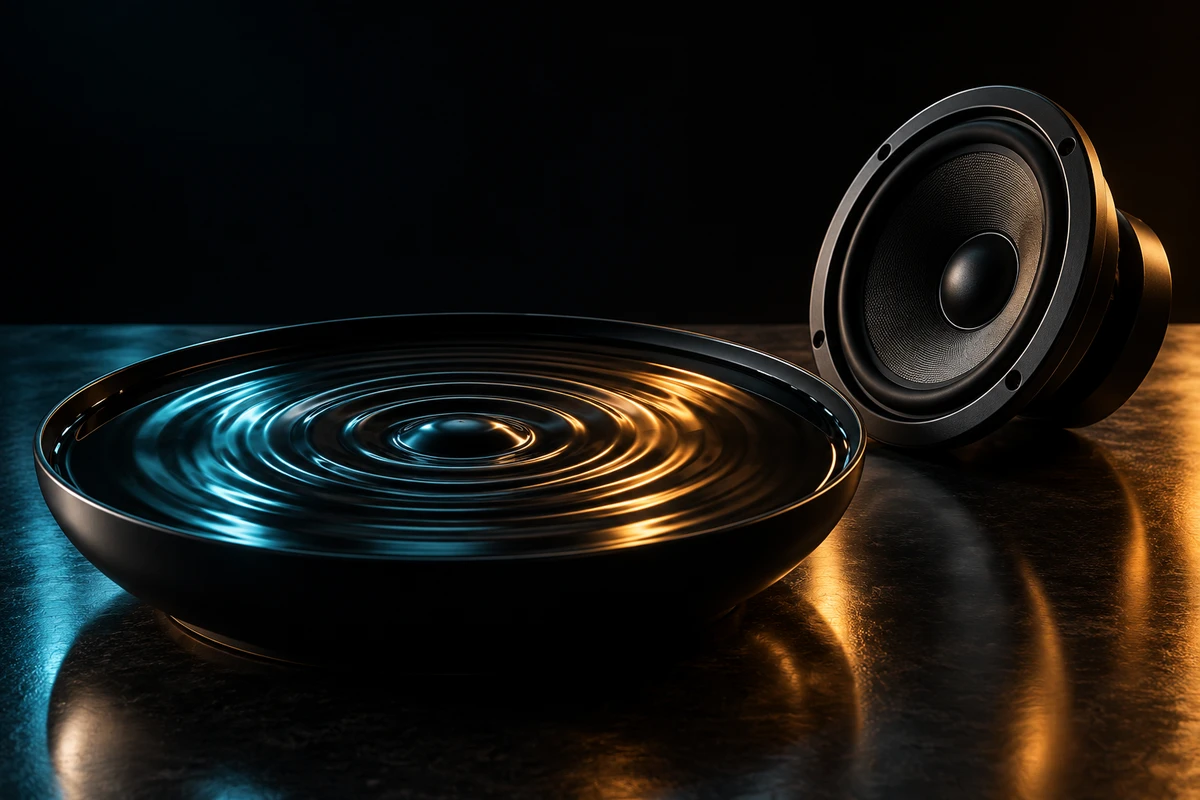
LBB's 21 October 2026 Apple Music identity account, associated with TBWA\Media Arts Lab, describes work with Fred again.. and NEST Acoustics. Sound was passed through a transducer into mineral oil; filmed movement and refraction supplied material for the identity. Creative Boom's 22 October report also describes the process and identifies finishing contributors.
Those accounts explain a production approach. They do not establish delivery of software that reacts live to arbitrary songs, or the absence of all post-production. The original film's full content could not be retrieved for this article; the descriptions are not presented as direct viewing or an experiment ONCE reproduced.
The useful question is why sound should determine a visual choice. That relationship is relevant to a music service. For a brand sourcing appliances from China, an attractive liquid effect still needs a reason connected to its own product or identity.
A connection is not yet a brand rule
Adobe's keyframe documentation, updated 2 April 2025, says Convert Audio To Keyframes analyzes amplitude within the composition work area and creates representative keyframes. It supplies data, not decisions about a brand's shape, colour or legibility. It is not evidence of melody or semantic understanding, or of the method used on Apple Music's project.
For comparison, NONOIA's West Channel project explicitly describes a 2023 commission for an audio-reactive website splash screen and a custom web-based generative tool. Its browser-performance statements are the studio's claims, not compatibility results tested by ONCE. The page's publication date was not established; it was checked on 27 October 2026.
The distinction matters: a film preserves a selected outcome; a tool must operate beyond that outcome. Neither example proves every brand needs the latter.
ONCE's three-use prototype
Approve candidate visual rules, then test the uses you actually require. This is a proposed planning method, not a validated client workflow.
| Prototype | Preserve | Examine |
|---|---|---|
| Original soundtrack, main format | Approved sound and core form | Relationship to motion and legibility at the strongest movement |
| Short vertical version | The same identity under real duration and layout constraints | Whether the edit removes its only distinctive moment |
| A second approved sound input | The same rules within the intended input range | Quiet or dense passages, unacceptable outputs and required manual adjustment |
Buy the third test only when changing inputs is part of the brief. A brand repeatedly playing one approved opening may need fixed exports, not live development. If specialists must process each new track, describe that honestly as a continuing production service rather than a self-service tool.
A hypothetical audio brand might need a product-film opening, creator-demo assets and an exhibition screen. A fixed approved version could serve the film. Creator use might require a limited music selection and editing guidance. A genuinely reactive exhibition needs separate testing of the specified equipment, input path and failure conditions. This is an illustration, not an ONCE client case.
Define invariants before variable parameters: core contours, colour range, text-safe areas and the final resting state. Then discuss the permitted motion amplitude, speed and texture density. “Keep it on brand” is not enough guidance for another operator.
Scope creation, repeat production and operation separately
A fixed film covers its creative work and approved exports. An asset family adds documented rules, adaptations, adjustable project material and operating instructions. A running system adds development, deployment, input integration, performance checks and maintenance. These are scoping categories, not an existing ONCE tariff.
For a tool handover, have the actual recipient create an output from the second approved input in the agreed environment. Record input, version, settings, result and remaining specialist intervention. A successful studio demonstration does not establish performance on a client's site or event hardware.
Agree on a fixed fallback for unavailable sound or system failure, and who activates it. A fallback reduces an unacceptable blank-screen outcome; it does not repair the system. If live input is involved, specify whether microphones are used, whether audio is retained, and the necessary permissions and privacy arrangements. Do not assume audience audio may be captured.
For ONCE, the potentially reusable asset is the approved relationship between inputs, visual rules and real applications. A maintenance service is justified only by actual update demand, operating capability and cost—not by the novelty of a generative demo. Before commissioning, decide what stays fixed, who changes what, and where it must continue working.
Sources checked on 27 October 2026. No software, brand-memory or live-event test was performed. The cover is an original conceptual image, not equipment from the cited projects.