An overseas brand may need to circulate a supplier's demonstration before anyone can approve a sample or a production trial. If the first contact forwards the video to an operations colleague, should that colleague have to become a new marketing lead just to understand the answer?
ONCE's recommendation is to separate three jobs: explaining an approved product capability, requesting a service, and granting access to sensitive material. They need different entry points. This is an evergreen planning choice, not a claim that ungated video always performs better.
An email form is not the same as access approval
The current Wistia Forms documentation describes a skip setting: viewers must submit the form to continue when skipping is disabled, and can bypass it when enabled. The form's position is configurable. Checked on 27 October 2026, the page displays a relative update age rather than an exact publication date.
Vidyard's request-access guide, updated 20 February 2025, describes approval or rejection by a designated moderator. That is a different mechanism, not a property to assume of every lead form. Nor is it a guarantee against every subsequent copy or disclosure.
Collecting contact details and deciding who may see confidential material are different requirements. For restricted footage, the information owner and IT team should approve an appropriate access arrangement. Adding more questions to a marketing form does not settle that decision.
Design for someone who missed the supplier call
Consider a hypothetical brand evaluating a packaging machine from a Chinese supplier. Its sourcing lead attended the presentation; an operations manager now needs to understand the changeover sequence. The operations manager may be reviewing an existing opportunity, not asking for another sales introduction. This is an illustrative scenario, not an ONCE client result.
Production peer Oak + Rumble's distribution guide, published 4 May 2021 and updated 7 October 2026, advocates planning distribution before filming and supplying sales with clips answering specific questions. ONCE extends that planning question to the forwarded page: can a new colleague understand the answer without reconstructing the original meeting?
A shareable cut should retain the model, demonstration conditions, conclusion and limitations. Remove introductions meaningful only to the original recipient. Offer a specific next step—such as requesting a configuration review—without making every viewer request one merely to watch.
ONCE's answer-before-appointment method
Use these questions in order. This is a proposed planning method, not a validated performance model.
| Question | Content and access choice |
|---|---|
| Is onward sharing of this material approved? | If not, prepare an approved shareable cut or arrange controlled access. A longer lead form is not the remedy. |
| Does the next service actually require identity? | Sample delivery, a tailored assessment and a booking need contact details. A general explanation may not. Attach the request to the service. |
| Has the viewer received enough information to judge the exchange? | Explain the product and relevant problem before asking. For a gated course or specialist resource, describe precisely what registration provides. |
For approved product explanations intended to circulate, start with a viewing page that does not require a form, followed by an optional contact action. A specialist resource may justify mandatory registration, but production expense alone does not establish its value to the viewer. Nonpublic processes require an authorization decision first.
These choices need not mean three new shoots. Separate public explanations from project-specific details during planning, approve them separately, and build the required cuts from those sections.
Compare the job, not just the number of forms
A mandatory gate and an open sales explanation are not automatically comparable lead-generation assets. More submissions do not prove better buying progress; more plays do not prove more orders.
Pilot an approved, stable explanation in comparable sales situations. Keep its claims and follow-up offer consistent. Distinguish new visitors from contacts already in a discussion. Look for relevant questions and agreed next steps, such as a sample request or assessment. Record internal circulation only where it can actually be observed; anonymous plays do not establish additional buying roles.
As a comprehension check, invite an authorized colleague who missed the original presentation to explain which configuration the demonstration covers and what remains undecided. Note where a form interrupts that task and whether the exchange is clear. Do not ask anyone to bypass company controls. This checks usability, not the video's causal contribution to revenue. With small samples, preserve specific feedback rather than inventing a conversion uplift.
Specify the exchange in the production brief
Tell the supplier and production team what may circulate, what answer the viewer should receive, and which next step needs contact details. Scope the shareable edit, page summary, form wording and deployment review explicitly. Allocate hosting, data integration and access configuration to the party authorized to manage them.
For ONCE, reusable value lies in approved answers to real buyer questions—not an expanding list of mandatory fields. Let the explanation travel when its job is internal discussion. Ask for identity when the next job genuinely requires collaboration.
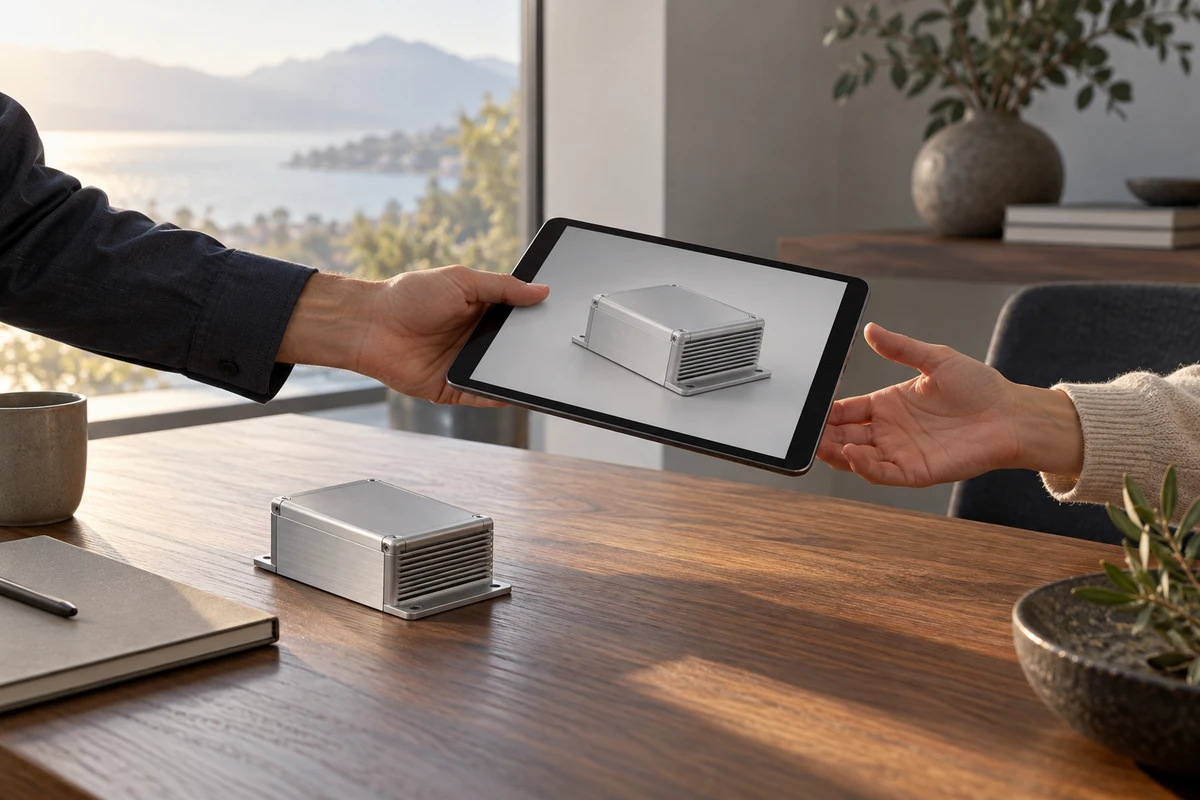
Sources checked on 27 October 2026. No customer account, live form or sales outcome was tested. The cover is an original conceptual image.