Digital human projects often bundle models, skins, expressions, animations, and platform outputs into a single file. Issues may not appear during the initial preview, but when switching shots, languages, or platforms, any modification affects the entire pipeline. Layering assets is essential for future reuse.
Models and topology determine future editability
Reallusion's public documentation separates Character Creator, character bases, skins, and animation tools. Comprehensive character assets must account for facial edges, joints, fingers, UVs, and expression morphs. For a single front-facing poster, precision and structure can be simplified. However, close-ups and continuous performances require editable topology from the start.
Maintain separate versions for skins, makeup, and materials
Tools like SkinGen handle skin and makeup effects at the material layer, enabling rapid testing of different ages, skin tones, and character designs. For brand projects, base skins, makeup, scars, lighting, and post-processing effects should be named separately. This prevents temporary retouching from being mistaken for core character assets when changing scenes.
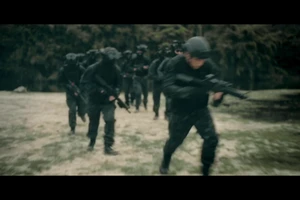
The image below is from ONCE's proprietary urban cycling video, used to discuss continuity between characters, motion, and environments. It does not imply that digital human assets, character tools, or motion capture systems were used in this article.

Rigging and animation must share common standards.
When moving a single character across real-time engines, offline renderers, or other DCC tools, bone naming, facial controls, units, and versions must be documented in the asset specifications. Epic's MetaHuman documentation separates character assembly, Live Link, and animation tools into distinct stages, clearly demonstrating that asset delivery cannot consist solely of a rendered image.
Cross-platform samples can be produced following this sequence.
- A medium shot of walking.
- A close-up talking shot.
- A set of skin and lighting variations.
- A motion retargeting pass or language version swap.
- A round-trip review from project to master.
If you are planning digital human characters, animations, and platform versions, you can start from ONCE Project Brief Entry Start communication.
Material Review
- Research Seed 0934 Reallusion digital human tools expansion
- Reallusion Character Creator
- Reallusion SkinGen
- Epic Games MetaHuman Documentation