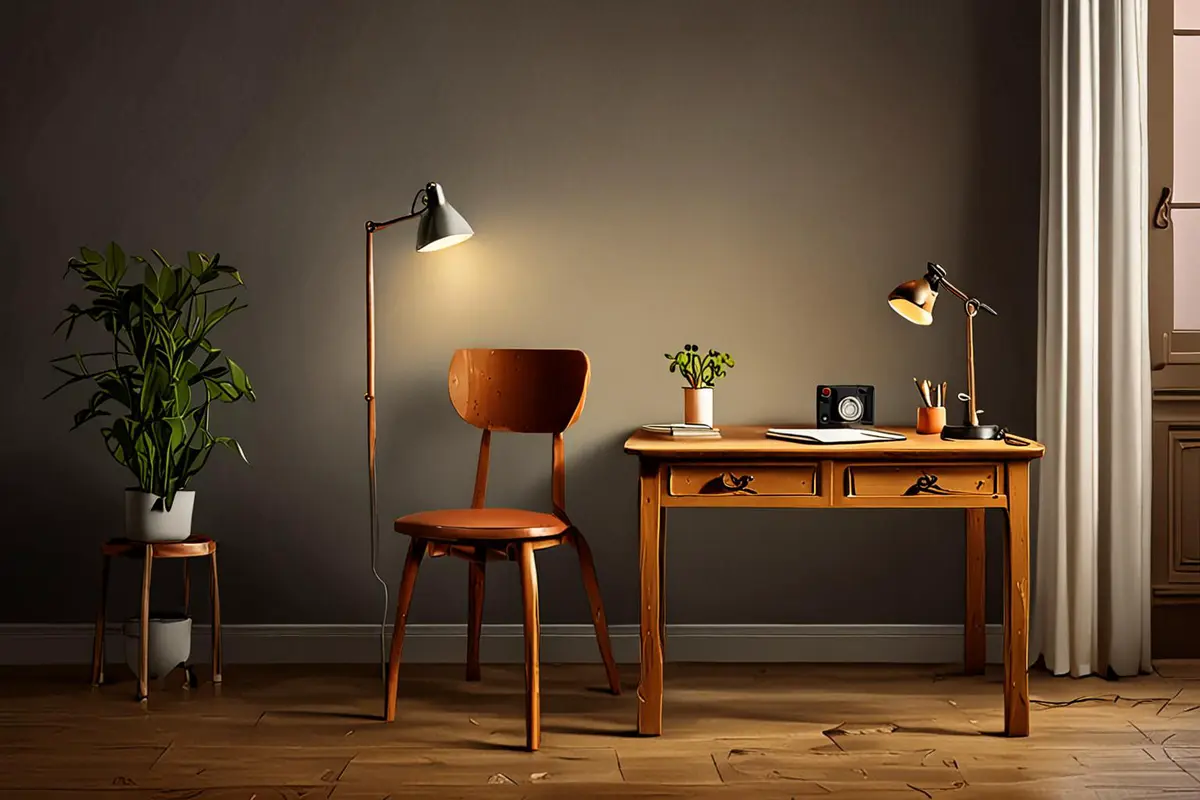
A character closes the door and leaves; the camera stays behind. A desk lamp is still on, a chair remains pushed back, and a curtain moves slightly by the window. A frame without a person can still help viewers understand what just happened or anticipate the next scene.
In a brand film, an empty frame can do more than decorate a transition. It can carry the result of an action, change the rhythm or make a character's choice visible. Its value comes from its relationship to the shots around it, not simply from how beautiful the room looks.
Let the frame hold the result of an action
Imagine a fictional home brand film in which someone finishes working late, closes a laptop and leaves. On the desk are a half-finished glass of water, a lamp left on and papers moved to one side. If viewers have seen the character rearrange the desk, the changed positions can show the result of that action.
No prop has one fixed meaning. A glass of water might suggest haste or an ordinary routine; its meaning depends on what the character did earlier. An empty frame lets viewers interpret the moment instead of hearing a voice-over explain that the work is finished. It also carries a risk: without the preceding action, viewers may simply see an ordinary desk.
Give the product a reason to remain
When a product belongs in the space, it can remain visible after the character leaves. A lamp that genuinely has an adjustable head might still illuminate an open drawing. If viewers saw the character adjust it in the previous shot, the empty frame continues that action. The lamp relates to the task rather than appearing as an abrupt product insert.
Confirm the real construction, operating state and use of the product before filming. An attractive shot is not a reason to imply unsupported runtime, automatic behavior or other performance with effects. Where a function needs explaining, include a clearly visible demonstration. For another perspective on clarity, see status cues in product video.
Choose how long to wait and what to hear
A brief empty shot can let an action settle. A longer hold may invite attention to a change in the space, but it can also slow the film. Keep the full pause in an early edit, then compare a shorter version: is the departure still felt, and is there enough time to notice the important object? There is no universal duration; judge the information in the frame against the rhythm of the whole film.
Sound can keep the room alive: a distant door, footsteps in the hall or the room's own ambience can carry the action forward. Sound can also recede to make room for the next scene. If effects are added, avoid presenting them as the product's actual sound.
Preserve the moment in production and shorter edits
Record the camera position, prop placement and lighting before and after the character leaves. If a clean version is useful, keep filming from the same position once the actor has exited. Leaving the empty shot to an improvised pickup can make continuity harder: whether the chair actually moved and whether the product is still in the correct state affect the cut. A new angle can work too, provided viewers have enough spatial context.
In a shorter version, the empty space need not occupy a full standalone shot. Hold for a beat after the door closes, then cut to the product or the next scene. If removing the moment erases the result of the action, consider trimming a repeated image instead. The focus here is how a space carries the story after an action ends.
These scenes are fictional creative examples, not guarantees of advertising results. If you are planning a brand film, contact ONCE to discuss the scene, product and visual storytelling.