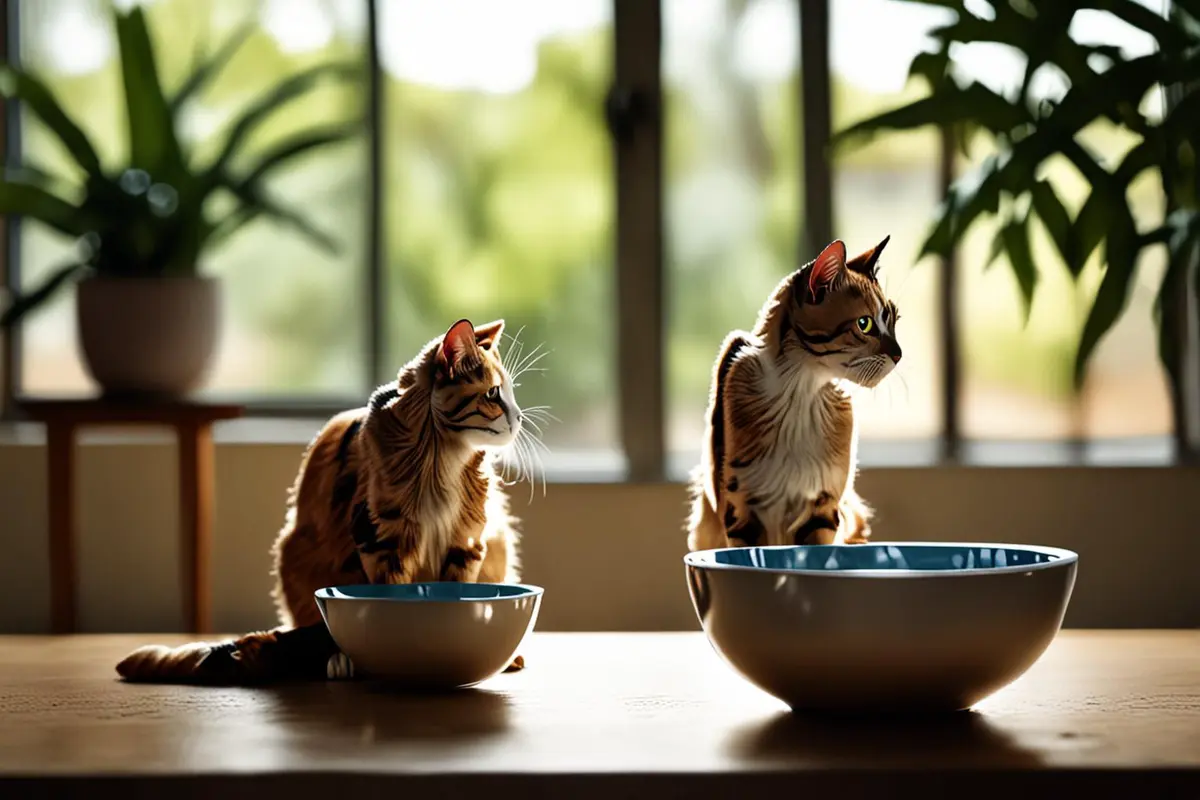
A cat does not walk toward the water fountain on cue. It pauses at the doorway and looks toward its person. That moment need not be a failed take: it shows how the animal observes its surroundings and gives the relationship room to breathe. A pet advertisement can begin with behavior rather than requiring an animal to reproduce every expression in a human script.
Observe what the animal actually does
Before storyboarding, talk with the owner or a qualified animal handler about familiar spaces, everyday habits and whether the animal is comfortable approaching particular objects. Does it wait when someone comes near, or move away? Does it investigate a new device or keep its distance? These observations do not represent every cat or dog, but they can help a director plan for the individual animal.
Imagine an advertisement for a water fountain. The story need not require a cat to drink at an exact second. A person places the device in a familiar position, the cat approaches on its own and the person waits nearby. Even footage of sniffing and pausing can convey curiosity and care. The product's actual operation can be shown separately.
Show the animal and person's responses together
A pet is not decoration, nor does it need to act like a speaking human. A glance back, a person making room, or a hand resting nearby without reaching immediately can express a relationship. Establish the surroundings before the approach, then allow time for both observation and the animal's own decision. The scene can accommodate an action happening or not happening.
ONCE's pet feeder case page describes how the device, cat and home setting create a viewing context. That is an observation about the page's visual organization, not proof of health outcomes or a prediction that every pet will react alike.
Plan product demonstration and animal interaction separately
People and the real product can demonstrate how a device opens, comes apart for cleaning or takes accessories. Whether an animal approaches can be observed on its own terms. In the edit, connect the two through consistent space and action. The feature remains clear without asking the pet to perform a complicated sequence in one take.
Capacity, timing and performance claims need to match the brand's supporting information and conditions. A cat standing near a bowl does not prove increased water consumption, and a warm interaction does not establish a health benefit. Treat visible behavior and the brand's intended message as separate questions.
Make room for the unexpected
Storyboards can allow several useful outcomes: the animal looks toward a product, approaches voluntarily, pauses nearby or moves away. Frame the area where it may move, and capture complete shots of the person's actions, product details and sound separately. If the animal does not want to approach that day, a story about preparing the space and operating the product can still work, or the interaction can be filmed at a more suitable time.
This does not mean waiting indefinitely. Include someone familiar with the animal in the schedule and give it opportunities to rest and leave. The American Humane Society's filmed media guidelines emphasize checking working areas, coordination with handlers and attention to conditions and animal state. Follow applicable local requirements and adapt to the individual; do not force or frighten an animal to obtain a specific response.
Choose the shots after the relationship is clear
Watch the rough cut without captions. Can viewers see who is being cared for, how the animal responds and what role the product plays? If only a sequence of cute close-ups remains, restore a shot of the person and animal sharing a space. If the feature is clear but the relationship is missing, keep a moment of waiting or a glance. Let the brand appear without presenting an imagined response as an actual function.
Planning a pet product video or brand film? Contact ONCE to develop a story around real behavior and product use.