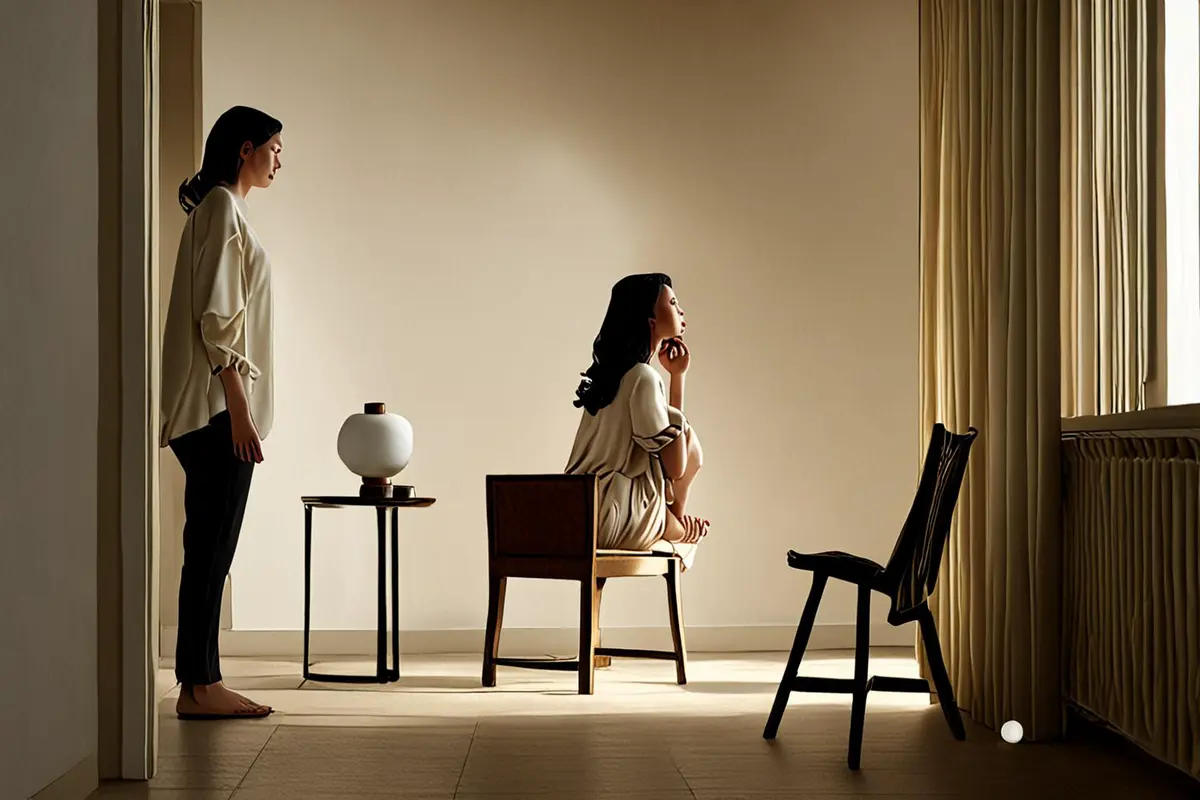
A product ad does not have to show every corner of a room for viewers to believe that someone is outside the door, air is moving through the hallway, or an action is unfolding just beyond the kitchen counter. What makes the scene convincing is often the way the frame responds to what cannot be seen. A person turns suddenly, a cup trembles on the table, or keys land in a tray somewhere in the distance. At that moment, off-screen space enters the story.
Off-screen space is neither an excuse to save on production design nor a trick for withholding information. It is a form of visual grammar: the frame keeps the most valuable effect in view while allowing its cause to sit temporarily beyond the edge. In product advertising, this can turn a single setup into part of a larger life, giving the product relationships with people, place, and time.
The Frame Is a Line of Choice, Not the Edge of the World
Viewers know that space continues beyond the image. When the cues remain consistent, the mind completes what has not been shown. A person looks right, then a lock clicks from that direction; we place the sound in the same room. A hand reaches in to pick up a charging case; we assume the rest of the body remains outside the frame.
This completion makes a clean studio feel less like a sealed display. The product can stay in the foreground while off-screen action tells us who uses it, when it matters, and what kind of life surrounds it. Camera moves, transitions, and digital set extensions can all change the apparent size of a location. Off-screen space does something more fundamental first: it creates causality. The image has not become wider, but the world has.
The Most Reliable Pattern: Cause Outside, Effect Inside
For off-screen action to work, the visible frame needs to retain a result that viewers can read. A doorbell rings and someone stops pouring water. A vehicle passes outside and soft light travels across the table. A second person hands over an ingredient from beyond the frame, and the person we can see places it in a blender. The cause is incomplete, but the response confirms that it exists.
If both cause and effect remain outside, the shot becomes an empty wait and viewers have little reason to know where to look. Product advertising needs a stable visual anchor: the product, a hand, an eyeline, or a material that visibly changes. The off-screen cue pushes the action forward; the on-screen cue delivers it.
A Reaction Does Not Have to Be a Facial Expression
A turn of the head is direct, but movement, light, and objects can react as well. A hem lifts in a draft, ripples appear on water, or a smart light turns on as footsteps approach from the corridor. These small changes often suit restrained product films better than emphatic performance. The viewer first feels that the space is working, then recognizes how deliberately it has been staged.
Eyelines, Entrances, and Motion Draw the Floor Plan
Off-screen space fails quickly when direction drifts. If a person first looks to the right and the next shot continues the same action from the left, the room seems to jump. Even when the camera moves, eyelines, entrances, exits, and object movement need to remain traceable.
Think of the four edges of every shot as doors. If someone leaves through one edge, where should they enter the next image? If a person looks in one direction, where should the sound or responding action be perceived? Our earlier article on eyeline design in corporate interviews considers the relationship between subject, interviewer, and camera. The same logic in a product ad can connect an invisible person or room to what is on screen.
Lock Screen Direction Before Hunting for Beautiful Angles
When every shot is designed first as an isolated beauty image, the edit often reveals conflicting directions. A better approach is to define the main screen direction in the storyboard: perhaps the off-screen person always sits to the right, the product passes from left to right, and the lead exits toward the background. The camera can change, but the relationship should not reset without a reason.
Sound Gives Off-Screen Space Distance, Material, and Weight
Off-screen sound does more than announce that something else exists. Clarity, reflection, and delay tell viewers how far away it is, what surfaces sit between it and the camera, and what kind of space contains it. Close fabric movement creates a different radius of life from a distant elevator chime. A dull impact behind a timber door feels different from metal touching stone in an open kitchen.
When music fills every frequency from beginning to end, those spatial cues flatten. A product film can leave half a second around a key action so that viewers hear direction before they see the reaction. Our article on creating spatial variation in a limited location discusses using ambience to extend a set. Here, sound has an additional job: it must form a causal pair with the visible response. It is one end of the action, not background decoration.
Keep the Product in the Relationship
A product can play three common roles in this structure. It can receive an action, as when an off-screen hand places earbuds into a charging case. It can trigger an action, as when a coffee machine starts and someone approaches from outside the frame. Or it can resolve an action, as when a person hears a sound from a nursery and checks it through a device. In each case, the product participates in the causal chain instead of waiting in the foreground for a logo reveal.
This is also why off-screen staging does not simply mean being more subtle. A product name may arrive later and viewers may complete part of the lifestyle context, but the evidence for important functions, operating conditions, and results must remain visible. If the ad needs to prove button feedback, show the press and the response. If capacity matters, put the reference object in the same image. Safety, installation, and compatibility cannot be replaced by action beyond the frame. The factual responsibility of a product demonstration remains even when the storytelling becomes more atmospheric.
Reveal the Cause, Delay It, or Leave It Unseen
Not every off-screen action needs to be revealed in the next shot. The right choice depends on what the viewer must understand.
If the cause matters to a functional judgment, reveal it. A person hears something and reaches for a product; the next shot should show how the product answers the situation. If the cause only adds everyday texture, it may stay unseen: a blurred greeting from the hallway, a shadow passing a window, or water running in another room can simply make the location feel inhabited. Delayed revelation is a third option. Show the reaction first, then reveal the cause two or three shots later. It can create light humor or anticipation, but the longer the delay, the more exact the direction and sound must be.
One film usually benefits from one dominant off-screen question. If the character keeps reacting to different edges, the space shifts from rich to confused. Viewers should know what they are waiting for rather than constantly wondering what the director is hiding.
A Relationship That Works in Landscape May Vanish in Vertical
Landscape frames have longer side edges, which makes them useful for lateral eyelines, entrances, exits, and object handoffs. After a vertical crop, an eyeline may be pushed toward the center and a hand entering from outside may become an unreadable fragment. A simple center crop often removes the spatial direction that made the original shot clear.
Production can capture a tighter vertical reaction and let the entering action travel farther into the image. Sound direction should not rely entirely on stereo placement because many social viewers listen through phone speakers. The image still needs an eyeline, changing light, or object movement as visible evidence. One idea can then adapt to different ratios without pretending that a single composition can carry every version.
AI and CG Still Have to Obey the Same Spatial Logic
AI backgrounds, CG extensions, and live-action composites can make it tempting to treat the unseen world as a place where anything can happen. The underlying question remains continuity. If an off-screen light changes, does the reflection on the product change with it? If footsteps approach from the right, does the person look in the same direction? If an unseen force pulls an object, do its weight, friction, and pause feel credible?
Lock screen direction, light source, and sound distance before generating or extending the background. Let technology complete the space without rewriting it. The more important the off-screen event, the more it benefits from a controllable live-action anchor: a real reaction, a real point of contact, or real highlights on the product. Hybrid production can then remain flexible without losing the product's physical presence.
Plan What Viewers See Separately from What They Believe
Add two columns to the storyboard: visible action inside the frame, and the off-screen action viewers need to believe. For every shot, identify the bridge between them. Is it an eyeline, sound, light, object movement, or an entrance or exit? During production, keep the pauses before and after an action, clean room tone, reactions at different intensities, and complete versions of people or objects crossing the frame. These are not scraps. They are the connective words of the edit.
Good off-screen space does not make viewers feel that information has been hidden. It shows only what is most worth seeing while allowing life around the product to continue. If you are planning an ad that needs to balance product truth, human relationships, and multiple formats, ONCE can begin with the storyboard and testing stage of product video production, deciding which actions belong on screen and which can live just beyond it. Contact us to turn real product use into a shot structure that can be filmed, edited, and adapted.