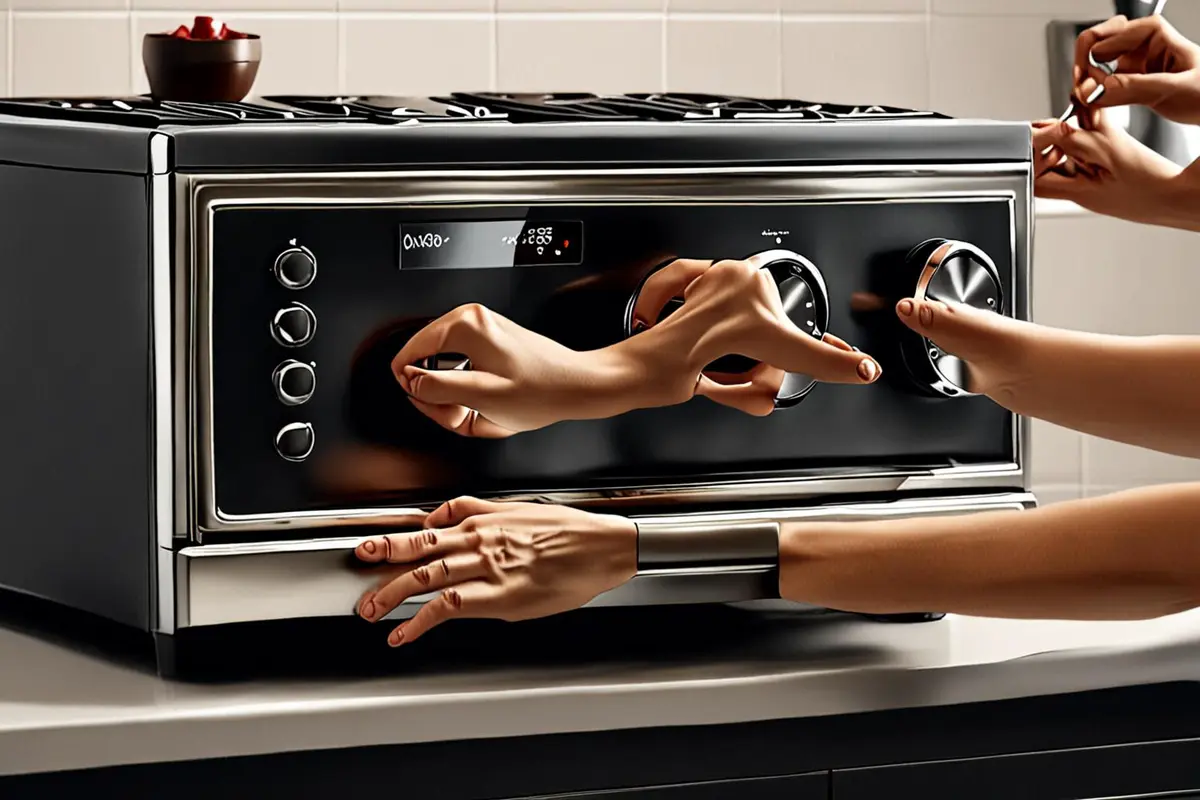
In product advertising, the performer seen most often beside the product is not a face. It is a pair of hands. They press a button, lift a lid, turn a dial, or pick up a cup, giving the audience its first impression of weight, resistance, temperature, and scale.
The same function can feel completely different depending on who performs it. A touch that is too light makes the product feel like a prop. Too much force makes it look difficult to use. A rushed action hides the mechanism, while a pause after every step turns the film into a manual. Hand performance is therefore more than a collection of inserts. It is the product's first on-screen user experience.
The hand is not decoration; it temporarily becomes the user
The audience cannot touch the material or know how much force a dial requires. The hand makes those qualities visible. Where a finger lands, whether the wrist looks tense, and whether the performer hesitates after the action can all be read as characteristics of the product.
If a performer tests a lid twice before opening it, the structure appears unintuitive. If one hand completes the action naturally, the same lid feels easy. The product may not have changed, but the performance has translated usability into visible movement. Claims such as intuitive control, one-touch operation, and secure grip need physical behavior that supports them.
Before filming, the direction should be more precise than “open it.” The team needs to decide what the action means: lightness, precision, reassurance, speed, or strength. That decision changes the contact point, starting pose, path, and finishing position.
Ease comes from anticipation, not speed alone
Someone who knows a product usually prepares before touching it. Their gaze, balance, and finger path already anticipate the next step. A first-time user searches while moving, adding small pauses and corrections.
Advertising often mistakes speed for fluency. A performer reaches suddenly, presses quickly, and exits the frame, producing a fast action that still feels like a response to a crew cue. Convincing fluency has a clear beginning, path, and result. The hand approaches, the thumb finds the control naturally, the contact lasts until feedback appears, and attention then moves to the next step.
Anticipation also helps editing. One shot establishes intent, a closer shot shows contact, and a third reveals the result. The audience follows the function without additional explanation. For a related discussion of timing, see ONCE's article on when a product should appear in a brand film.
Force reveals the product's personality
Force is one of the most overlooked variables in hand performance. Turning a dial with fingertips can make a product feel precise. Gripping it with the full hand and visibly applying force can make it feel robust, or suggest excessive resistance. If the wrist drops while pressing a button, the button feels heavy. A small movement of the fingertip makes it feel sensitive.
The performer should not invent this force. During rehearsal, the team should use the real product, observe resistance, rebound, detents, and sound, then decide how much physical truth belongs in the film. Hiding every resistance point can exaggerate ease, while preserving every awkward attempt obscures the design intention. A better performance keeps the real feedback but organizes posture so that the direction of force is clear and the body carries no irrelevant tension.
When a prototype behaves differently from the production unit, the brand and production team should agree on which tactile qualities may be shown. A shot can clarify design, but performance should not manufacture an ease of use the product does not possess.
The half second after the action determines whether the function is seen
Many operating shots fail after the movement is technically complete. The performer presses a button and immediately removes the hand, leaving no time to see a light, structural change, or outcome before the next action begins.
Good hand performance leaves space for the result. The hand may remain briefly in frame or move naturally away from the area where feedback appears. This is not a mechanical hold. It gives the audience enough time to confirm cause and effect: the product changed because of the action that just occurred.
The finishing pose also affects product visibility. Fingers can cover a logo, the palm can block a mechanism, or the wrist can form an awkward angle. Rehearsal needs to confirm three things together: the action works, the product remains legible, and the composition holds.
Continuity means repeating the logic, not only the position
A product ad may repeat one operation in a wide shot, profile, macro, and overhead view. If the crew records only where the hand was placed, the cut can still jump. One angle uses the thumb and the next uses the index finger. One shot stabilizes the product before opening it, while another goes directly to the lid. Speed and breathing may also change.
The action logic needs continuity. Which hand stabilizes the product, which finger operates it, where force enters, and where the hand stops after feedback should remain consistent across angles. Continuity notes help, but it is more useful to divide the action into clear beats and make sure the performer understands why each beat exists.
Macro work magnifies small differences. Nail direction, skin compression, sleeve position, and reflections on the product all become cut points. Establishing one standard action before changing camera positions is usually more reliable than redesigning the performance for every angle.
Casting hands is about more than appearance
Commercial images care about skin, nails, and cleanliness, but a beautiful hand is not automatically right for the product. A large tool needs a believable grip and sense of force. Skincare requires delicate control against the skin. Small electronics need fingers that create an appropriate scale around buttons and ports.
Hands also communicate age, profession, and lifestyle. An overly manicured hand in a repair, outdoor, or heavy-use scene can weaken credibility. A rough hand changes the meaning of a premium care product. Hand casting should belong to character design rather than becoming a nail inspection just before the camera rolls.
Global content also needs attention to habits and environments. The way people hold a cup, open a cabinet, or organize a surface is shaped by the space and objects around them. Replacing the talent's hand does not automatically localize the scene, a point related to ONCE's analysis of kitchens in global appliance advertising.
Sound and macro photography magnify the tactile impression
When the frame moves close to fingers, controls, and joints, sound becomes part of the tactile experience. A defined click can make closure feel certain. A soft sliding sound can make a rail feel smooth. Excessive impact makes a precise object feel harsh, while complete silence can remove the outcome from the action.
Every sound does not need to be captured perfectly on set, but production should record a reference to the real operation. Postproduction can then shape the layers for viewing distance and brand character. Sound design should reinforce the physical relationship already visible instead of giving a light touch an implausibly heavy impact.
Macro photography also exposes preparation problems: dry skin, dust, fingerprints, and movement shake all become larger. Hand care, product cleaning, and rehearsal should happen before the take rather than becoming frame-by-frame repair in post.
Write the verb into the script, not only the shot size
“Close-up of hand demonstrating the feature” gives the performer little direction. A useful script describes the verb and outcome: “The thumb finds the recess and pushes gently; the cover slides open and the hand holds,” or “One hand stabilizes the body; the index finger presses; after the light appears, the hand moves away naturally.”
Verbs align the director, camera, performer, sound, and editor. The camera team knows when the contact point must be visible. Lighting knows where a hand shadow cannot cover the product. The performer knows what completes the action, and the editor knows which beat connects the shots.
A successful operating shot does not leave the audience thinking about the attractiveness of the hand. It lets them rehearse the product mentally. They know where to touch, how much force is needed, and when the result appears, making the feature easier to imagine in everyday life.
If your product film needs to balance functional clarity, elegant movement, and credible use, ONCE can plan product trials, action direction, hand casting, macro photography, and sound as one system. Contact ONCE to discuss product advertising and scalable content production.