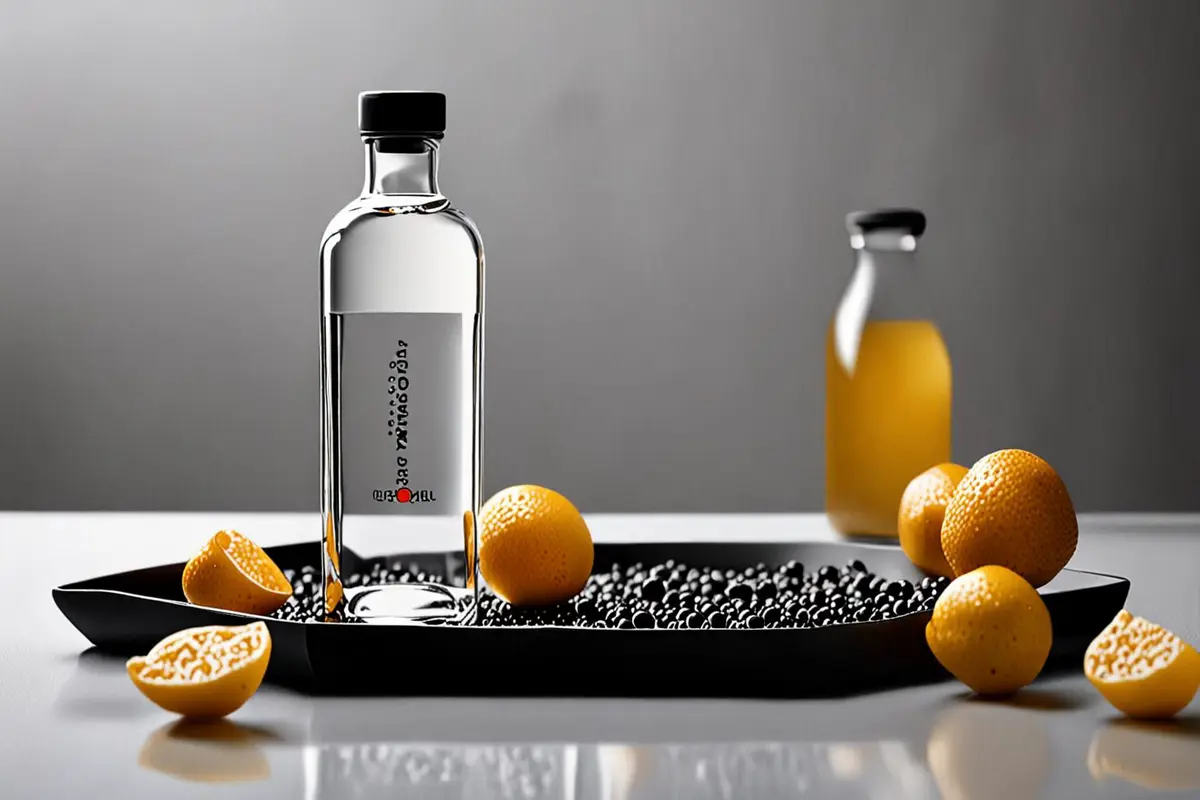
A beverage commercial can make every individual shot look cold: condensation covers the bottle, a cool haze sits in the background, and the cap opens with a crisp sound. Yet the sequence can still feel wrong. One shot shows fine mist as if the bottle has just left the refrigerator; the next has heavy streaks running down the label. A hand wipes across the surface, but the close-up that follows looks untouched. The problem is not whether each droplet is beautiful. The visible passage of time is inconsistent.
Condensation is not decoration applied to packaging. It is a clock the audience can see. If product ad production treats “add droplets” as a styling note without mapping how those droplets grow, merge, run and respond to touch, coldness will not survive changes in angle, shooting day or edit.
Droplets record time for the image
A cold bottle does not hold one fixed surface state in a warmer environment. Fine mist gathers into beads. Beads merge, become heavier and run. Water collects along label edges. A warm hand creates dry patches, fingerprints and streaks. Even under the same lighting, those changes make the product appear to have experienced a different amount of time. A new lens or light angle magnifies the difference.
Continuity therefore cannot be judged by asking whether every shot contains droplets. The useful questions are: Which cooling stage is the bottle in? How much story time has passed since the previous shot? Has the audience seen an irreversible action such as opening, pouring, gripping or wiping? Once that action occurs, later shots should inherit its trace unless the story clearly moves to another moment.
Write a condensation state arc before scheduling shots
After the storyboard and before the shooting order, give the hero product a short condensation state arc. This is a visual narrative shared by direction, cinematography, styling, continuity and editorial.
Coldness first appears
The bottle silhouette is clean, the surface is dominated by very fine mist, and the label is easy to read. This state suits the first reveal, a refrigerator opening or a clear brand-identification shot. It means “just taken out,” rather than “left on the table for a while.”
Coldness reaches its hero state
Fine beads develop variation in size, and small highlights give the surface depth, but large trails have not taken over the packaging. This is often the strongest state for a hero close-up because it feels cold while preserving color, shape and label clarity. Perfectly even droplets can look like a texture pasted onto the bottle.
The product enters use
Gripping, opening, pouring or toasting changes the surface irreversibly. Fingers create a drier area, beads are removed from the shoulder or base, and trails change direction. Any return to a product close-up should continue those marks or use another unit prepared to the same state.
The state requires a reset
A reset becomes necessary when heavy trails obscure key information, the bead pattern no longer matches surrounding shots, or the product has undergone an action that cannot be reversed. Resetting is more than wiping and spraying again. It means restoring label orientation, fill level, cap state, surface temperature, contact marks and droplet scale as one combined condition.
Shooting order should follow state as well as storyboard
Commercial crews often group shots by lighting, angle and talent availability. Condensation adds another constraint: whether the surface state can be reversed. A clean bottle can develop toward mature beads and then toward contact marks. Moving backward takes time and introduces variation. Shooting one unit from its clean reveal through its touched state is usually more stable than repeatedly switching between the two.
This does not require filming in final edit order. A practical schedule labels each shot by lighting group, camera group and condensation state, then finds the overlap. Continuity notes should record bead density, major trail positions, readable label areas, cap state and contact points alongside lens and performance details. Front, side and top reference frames for every key setup communicate more than a note saying “slightly wetter.”
Multiple hero units perform different states
Backup products do more than protect against scratches. Maintain separate units for a clean brand reveal, mature condensation close-ups and actions that involve opening, gripping or pouring. This reduces random differences caused by repeatedly wiping, chilling and restyling one bottle.
The units still need to match in label placement, packaging batch, fill level and small manufacturing details. A label seam, cap angle, print shift or liquid level may expose a swap before the droplets do. Give each unit an identifier, a defined role and a standard orientation image so that replacing it feels like continuous performance.
The same droplets can look like a different time under new lighting
Droplets become visible when they catch the right reflection. A long soft source from the side or rear can outline the bottle and bead edges; a smaller source creates sharper highlight points. Background brightness and reflection control change the separation between transparent packaging, label and water. If a new camera angle copies fixture positions without matching the apparent highlight scale, the same bottle may suddenly look drier or wetter.
Continuity references should therefore show the photographed result at final exposure, not only the bottle seen by eye on set. Begin each lighting group with a short test that evaluates label readability, silhouette and droplet highlights together. ONCE's earlier guide to rain and water-droplet texture discusses practical and digital realism; the concern here is how that realism carries a consistent time state between shots.
Hand contact is the most sensitive continuity turn
Viewers naturally track the relationship between hand and product. Finger placement, bottle rotation, thumb position over a label, and moisture around an opened cap all become references for the next shot. Cutting from a tactile grip to a perfectly untouched bottle removes the physical consequence of the action.
Decide which traces the audience should see. A dry patch after gripping can support a tactile sense of refreshment. If brand identification is the priority, hand placement should protect key information and trails should not cross the brand name. High-speed and macro shots need particular care because they enlarge fingerprints, bubbles and streaks that disappear at normal scale. Physical credibility should also come from weight, motion and performance rather than asking condensation to carry every signal.
Sound can support coldness without inventing product performance
A refrigerator seal, cap release, light ice contact and the bottle landing on a surface make coldness more specific. The sound should match the visible material and action: plastic, glass and metal have different contact signatures, and a studio void should not sound like a domestic tabletop. Exaggerated ice cracks or oversized low-frequency impacts can make a light product feel artificial.
Sound must not imply an unsupported feature. Droplets on an electronic device may establish atmosphere, but if the product has no relevant water-resistance claim, the images and soundtrack should not suggest immersion or pressure testing. Styling remains accountable to the real proposition.
The edit must preserve the arrow of condensation time
Condensation generally moves from fine to coarse, from separate beads toward merging trails, and then acquires contact marks. That creates a directional arrow. An edit that moves from mature streaks back to new mist and then to a hand-cleared patch makes the product repeatedly jump backward in time. Each shot may be attractive while the sequence loses credibility.
Platform versions create an additional risk. A landscape master may contain a complete progression, while a short vertical edit moves a late hero shot into the opening seconds. If it then returns to an early clean state, the surface history reverses. Add condensation states to clip labels so editors know which shots are freely interchangeable and which require order. This keeps the cold state coherent even when hooks and durations change.
Live action, CG and AIGC repair different problems
Live action is strongest at gravity, surface tension, touch and small random variation. CG can add a few missing beads, clean a trail that crosses the label, or bring density closer between two shots. When base lighting, bottle reflections and droplet direction already contradict each other, repair becomes much more complex. AIGC can explore atmosphere, backgrounds and storyboard references, but branded packaging, label text, bottle geometry and cross-shot droplet state still demand controlled assets and frame-by-frame review.
A stable hybrid approach establishes the product and condensation benchmark in camera, then uses post-production for continuity repair and invisible cleanup. This preserves physical contact while avoiding the synthetic, plastic surface that can result from pursuing perfect droplets. The division of labor is similar to the one discussed in ONCE's guide to physical wind effects in product advertising.
Different categories need different scales of coldness
Beverages can make condensation a primary appetite cue because “just removed from refrigeration” is part of the consumption situation. Skincare may use it to suggest freshness and a hydrated atmosphere, but the pack should not appear slippery or unreadable. Electronics require a careful distinction between atmosphere and functional demonstration. Food packaging also needs to match the real temperature and usage context, or the visual treatment becomes a spectacle that conflicts with experience.
Good condensation continuity does not make viewers notice meticulous continuity notes. It lets them feel that the product remains inside one believable cold environment and that touch, opening and use occur within the same passage of time. The goal is not to fix every bead in place. It is to make every shot agree on temperature, time and product state.
Turn coldness into a state that can be shot and edited
If a beverage, skincare or lifestyle product needs to preserve a coherent cold state across cameras and formats, ONCE can connect the script, state arc, styling, lighting, action, sound and post-production plan from the start. Contact ONCE to discuss product ad production.