Your China-based production partner delivers an elegant product demonstration. The mechanism moves, a status light changes, and the narrator says the product is effortless. The film sounds polished—but a person who cannot adequately see it may never learn what actually happened.
Before ordering another voiceover, identify the missing information. For overseas brands working with Chinese manufacturers, that changes both the script brief and the scope of localization: the task is to convey relevant product facts, not simply translate the existing promotional language.
A spoken slogan does not explain a visual action
W3C WAI’s Description of Visual Information, checked October 26, 2026, presents integrated narration, a separate described video and player-dependent separate files as possible approaches. Available space in the soundtrack also affects the choice.
Its G226 technique addresses meaningful visual information through narration and cautions against relying on references such as “this” or “here” without enough context. Techniques are implementation examples, not a compulsory single method.
Captions render audio information as text; description brings necessary visual information into audio. A fluent English marketing voiceover may do neither job completely. Treat these as distinct review tasks. This article is production guidance, not a determination of a particular brand’s legal duties or a claim that one edit makes an entire website conformant.
ONCE’s essential-information listening record
For each consequential sequence, record six things:
- The fact actually shown.
- What the existing soundtrack already communicates.
- The understanding lost if that fact is omitted.
- The proposed additional wording.
- The available time.
- The real publishing entry point for the resulting version.
This is an original planning method, not an official checklist or a completed ONCE customer test. Its purpose is to separate necessary explanation from a catalogue of decorative details.
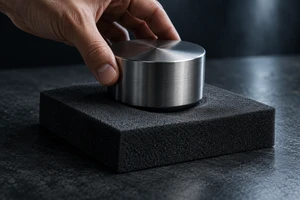
Imagine a fictional countertop-device brand showing a component becoming fully secured, followed by a light changing. If that state change is approved product information, the script should identify the relevant component, action and state accurately. “Effortless setup” does not carry the same information. Actual wording must be checked against the real product; the example is not operating advice for any device.
Do not use description to invent an unseen capability or turn an uncertain visual cue into a product guarantee. Manufacturer approval of the underlying facts remains necessary even when the sentence sounds obvious.
Buy the intervention the film needs
For a new production, try revising the main script before recording. Replace vague praise with useful explanation where appropriate, and give the action and words time to align. A read-through and rough cut can reveal whether this works naturally. Do not assume integration is free or always creatively suitable.
For a locked film, inspect the gaps first. If the necessary information fits clearly, scope the writing, recording, audio editing and review. If it does not, compare a timing change with a separate described version. Asking the narrator to accelerate is not a solution to a missing editorial decision.
Accessible.org’s Audio Description Best Practices for Video Accessibility, dated May 20, 2026, similarly emphasizes respecting dialogue and timing. Its broad statements about platform support are not adopted here. Check the actual publishing environment rather than assuming every account, player or embed offers the same features.
The purchasing unit is the work required to convey the approved information: script changes, usable time, production and delivery. Word count alone does not describe that scope. A separate version also needs naming, a discoverable entry point and an update owner.
Use listening to find gaps, not to certify access
Have a colleague who did not edit the film listen without looking, then explain the object, action and result they understood. Compare the answer with the approved record. This is an internal diagnostic—not a simulation of blind or low-vision experience, and not a substitute for relevant user participation or professional accessibility evaluation.
Review again with the picture. Check synchronization, conflicts with important speech or sounds, and unsupported statements. Then test the delivered experience from its real entry point: can the intended version be found and used, including after a language change? Successful playback in an editing application does not verify those publishing controls.
For the next brief, name the sequences in scope, main-script or separate-version approach, recording and mixing, languages, and the person responsible for publishing checks. Keep approved product information tied to its versions so a later product or language change can trigger a targeted review. That is a potential repeatable service—not an established ONCE efficiency or revenue result.
Sources checked October 26, 2026. Precise publication dates were not established for the current W3C pages. The original AI cover is conceptual, not a customer project or accessibility test.