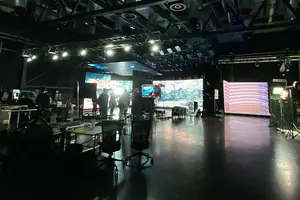
The core of the pre-production phase is defining information density.
Many brands, when launchingcorporate videoprojects, often fall into the trap of trying to showcase all technical details in a single shot. This approach frequently results in cluttered visuals where the audience cannot grasp the key points. The correct approach is to establish information layering principles early in pre-production. Marketing leaders must collaborate with the production team to sort out core selling points, breaking down complex production or service processes into three levels: macro environment, meso interaction, and micro details. This step determines subsequent shot selection and narrative pacing. Failing to clarify this logic upfront risks redundant footage or missing key information during post-production. Brands should provide clear product manuals or flowcharts, highlighting mandatory compliance nodes and technical highlights as strict constraints for scriptwriting.

Macro shots establish spatial awareness and trust
The first shot type typically serves to establish the scene and provide endorsement. These shots need to showcase the company's scale, environmental cleanliness, or overall technical architecture. The crew should use wide-angle lenses or drones to capture full views of factories, R&D center layouts, or data centers. Lighting at this stage must emphasize spatial transparency and order, avoiding heavy shadows that create visual oppression. Brands must confirm filming permissions and restricted areas in advance to ensure macro shots do not leak sensitive trade secrets. If the location is cluttered, sufficient time must be allocated for set dressing and cleaning. Acceptance criteria for these shots include balanced composition, even lighting, and accurate conveyance of the company's scale. Any perspective deviations caused by site limitations should be confirmed via storyboards during pre-production to avoid schedule delays from on-site adjustments.
Meso shots focus on human-system interaction logic
The second shot type bridges the environment and details, focusing on how personnel operate equipment or how systems function. This stage requires translating abstract processes into tangible actions. Cinematographers should use medium focal length lenses to follow operators' hand movements or data changes on screens. Attention must be paid to the continuity and logic of actions, ensuring every step complies with actual business protocols. Brands should arrange technical staff familiar with business processes to supervise on-set, preventing non-compliant operations or incorrect demonstrations. Lighting must complement the subject's movement, highlighting interface clarity and personnel focus. Risks include ambient noise affecting audio quality and continuity errors in multi-camera setups. Acceptance checks should verify smooth action, legible interface text, and natural expressions. For precision instrument operation, high frame rate shooting is recommended to allow slow-motion processing in post-production for enhanced visual impact.
Micro shots reveal technical core and craftsmanship precision
The third shot type aims to demonstrate core competitiveness through extreme detail, including chip textures, material qualities, or code flow. Macro lenses or CGI play a key role here. The crew must use professional macro or probe lenses to capture craftsmanship details invisible to the naked eye. Internal structures that cannot be filmed practically can be visualized using AIGC or 3D animation. Brands must provide high-precision product models or design drawings to ensure digital reconstruction accuracy. The biggest risk at this stage is unnatural integration of real and virtual elements, or details violating physical laws. Acceptance criteria include sharp focus, realistic material rendering, and lighting consistency between VFX and live-action footage. If the budget is limited, prioritize practical macro shots of key components and use schematic animations for other parts to control costs while maintaining visual quality.
Pacing control and information integration in post-production
After filming, the post-production team must organically link the three shot types. Editors should adjust the cutting frequency of macro, meso, and micro shots based on the emotional arc of the background music. Macro shots should be longer to create stability; meso shots moderate to maintain narrative flow; and micro shots shorter to create visual surprises. Color grading must unify color temperature and contrast across different scenes to ensure consistent visual style. Sound design is equally important; appropriate ambient sounds and effects should be added to enhance immersion. During review, brands should focus on information accuracy and comfortable pacing rather than mere technical flair. If a segment feels overloaded, decisively cut redundant footage to retain core messages. Subtitles and motion graphics must be concise and clear, avoiding obstruction of key visual content.
Itemized delivery inspection and copyright confirmation
Project delivery focuses on a comprehensive acceptance process covering multiple stages. First, confirm deviations between the script/storyboard and execution; second, check logical continuity of the edit; third, verify technical specs for color and sound; finally, confirm accuracy of subtitles and graphics. Each stage requires written records to avoid misunderstandings from verbal communication. Brands must specify format, resolution, and codec requirements for final deliverables to suit different publishing platforms. Simultaneously, confirm copyright scope for music, fonts, and assets to ensure legal commercial use. Retain authorization documents for any third-party licensed materials. Archiving and managing source files is also part of acceptance to facilitate future content adaptation and modification.
Identifying special scenarios unsuitable for three-part breakdown
Not allcorporate videosare suitable for this three-part breakdown method. For brand story films emphasizing emotional resonance, excessive structure may weaken impact. For purely conceptual brand image films, abstract visuals may matter more than specific processes. Furthermore, if the subject involves highly confidential or non-visualizable service processes, forced breakdown may lead to information distortion or compliance risks. In such cases, metaphors, symbolism, or interviews are recommended. Brands should fully communicate communication goals and audience characteristics with the production team early in the project to assess applicability. If uncertain, produce a prototype for testing and adjust strategy based on feedback. Adapting flexibly to different project needs reflects a professional production team.
If you are planning next quarter's brand video content, we recommend organizing existing asset libraries and core messaging before discussing specific visual solutions with a professional team. Clear pre-production planning effectively reduces production risks and improves final quality. ONCE provides production services for corporate videos, brand promotional videos, and TVCs, offering customized solutions based on your specific needs. Please discuss project goals and expected outcomes in detail before collaboration to ensure mutual alignment.
If you are preparing a corporate video project, start by organizing your brief, reference visuals, product or company materials, delivery platforms, and copyright scope, then visit theCorporate Video Service Pageto translate abstract preferences into actionable production boundaries.