Define Dynamic Visual Stability Requirements During Project Initiation
At the start of a TVC project, the brand and production team must jointly define the physical logic of on-screen motion. Stable camera movement means not only a shake-free image but also consistent perspective relationships and spatial depth. If the creative involves virtual set extensions or complex VFX compositing, camera trackability must be confirmed during pre-production. The brand should provide core selling points and reference imagery, specifying which shots require 3D reconstruction or element replacement. Ignoring the technical difficulty of motion matching at this stage will result in significant remediation costs later. Feasibility hinges on whether live-action footage contains sufficient parallax information for software to solve the camera path.
Specific actions include holding a technical previsualization meeting to convert storyboards into a technical parameter sheet. The production team must analyze each shot's motion range, speed, and depth-of-field changes, flagging high-risk shots. For long takes or fast pan/tilt shots, plan stabilizer models and dolly tracks in advance. Acceptance criteria depend on whether the creative team accepts composition adjustments due to technical constraints and whether the post team can achieve high-precision motion matching within budget. Failing to establish these boundaries early often leads to endless parameter tweaking in post-production.
Data Acquisition Standards During On-Set Execution
The cinematographer and gaffer must coordinate with the post department to capture specific data. Using prime lenses reduces perspective distortion caused by zooming, facilitating post-tracking. If zoom lenses are necessary, record focal length curves. Place high-contrast tracking markers or reference objects on set to ensure algorithm recognition in textureless areas. Lighting design should avoid large overexposed or pure black areas, as these lack feature points and cause tracking failures. Actor blocking and prop movement must maintain a controllable pace to prevent motion vector breaks caused by rapid blur. The production team must ensure script supervisors record detailed lens parameters, frame rates, and shutter angles for every take, as this data forms the basis for reverse-solving camera motion in post.
On-set execution requires the Director of Photography to conduct test shoots before principal photography to verify marker detectability in post software. The gaffer must maintain a stable key-to-fill ratio to prevent auto-exposure adjustments from flickering light, which compromises brightness consistency. Criteria include tracking marker coverage exceeding 30% of the frame and sufficient texture detail retention in highlight areas. If tracking proves difficult on set, immediately capture static reference frames or add temporary markers; never rely on a "fix it in post" mentality at the expense of data quality.
Footage Pre-processing Strategies Before Compositing
Upon entering post-production, first apply denoising and color standardization to raw footage. Noise from high ISO interferes with feature extraction in tracking algorithms, so moderate denoising is required while preserving detail. Footage with rolling shutter artifacts requires geometric correction to prevent skewing of fast-moving objects. Editors must lock the final cut to prevent editing changes from invalidating completed tracking data. A key risk at this stage is that excessive beautification may erase essential texture details; therefore, pre-processing must occur under a Technical Director's supervision to ensure grayscale information needed for tracking remains intact.
Operational steps include establishing a proxy workflow to generate low-resolution intermediate formats that retain full motion information. Colorists must output ungraded Log footage for tracking, applying the final grade to composite layers only after motion solving is complete. Criteria include sufficient edge sharpness for algorithm detection when zoomed in and noise levels below threshold. If footage exhibits severe motion blur, evaluate optical flow interpolation or decisively opt for reshoots if repair is impossible, avoiding wasted hours on an unsalvageable foundation.
3D Space Solving and Motion Matching Execution
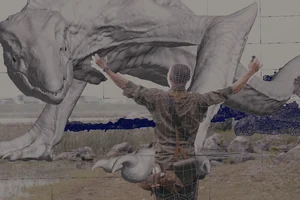
The VFX team uses professional software to solve 3D space from 2D footage. By identifying static feature points, they reconstruct the camera trajectory and scene geometry. Complex camera moves may require layered solving, separating foreground, midground, and background. If automatic solving yields significant errors, manual keyframe adjustment is necessary to ensure virtual elements do not slide against live-action surfaces. The core task here is repeatedly verifying reprojection error to guarantee perfect synchronization between virtual and live cameras. Even minor deviations are magnified in high-speed or close-up shots, causing visible compositing flaws.
During execution, VFX artists must build simplified proxy geometry to simulate scene structure as a collision reference for virtual objects. For irregular handheld motion, manually add keyframes to correct drift from automatic solving. Criteria include maintaining pixel-level reprojection error and ensuring correct occlusion between virtual and real objects during extreme angle changes. If the solve jumps at any frame, backtrack to check feature point matching; manually draw masks to isolate interfering elements if necessary, ensuring smooth and physically accurate motion curves.
Refined Adjustments for Light Integration and Material Matching
Once camera motion is stabilized, address lighting integration between virtual elements and the live environment. Adjust 3D asset materials and lighting based on the direction, color temperature, and intensity of practical lights. Pay attention to ambient occlusion to ensure virtual objects cast physically accurate shadows on the ground or surrounding objects. If practical lighting changes over time, match lighting frame-by-frame or via dynamic binding. This step directly impacts photorealism; inconsistent lighting direction creates dissonance even with perfect motion tracking. Brands should focus on verifying product texture harmony with the environment to avoid plastic-looking or unnaturally lit results.
Specific actions include using HDR images as environmental lighting references and replicating the practical key and fill layout in the 3D scene. Texture artists must adjust reflectivity, roughness, and subsurface scattering to match the optical properties of real objects. Criteria include verifying that specular highlights correspond to environmental light sources and that shadow softness matches the distance and size of practical lights. For dynamic practical lights like sweeping car headlights or cloud cover, keyframe animate lighting changes to ensure logical consistency in every frame.
Key Checklist for Final Delivery Acceptance
Acceptance requires multi-dimensional inspection standards. First, check for flickering or jitter at motion edges, especially when objects quickly cross frame boundaries. Second, verify perspective by observing whether virtual element scaling at different depths follows optical laws. Third, check color consistency to ensure seamless white balance, contrast, and grain matching between composite and live-action elements. Sound design should also sync with visual motion to enhance realism. All feedback must cite specific timecodes and layers, avoiding vague subjective descriptions. Source files, project files, and intermediate renders must be archived as agreed for future revisions or derivative content.
Acceptance procedures require reviewers to play back footage frame-by-frame on high-resolution monitors, focusing on semi-transparent transitions at composite edges. Compare original live-action footage with the final composite to confirm no additional artifacts or color banding were introduced. Criteria include checking for abnormal trailing during fast motion and ensuring virtual objects do not appear to float above the scene in static frames. Document exact timecodes and issue descriptions for any subtle flaws to enable precise fixes by the post team. Ensure standardized layer naming during archiving to facilitate future version iterations or partial modifications.
Technical Applicability Limits and Alternative Solutions
Not all TVC commercials are suitable for complex post-production camera compositing. If budget or schedule is tight, prioritize achieving dynamic effects through practical filming. For chaotic or textureless scenes where post-solving is difficult and costly, use green screen keying or full CG animation instead. If the creative emphasizes abstract concepts over physical realism, accept stylized deviations without pursuing perfect physical matching. Brands must weigh realism against production costs based on communication goals to avoid overspending on unnecessary technology. When live conditions cannot meet tracking requirements, pivot creatively to static compositions or simple pans to ensure timely, high-quality delivery.
Decision-making actions include scoring technical feasibility during ideation and recommending alternatives for low-scoring projects. For example, for shots with all-white backgrounds or solid walls, build simple geometric structures on set for tracking points or switch to a 2D animation style. The criterion is ROI: if post-repair costs exceed reshoot costs, choose to reshoot. If the creative core is emotional resonance rather than visual spectacle, simplify camera movement and rely on editing rhythm and performance to engage viewers, thereby mitigating uncertainty from high technical risks.
Full-Process Coordination and Risk Management Mechanisms
Brands are advised to introduce technical assessments early in the project to map out the technical path for creative execution with the production team. Clearly defining shooting standards and acceptance criteria effectively reduces communication costs and rework risks. Production teams should establish cross-departmental collaboration mechanisms to ensure lossless data transfer from set to post. Reserve backup plans and buffer time for potential risks like tracking failure or lighting mismatches. For further discussion on TVC production workflows or customized solutions, contact ONCE for professional support.
Management actions include holding weekly technical sync meetings to update shooting progress and pre-processing results. Establish a shared cloud database for real-time uploading of continuity logs, lens parameters, and test footage to ensure transparency. Criteria include the team's response speed to potential risks and the completeness of contingency plans for unexpected technical issues. If a specific shot type consistently fails to solve, pause filming immediately to reassess the technical approach or lighting strategy. Through this comprehensive risk management process, ensure every stage of TVC production from concept to delivery remains under control.
If you are preparing a TVC project, organize your brief, reference imagery, product or corporate materials, delivery platforms, and licensing scope before reviewingthe TVC Commercial Services pageto translate abstract preferences into actionable production parameters.